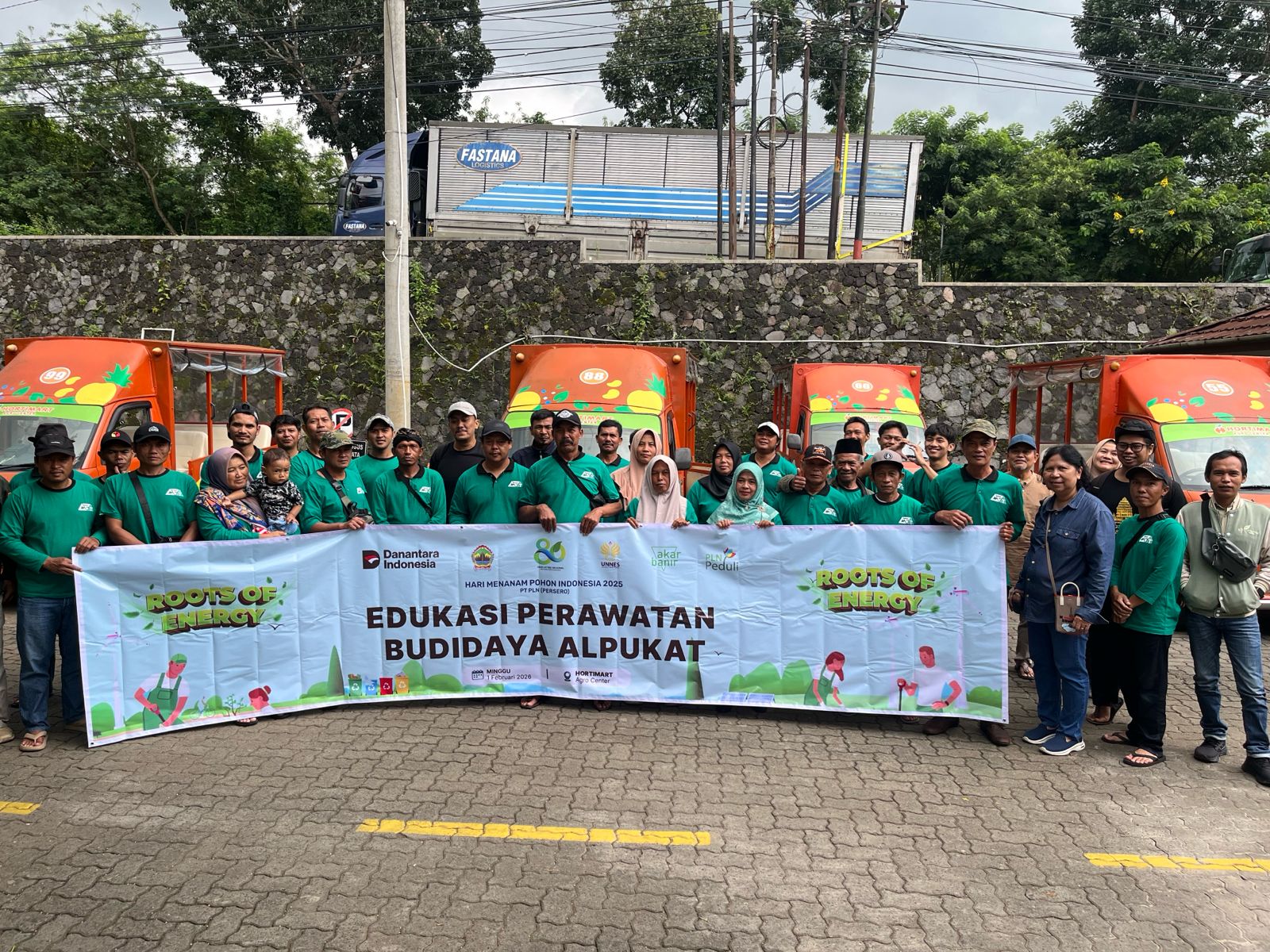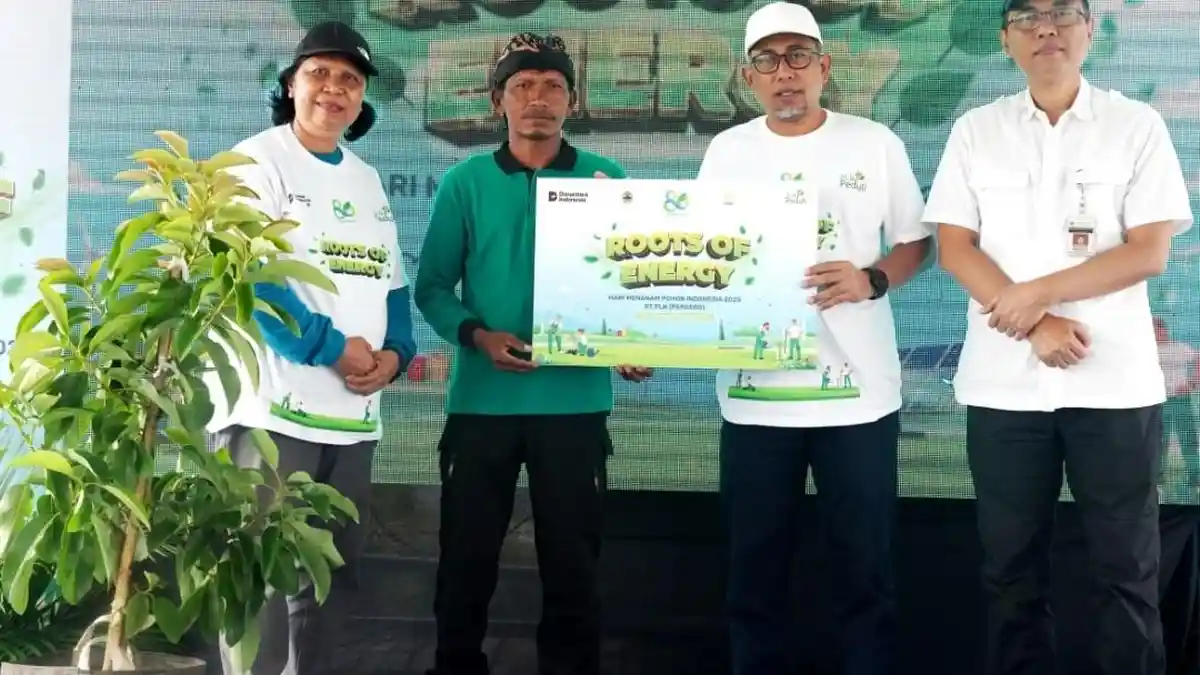
Semarang Regency – In commemoration of Indonesian Tree Planting Day on November 28, 2025, PLN Central Java and DIY Distribution Unit (UID) carried out the Roots of Energy activity by planting 600 avocado seedlings in Talun Hamlet, Candi Village, Bandungan District. This activity is part of the PLN Group’s national movement, which was held simultaneously throughout Indonesia.
PLN collaborated with Semarang State University (Unnes) and the Utomo Lestari Young Farmers Group as managing partners to ensure that the tree planting did not end with the ceremony, but actually had a lasting impact. Senior Manager of Communications and General Affairs at PLN UID Central Java and DIY, Moh. Sarno, said that this activity was a concrete form of PLN’s commitment to environmental preservation.
The planting location is at an altitude of about 1,100 meters above sea level, including the upstream area of the Tuntang River Basin (DAS) and the Rawapening Water Catchment Area . This area was recommended by the Forestry Service Branch 3 as a critical area in need of rehabilitation. Head of the UNNES Conservation Sub-Directorate, Prof. Dr. Nana Kariada TM, M.Si., explained that the location was chosen not merely for symbolic purposes, but as a real effort to restore the environmental conditions in the upstream watershed area so that it can continue to perform its ecological functions.
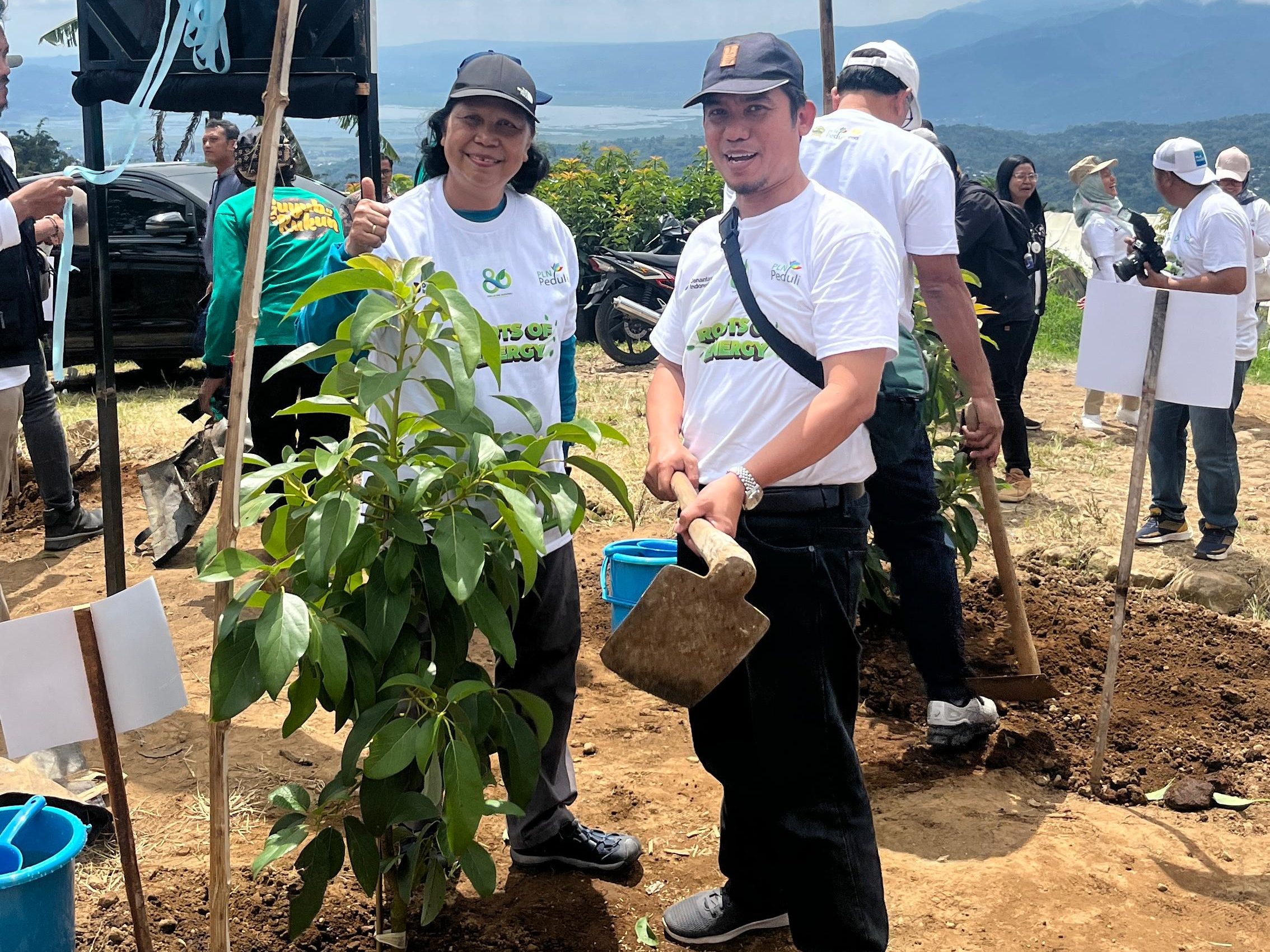
Planting avocado tree seedlings
Source: UNNES’ documentation
PLN hopes that the Roots of Energy program can contribute to maintaining ecosystem balance, improving water security, and improving environmental quality in Central Java and Yogyakarta. The Head of the Central Java Provincial Environment and Forestry Agency, Widi Hartanto, also expressed his appreciation for PLN’s efforts, which are considered to have played a major role in environmental restoration in the upper reaches of the Tuntang River Basin.
In a separate statement, General Manager of PLN UID Central Java and DIY, Bramantyo Anggun Pambudi, emphasized that this activity demonstrates PLN’s long-term commitment to environmental sustainability. He explained that conservation efforts upstream of the Tuntang River Basin have a direct impact on the reliability of the electricity system, as good environmental conditions can reduce the risk of disruptions caused by natural disasters or ecological degradation. He expressed his gratitude to all partners, including Unnes, farmer groups, and all PLN Group entities in Central Java and Yogyakarta.
This program is a form of cross-unit collaboration within the PLN Group, involving PLN UID Central Java and DIY, PLN Tanjung Jati B Generation Unit (UIK TJB), PLN Central Java Development Unit (UIP JBT), PLN Central Java Transmission Unit (UIT JBT), PLN Project Management Center (Pusmanpro), PLN ICON Plus, Indonesia Power, and PLN Insurance. The synergy of all these entities demonstrates that environmental recovery requires joint efforts to generate sustainable ecological and social benefits for the community.
The initiative is also strongly aligned with the Sustainable Development Goals (SDGs). The tree planting effort directly supports SDG 13 (Climate Action) by contributing to carbon sequestration and strengthening climate resilience. It aligns with SDG 15 (Life on Land) through efforts to rehabilitate degraded land, restore watershed ecosystems, and improve biodiversity in the Upper Tuntang River Basin. Additionally, by enhancing water retention capacity and stabilizing soil conditions, the program advances SDG 6 (Clean Water and Sanitation), particularly in ensuring the sustainability of water resources for surrounding communities. The collaborative nature of this initiative uniting government, academia, local communities, and state enterprises also reflects the principles of SDG 17 (Partnerships for the Goals), demonstrating how multi-stakeholder cooperation can drive meaningful environmental impact.