UNNES PKM-PM Team Enhances Psychological Well-being of Children at Muawanah Orphanage Through the Program “Bahas(aku), Jiwaku”

Universitas Negeri Semarang > Sustainable Development Goals Universitas Negeri Semarang > News > News > UNNES PKM-PM Team Enhances Psychological Well-being of Children at Muawanah Orphanage Through the Program “Bahas(aku), Jiwaku”

Semarang — Students of Universitas Negeri Semarang (UNNES) have introduced an innovative and creative learning program for children at Muawanah Orphanage through a community service initiative titled “Bahas(aku), Jiwaku.”

The term “Bahas(aku), Jiwaku” combines the words Bahasa (Language), Aku (Self), and Jiwaku (My Soul). Bahasa represents the implementation of the Trigatra Bangun Bahasa framework, while Aku symbolizes the process of personalizing language in shaping identity and psychological well-being. Meanwhile, Jiwaku emphasizes that language is not merely a tool for communication, but also a reflection of the soul, a means of self-expression, and a channel for strengthening one’s mental state. Altogether, “Bahas(aku), Jiwaku” represents the process of nurturing children’s emotional growth through language.

This program was initiated by Raihan Adib Ghifari, together with Aisyah Mudjahidah, Alifia Oktafiani, Nafhisa Diva Salsabella, and Aura Sekar Aulia, under the supervision of Rahma Ari Widihastuti, S.Pd., M.A. The initiative integrates the three main pillars of Trigatra Bangun Bahasa—Prioritize the Indonesian Language, Preserve Local Languages, and Master Foreign Languages—as a means to enhance the psychological well-being of children, particularly in terms of self-confidence, emotional expression, and positive social relationships.

The program consists of several key activities, including Pre-test and Post-test, Psychological Well-being Education, Intensive English Course, Rasa Pangrasa, Narrative Expression, and Daily Emotion Journal sessions. The Psychological Well-being Education session helps children understand the importance of recognizing, managing, and expressing emotions healthily to achieve psychological balance.

Through the Intensive English Course, children learn the basics of English such as the alphabet (A–Z spelling), greetings, and introductions, in an engaging and interactive manner.

“At first, they were shy, but after several sessions, many began confidently spelling words in English in front of their friends,” shared Alifia Oktafiani, one of the team members.

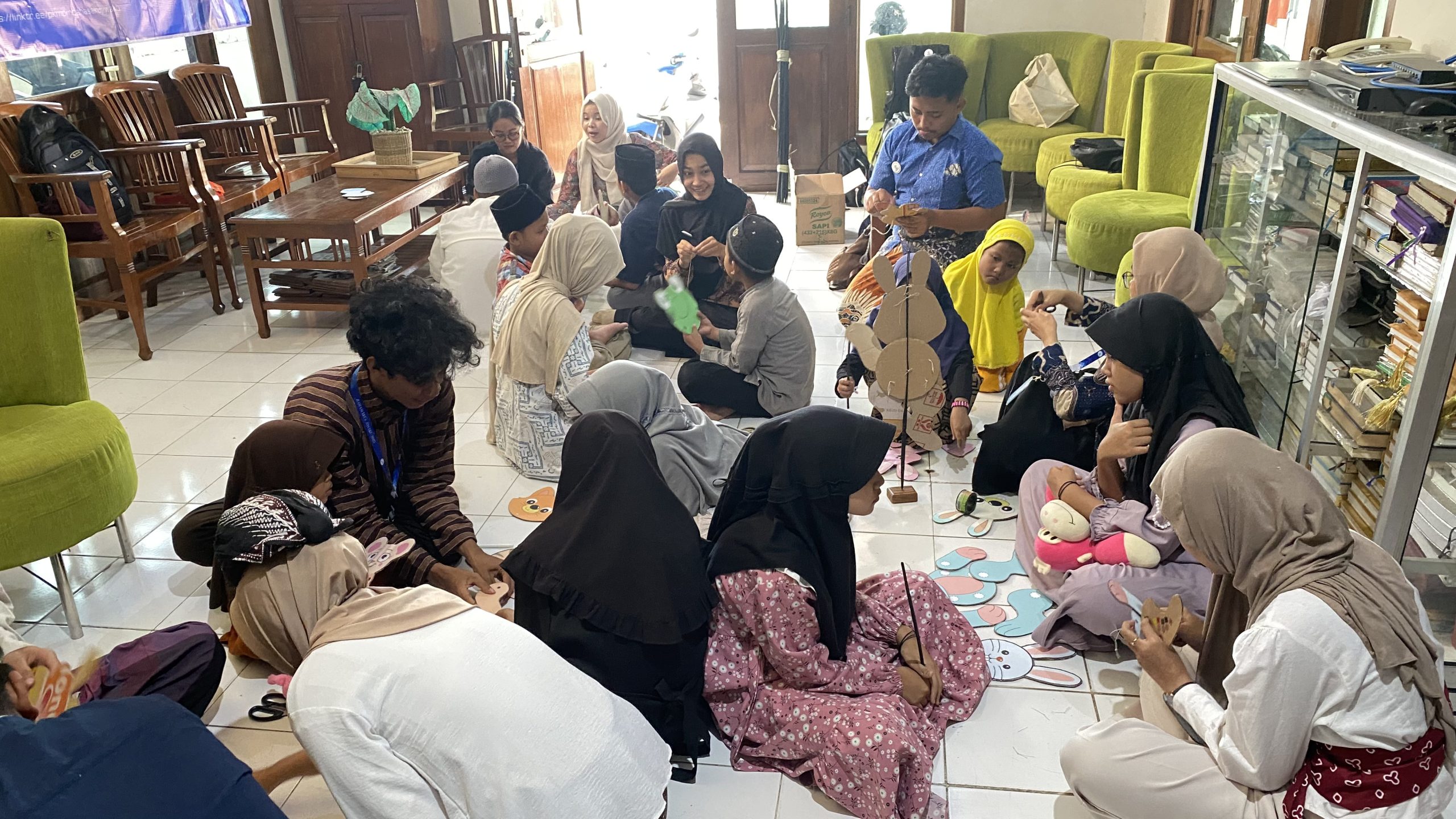
The Rasa Pangrasa activity encourages children to express their emotions and experiences through creative wayang (traditional puppet) art. They not only design and perform with the puppets but also learn to interpret the values behind each character and story. Through this activity, children develop self-awareness, manage emotions positively, and build confidence while fostering an appreciation for local culture. This traditional art-based approach has proven effective in helping children express positive emotions in a fun and educational way.

Additionally, the Narrative Expression activity trains children’s communication and collaboration skills through role-play and drama performance. This activity significantly boosts their confidence and public-speaking abilities.

To complement these sessions, the Daily Emotion Journal provides children with a simple reflective space to write or share their feelings.

“Many children who were initially hesitant to express their emotions are now more open and willing to share their feelings. This marks a positive step toward their emotional well-being,” explained Raihan Adib Ghifari, the program leader.

The program received positive feedback from the orphanage caretakers, who noticed visible improvements in the children’s attitudes.

“They have become more open, confident, and happier in interacting with others,” said one of the caregivers.

The “Bahas(aku), Jiwaku” program demonstrates that language is not merely a tool of communication—it is a bridge for children to understand themselves, develop empathy, and strengthen their psychological well-being.
Related Posts

Leave a Reply

* Kode Akses Komentar:

* Tuliskan kode akses komentar diatas:

GDPR

  • Privacy Policy

Privacy Policy

At unnes.ac.id, the privacy of our visitors is of extreme importance to us. This privacy policy document outlines the types of personal information that is received and collected by unnes.ac.id and how it is used.

Log Files

Like many other Web sites, unnes.ac.id makes use of log files. The information inside the log files includes internet protocol (IP) addresses, type of browser, Internet Service Provider (ISP), date/time stamp, referring/exit pages, and number of clicks to analyze trends, administer the site, track user’s movement around the site, and gather demographic information. IP addresses and other such information are not linked to any information that is personally identifiable.

Cookies

unnes.ac.id uses cookies to store information about visitors’ preferences, to record user-specific information on which pages the site visitor accesses or visits, and to personalize or customize our web page content based upon visitors’ browser type or other information that the visitor sends via their browser.

Third-party ad servers or ad networks use technology in their respective advertisements and links that appear on unnes.ac.id and which are sent directly to your browser. They automatically receive your IP address when this occurs. Other technologies (such as cookies, JavaScript, or Web Beacons) may also be used by our site’s third-party ad networks to measure the effectiveness of their advertising campaigns and/or to personalize the advertising content that you see on the site.

unnes.ac.id has no access to or control over these cookies that are used by third-party advertisers.

You should consult the respective privacy policies of these third-party ad servers for more detailed information on their practices as well as for instructions about how to opt-out of certain practices. unnes.ac.id’s privacy policy does not apply to, and we cannot control the activities of, such other advertisers or web sites.

If you wish to disable cookies, you may do so through your individual browser options. More detailed information about cookie management with specific web browsers can be found at the browsers’ respective websites.

Consent

By using our website, you hereby consent to our privacy policy and agree to its terms.

Update

This Privacy Policy was last updated on: 2023-02-14. Should we update, amend or make any changes to our privacy policy, those changes will be posted here.

Contact Us

If you have any questions, comments, or concerns about our Privacy Policy or our practices with regards to your personal information, please feel free to contact us through the contact form on our website or by emailing us at humas[at]mail.unnes.ac.id.

This Privacy Policy is intended as a general guide to our practices in collecting and using information. If there is any inconsistency between this Privacy Policy and the terms of the Service Agreement or any other terms that may apply to specific services you use, then those specific service terms shall apply.

Terms of Use

By using our website, you agree to abide by this Privacy Policy. If you do not agree with this Privacy Policy, please do not use our website. We reserve the right to update this Privacy Policy from time to time without prior notice. Please review our Privacy Policy periodically to check for changes. Your continued use of our website following the posting of changes to this Privacy Policy means that you accept the changes.

Thank you for reading our Privacy Policy. We are committed to protecting the privacy of our website visitors and will continue to update our Privacy Policy to ensure optimal protection.