UNNES Leads Cross-Sectoral Dialogue to Accelerate SDG Action in Indonesia

Universitas Negeri Semarang > Sustainable Development Goals Universitas Negeri Semarang > SDGS Goals > SDG 17 - Partnerships for the goals > UNNES Leads Cross-Sectoral Dialogue to Accelerate SDG Action in Indonesia

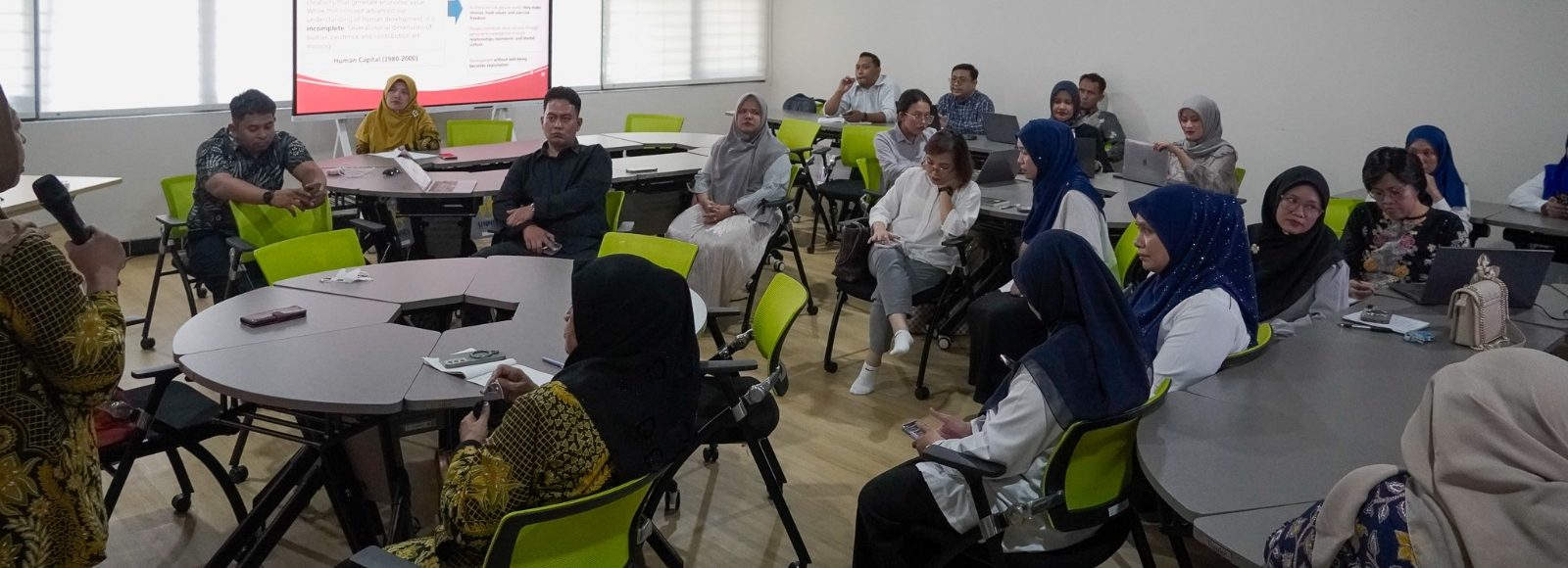
Universitas Negeri Semarang (UNNES) continues to affirm its role as a Conservation University with International Reputation by actively initiating and participating in cross-sectoral dialogues on the Sustainable Development Goals (SDGs). Through structured collaboration with government agencies, NGOs, academia, and youth leaders, UNNES positions itself as a driving force in advancing national sustainability policies and practices.

Institutional Commitment to SDG Dialogue

UNNES has established a formal institutional framework to lead SDG coordination through the UNNES SDGs Center, created under Rector’s Decree No. T/4356/UN37/HK.02/2024. The Center is responsible for coordinating research, education, and community engagement in alignment with the SDGs, while also building networks with government institutions, civil society organizations, and international partners.

“UNNES believes that sustainability cannot be achieved in isolation. Cross-sectoral dialogue allows evidence from research and community practice to directly shape national policy,” stated the Director of the UNNES SDGs Center.

UNNES Hosts the 4th National Student Leaders Sustainability Meeting 2024

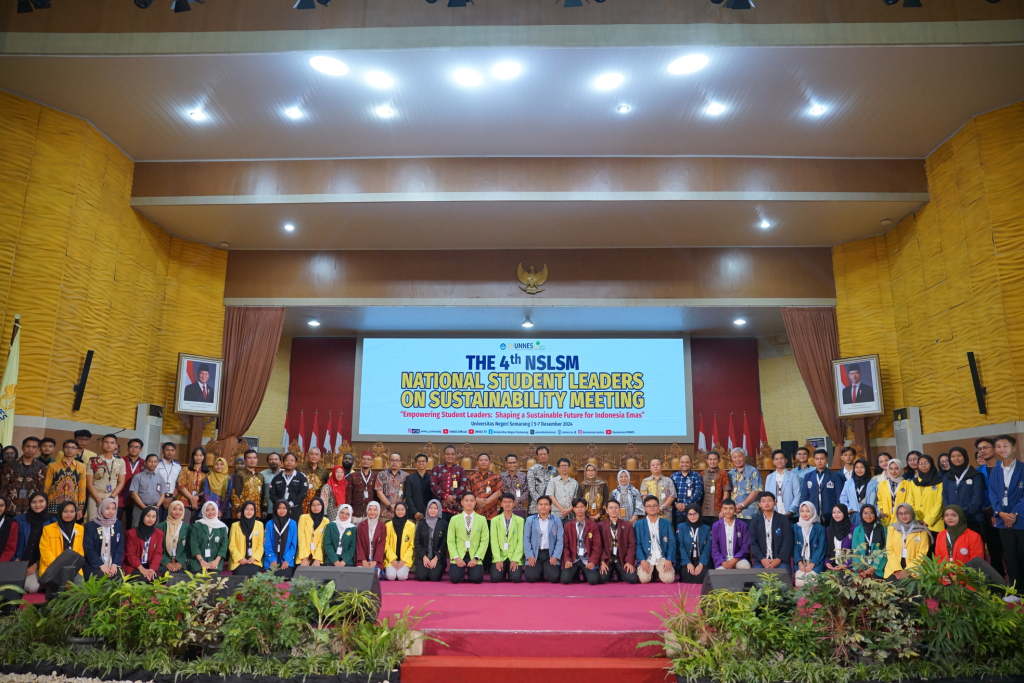
A flagship example of UNNES’s leadership in initiating national SDG dialogues is the 4th National Student Leaders Sustainability Meeting, hosted at the UNNES campus in December 2024.

The event brought together 83 student leaders from 49 universities across Indonesia and international participants from Ghana and Timor-Leste, uniting future changemakers under the theme “Empowering Student Leaders: Shaping a Sustainable Future for Indonesia Emas.”

Jointly organized by the Subdirectorate of Conservation and Universitas Indonesia GreenMetric (UIGM), the conference featured:

  • Panel discussions with experts from BKSDA Central Java, environmental NGOs, and academic institutions;
  • Sustainability workshops and environmental action projects led by student teams;
  • A joint declaration on sustainability leadership, committing universities to green governance and SDG-aligned education.

Photo: Participants of the 4th National Student Leaders Sustainability Meeting 2024 at UNNES.

Through this event, UNNES acted not merely as a host, but as an initiator of inter-sectoral collaboration, aligning academic discourse, youth action, and government policy within one platform.

Collaboration with Government and NGOs

Beyond student forums, UNNES consistently engages in policy-oriented dialogues involving government institutions and NGOs. Examples include:

  • Public Participation Forum on the Draft Criminal Code (RKUHP) with Kominfo and Badan Intelijen Negara (BIN) — focusing on legal modernization and SDG 16: Peace, Justice, and Strong Institutions;
  • Regional SDG Dialogue with Bappeda Central Java — addressing food security, local innovation systems, and legal literacy;
  • Partnership with the Ministry of Environment and Forestry (KLHK) — promoting plastic-free campuses and water conservation;
  • Engagement with UN Information Centre (UNIC) Jakarta — advancing youth SDG literacy campaigns.

These initiatives underscore UNNES’s strategic role as a bridge between policy, education, and community practice, strengthening Indonesia’s collective capacity for sustainable transformation.

Expanding Regional and International SDG Engagement

UNNES’s involvement extends to the regional and international level through collaborations under the UI GreenMetric World University Ranking Network and partnerships with ASEAN and African universities.

The 2024 meeting also welcomed visiting delegates from Kwame Nkrumah University of Science and Technology (Ghana) and Universidade Nacional Timor Lorosa’e (Timor-Leste), establishing new pathways for South-South cooperation on sustainability education.

“This meeting proves that UNNES is not only a participant but also a convener of global SDG dialogues that connect youth, universities, and policymakers,” said the UNNES Vice Rector for Planning and Partnership.
Related Posts

Leave a Reply

* Kode Akses Komentar:

* Tuliskan kode akses komentar diatas:

GDPR

  • Privacy Policy

Privacy Policy

At unnes.ac.id, the privacy of our visitors is of extreme importance to us. This privacy policy document outlines the types of personal information that is received and collected by unnes.ac.id and how it is used.

Log Files

Like many other Web sites, unnes.ac.id makes use of log files. The information inside the log files includes internet protocol (IP) addresses, type of browser, Internet Service Provider (ISP), date/time stamp, referring/exit pages, and number of clicks to analyze trends, administer the site, track user’s movement around the site, and gather demographic information. IP addresses and other such information are not linked to any information that is personally identifiable.

Cookies

unnes.ac.id uses cookies to store information about visitors’ preferences, to record user-specific information on which pages the site visitor accesses or visits, and to personalize or customize our web page content based upon visitors’ browser type or other information that the visitor sends via their browser.

Third-party ad servers or ad networks use technology in their respective advertisements and links that appear on unnes.ac.id and which are sent directly to your browser. They automatically receive your IP address when this occurs. Other technologies (such as cookies, JavaScript, or Web Beacons) may also be used by our site’s third-party ad networks to measure the effectiveness of their advertising campaigns and/or to personalize the advertising content that you see on the site.

unnes.ac.id has no access to or control over these cookies that are used by third-party advertisers.

You should consult the respective privacy policies of these third-party ad servers for more detailed information on their practices as well as for instructions about how to opt-out of certain practices. unnes.ac.id’s privacy policy does not apply to, and we cannot control the activities of, such other advertisers or web sites.

If you wish to disable cookies, you may do so through your individual browser options. More detailed information about cookie management with specific web browsers can be found at the browsers’ respective websites.

Consent

By using our website, you hereby consent to our privacy policy and agree to its terms.

Update

This Privacy Policy was last updated on: 2023-02-14. Should we update, amend or make any changes to our privacy policy, those changes will be posted here.

Contact Us

If you have any questions, comments, or concerns about our Privacy Policy or our practices with regards to your personal information, please feel free to contact us through the contact form on our website or by emailing us at humas[at]mail.unnes.ac.id.

This Privacy Policy is intended as a general guide to our practices in collecting and using information. If there is any inconsistency between this Privacy Policy and the terms of the Service Agreement or any other terms that may apply to specific services you use, then those specific service terms shall apply.

Terms of Use

By using our website, you agree to abide by this Privacy Policy. If you do not agree with this Privacy Policy, please do not use our website. We reserve the right to update this Privacy Policy from time to time without prior notice. Please review our Privacy Policy periodically to check for changes. Your continued use of our website following the posting of changes to this Privacy Policy means that you accept the changes.

Thank you for reading our Privacy Policy. We are committed to protecting the privacy of our website visitors and will continue to update our Privacy Policy to ensure optimal protection.