


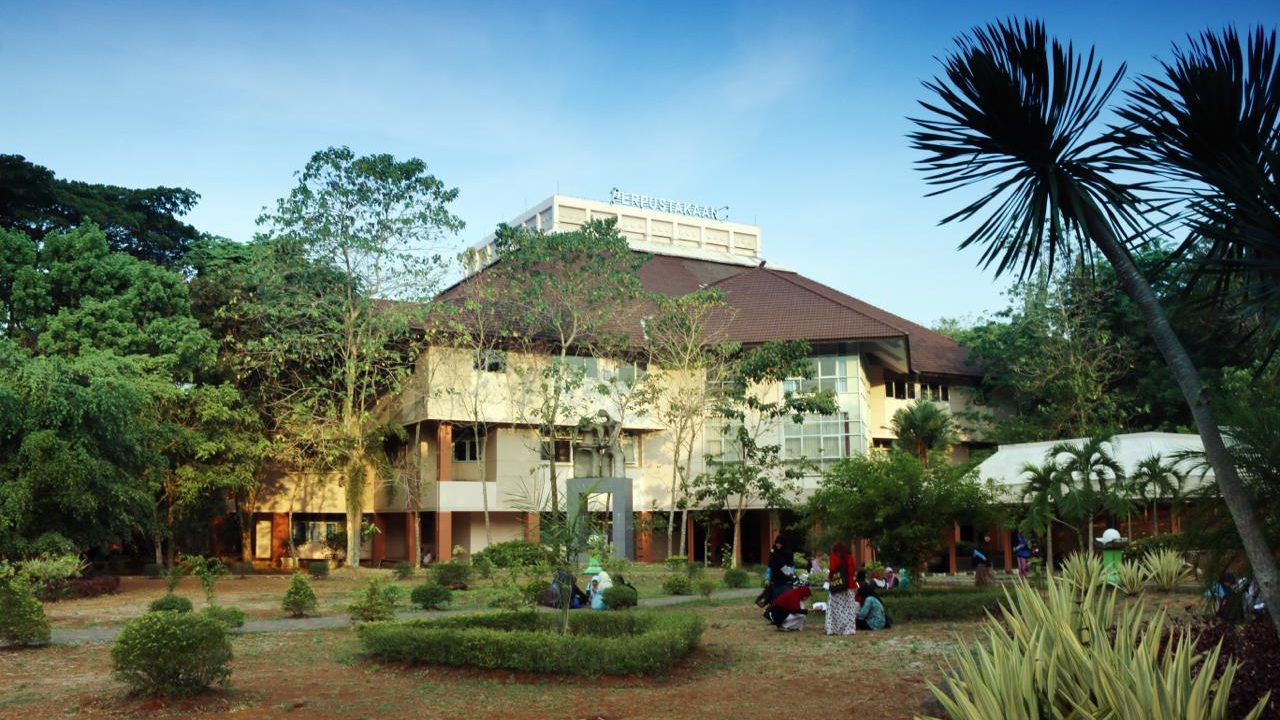
Universitas Negeri Semarang (UNNES) continues to demonstrate its commitment to sustainable development principles by adopting a policy of utilizing brownfield land, areas with pre-existing structures, for the development of new campus facilities. This initiative aligns with UNNES’s vision as a Conservation-Oriented University that emphasizes land-use efficiency and environmental preservation.
The policy aims to minimize the opening of new green areas and to optimize the use of existing spaces to maintain productivity without causing significant ecological impact. Through this approach, UNNES seeks to balance infrastructure development with the conservation of green zones, which are a defining feature of its identity as a conservation campus.
An example of this policy’s implementation can be seen in the construction of the new Faculty of Social and Political Sciences (FISIP) Dean’s Building, which repurposes the structures and location of the former C7 Building and the old Archival Building. This initiative is not only efficient in terms of land use but also reflects the university’s ecological responsibility in its planning and infrastructure development processes.
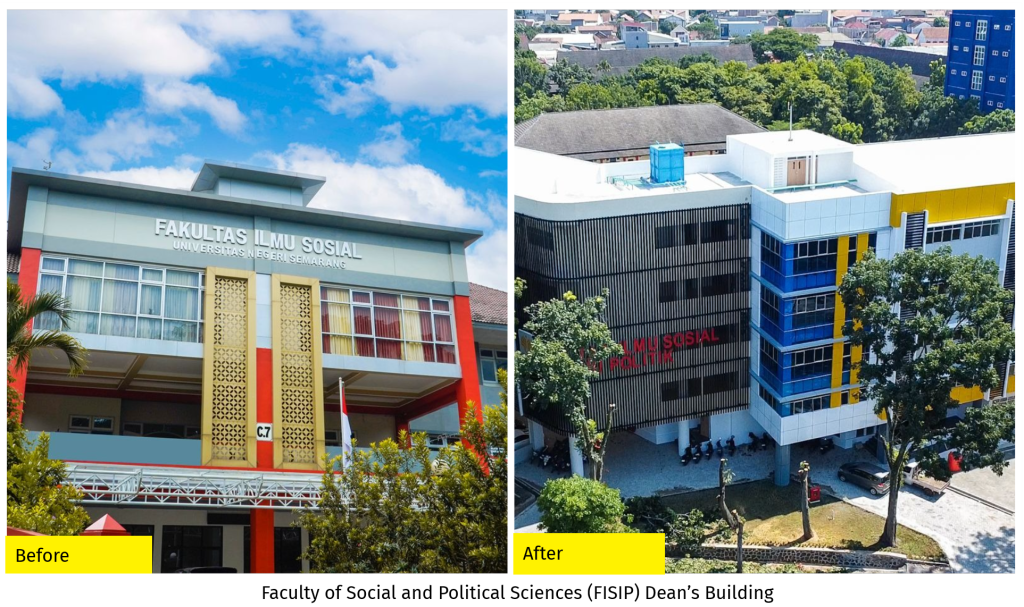
Through the strategy of brownfield land utilization, UNNES strives to reduce the environmental impact of new developments while maintaining the proportion of green open spaces (RTH) across the campus. This approach is expected to serve as a model of best practice for other universities in applying principles of conservation and sustainability in campus management.
“Development at UNNES is not solely oriented toward modernization of facilities, but also toward maintaining ecological balance and resource efficiency. By reusing existing land, we contribute to harmonizing progress with environmental preservation,” stated a UNNES official.
Through this initiative, UNNES reaffirms its commitment to being a pioneer in implementing the eco-campus concept in Indonesia—pursuing environmentally responsible, sustainable, and conservation-based development.