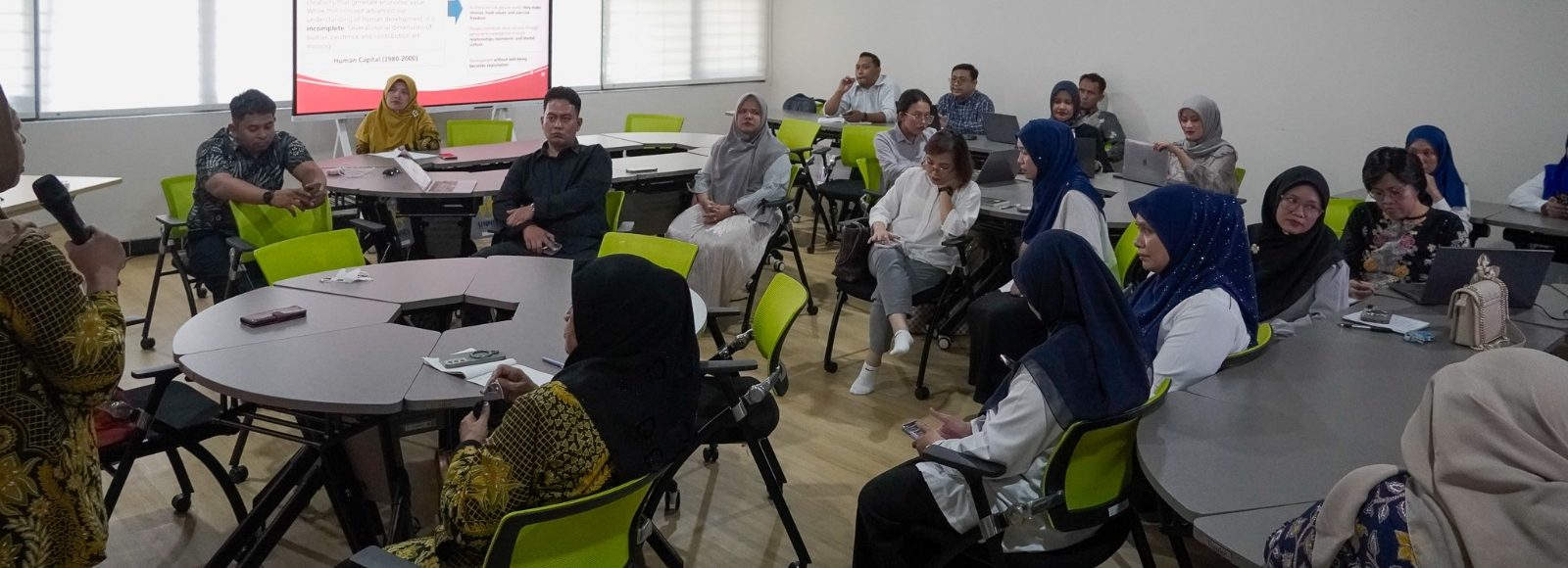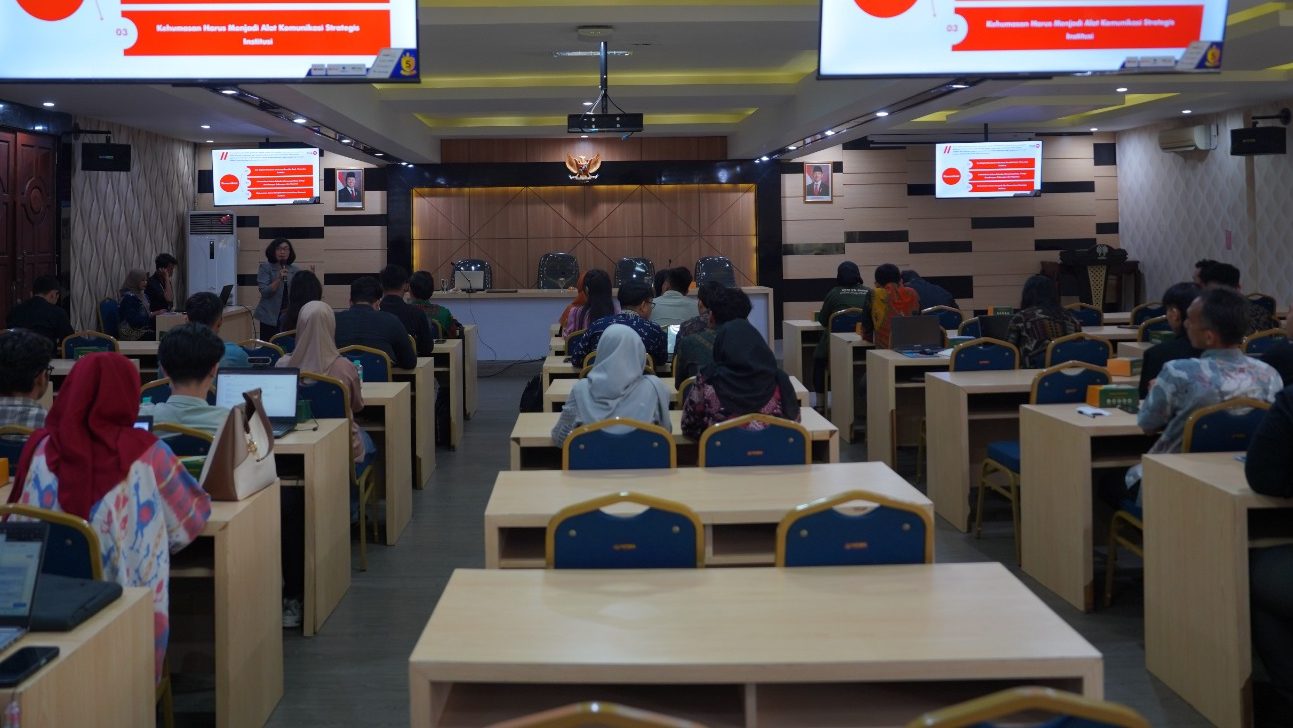
Universitas Negeri Semarang (UNNES) held a Workshop on Handling Ethical and Disciplinary Violations among Students on Wednesday (06/11) in Room 405, Building H, 4th Floor. The workshop aimed to provide concrete guidelines on addressing ethical and disciplinary breaches, covering the identification of violations, investigative procedures, and the imposition of sanctions. The event was attended by Vice Deans for Academic and Student Affairs from each faculty, chairs and members of the University, Faculty, and Postgraduate Student Ethics and Conduct Committees, as well as the Ethics Document Verification Team.
The workshop was officially opened by Mulyo Widodo, S.Pd., M.M., Director of Academic, Student Affairs, and Conservation (DAKK) at UNNES. In his opening remarks, the Director emphasized the importance of implementing ethics and discipline across the academic community in order to foster a conducive campus environment that supports the realization of the university’s Tridharma (Three Pillars of Higher Education).
“It is expected that representatives from each faculty will understand, uphold, and implement the values embedded in this regulation,” he stated.
The workshop featured presentations by Muhammad Azil Maskur, S.H., M.H., Chair of the University Ethics Council, and Dr. Cahya Wulandari, S.H., M.Hum., Head of the UNNES Legal Office. Both speakers provided a comprehensive review of UNNES Rector’s Regulation Number 124 of 2024.
In their presentation, it was conveyed that the general principles underlying student ethics and conduct include values such as the pursuit of knowledge for truth, academic freedom, harmony, responsibility, honesty, justice, compassion, exemplary conduct, discipline, courtesy, non-discrimination, and mutual respect.
This regulation is intended to shape students’ character in alignment with academic ethical standards and to support the creation of a harmonious and productive campus life. The socialization concluded with an interactive discussion between the speakers and participants.
This initiative directly supports SDG 4-Quality Education, by ensuring that all learners acquire the knowledge and skills necessary to promote sustainable development—including through the promotion of a culture of peace and non-violence, global citizenship, and appreciation of cultural diversity, as well as SDG 16-Peace, Justice and Strong Institutions, by promoting decision-making that is responsive, inclusive, participatory, and representative.