Central Java, 2025 — The Faculty of Law at Semarang State University (UNNES) has once again demonstrated its commitment as an impactful campus by organizing a community service program entitled “Mapping Economic Empowerment and Legal Assistance for Prayer and its Implementation for Converts in Central Java.” This program will run for eight months and is a tangible manifestation of the role of the UNNES Faculty of Law in strengthening social, religious, and community empowerment contributions, in line with the spirit of FH Menggema, Digdaya, and Berdaulat.
The program focuses on the convert community affiliated with the Convert Center of the Indonesian Ulema Council (MUI) of Central Java, considering that this group still faces complex challenges such as limited understanding of worship, inability to read the Hijaiyah alphabet, and economic pressure due to changes in belief. These conditions necessitate intensive assistance so that converts can practice their religion properly while building independence in life.
The activities were managed by a team of lecturers from the Faculty of Law, UNNES, namely Baidhowi, S.Ag., M.Ag.; Dr. Dian Latifiani, S.H., M.H.; Andry Setiawan S.H., M.H.; and Isworo Indriati, S.E., and supported by a team of students. Collaboration with the MUI Central Java Convert Center enabled the program to reach a network of convert homes in 35 districts/cities, making it more effective.
Initial observations revealed various challenges faced by converts, ranging from limited ability to read the Arabic alphabet to only being able to perform the movements of prayer without recitation. In addition, economic problems often arise due to the loss of family support or employment. Through this program, FH UNNES provides Islamic law education, guidance on understanding and practicing prayer in accordance with Sharia law, and strengthening zakat literacy based on Law No. 23 of 2011 and QS. At-Taubah verse 60 so that converts understand their rights and position as mustahiq.
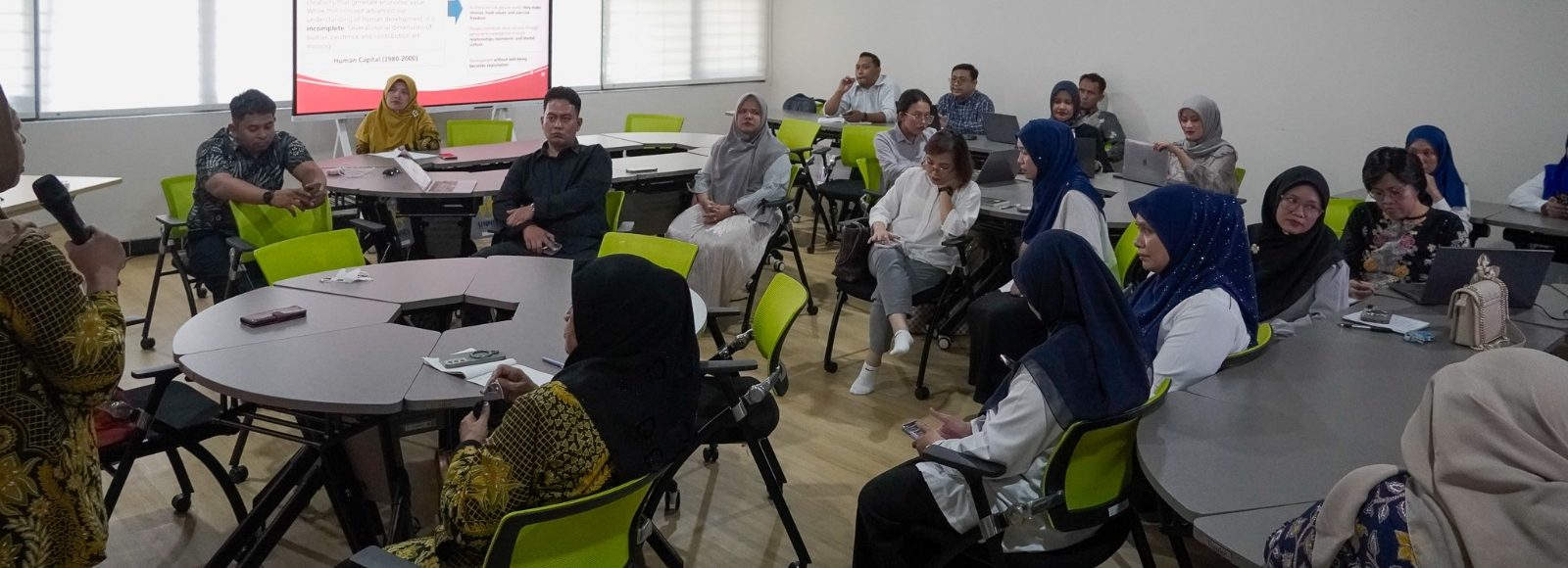
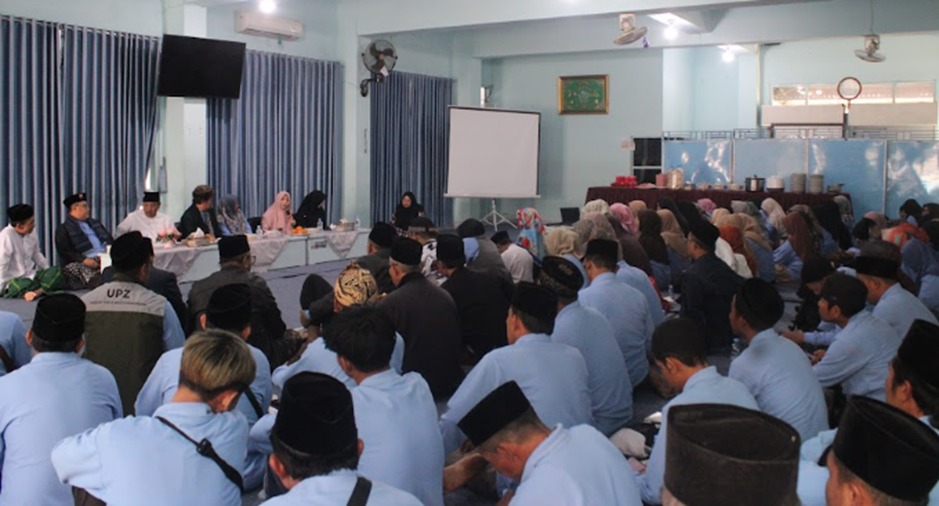
Activities are carried out in the form of lectures, practices, discussions, and intensive offline and online guidance. In addition to religious guidance, the team also conducts economic mapping to identify the business potential of converts. A total of 48 convert entrepreneurs were involved in the 2025 mapping, with businesses predominantly in the grocery, service, livestock, and culinary sectors. Various business challenges such as marketing, production, and skills were also identified as the basis for developing a more comprehensive empowerment strategy.
This program received positive responses from converts who enthusiastically participated in the activities. The Central Java MUI Convert Center emphasized that this kind of assistance is very important in providing moral, social, and religious protection. The collaboration between FH UNNES, MUI, and BAZNAS is expected to produce sustainable solutions for improving the quality of life of converts in Central Java.
This initiative directly supports the achievement of several Sustainable Development Goals (SDGs). The contribution to SDG 16 (Peace, Justice and Strong Institutions) is realized through strengthening Islamic legal literacy and efforts to protect and empower vulnerable groups, thereby creating a more just and equitable social order. In addition, this initiative is also in line with SDG 4 (Quality Education) because it encourages the implementation of inclusive, quality religious education that is able to improve individuals’ understanding and capacity in a sustainable manner. Furthermore, support for SDG 8 (Decent Work and Economic Growth) is reflected in efforts to map the potential and economic empowerment of converts, which aims to increase economic independence, open up decent job opportunities, and encourage inclusive economic growth.
With the implementation of this program, FH UNNES once again reaffirms its position as a faculty that is Resounding in contribution, Powerful in empowerment, and Sovereign in strengthening legal and social institutions in society.