Universitas Negeri Semarang (UNNES) consistently positions itself as a higher education institution committed to equity, inclusion, and social mobility. For UNNES, providing access to higher education for students from low-income households is only the first step. The university further commits to ensuring that these students complete their studies successfully and graduate on time. By setting a 100% graduation target for students from the bottom income quintile, UNNES demonstrates that poverty should never prevent talented individuals from achieving a university degree. This commitment is formally reinforced through Rector’s Regulation No. 66 of 2023 on the Obligation for Scholarship Recipients to Graduate on Time. The regulation mandates that all scholarship students complete their studies within the standard study duration—four years for undergraduate programs, three years for diploma programs, and according to the established standards for master’s and doctoral programs.
The policy aims to:
- Encourage scholarship recipients to complete their studies on time;
- Ensure efficient and accountable use of scholarship funds;
- Provide opportunities for other students in need of financial support.
Under this regulation, students who fail to graduate on time without acceptable reasons (such as serious illness or natural disasters) may be required to return part or all of their scholarship funds. Academic evaluations are conducted each semester by the faculties and the student affairs bureau to monitor progress and determine continued eligibility.
Graduation Performance and Completion Targets
UNNES has gone further by embedding completion targets into its policies for low-income students. The university aims for on-time graduation rates above 91,23% among scholarship recipients and disadvantaged students.
Evidence from 2024 shows clear progress:
- Average study duration improved compared to the previous year. Diploma students graduated in 7 semesters, undergraduate students in 8 semesters, master’s students in 6 semesters, and doctoral students in 9 semesters.
- Thesis completion for Diploma and Undergraduate programmes averaged 2 semesters, as students typically begin supervision early (semester 5 for Diploma, semester 7 for Undergraduate).
- These improvements are supported by the Integrated Academic Information System (Sikadu), which manages supervision, allowing effective and efficient coordination between students and supervisors. This system ensures that the thesis process does not delay graduation.
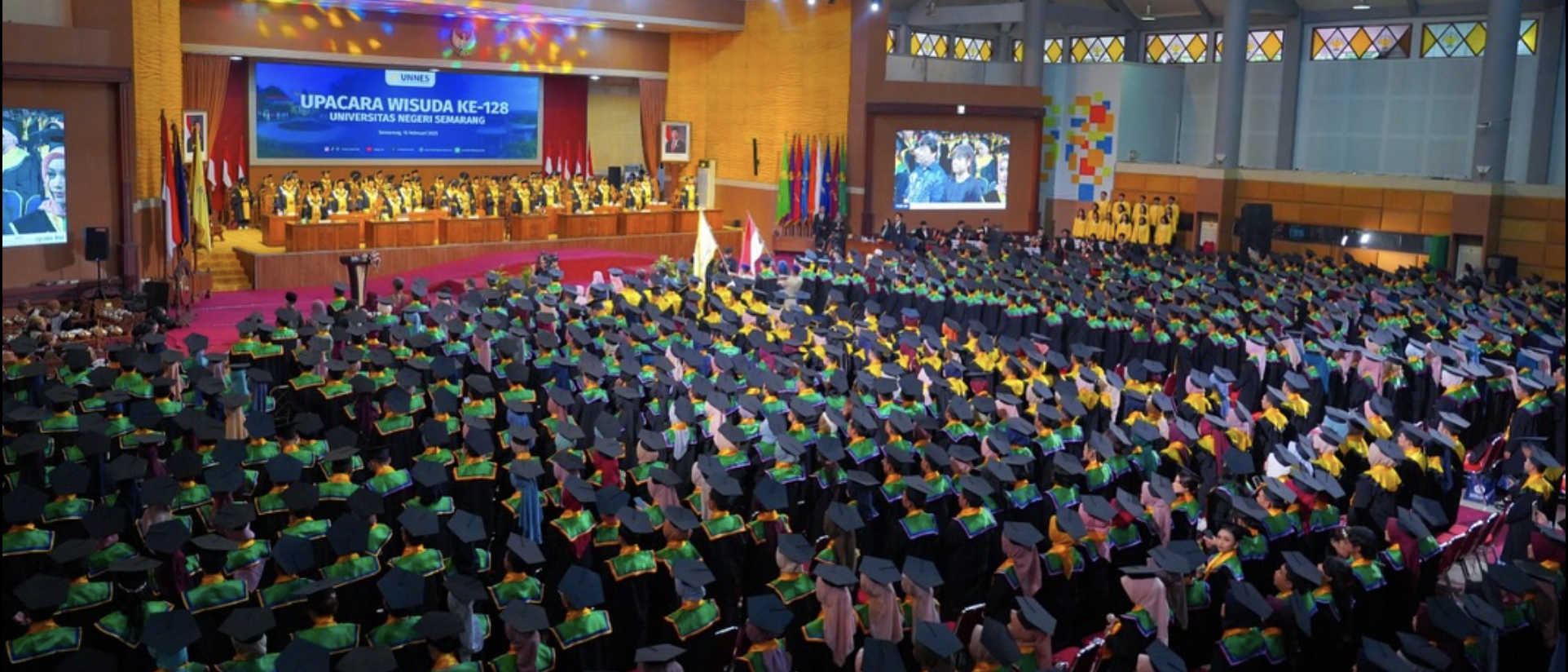
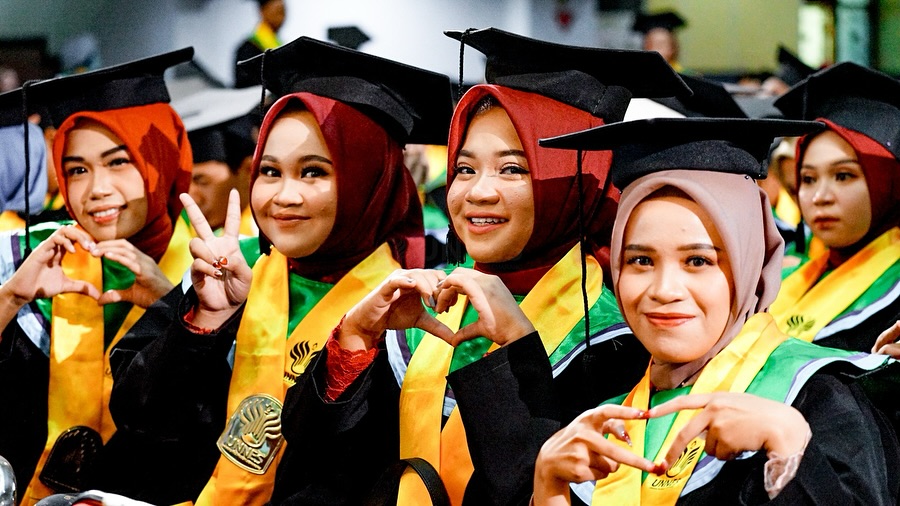
In 2024, UNNES organized nine graduation ceremonies (Period 119–127), celebrating 8,921 graduates across all study levels. These outcomes reflect not only high enrolment but also successful completion, showing that UNNES’s policies directly translate access into graduation.
Holistic Support Mechanisms
To reach the 100% graduation target, UNNES applies a holistic support framework that combines:
- Continuous financial aid through scholarships, tuition reductions, and living stipends.
- Academic monitoring and mentoring for KIP-Kuliah and low-UKT students, ensuring progress is tracked and remedial support is provided when needed.
- Counselling and career guidance to address psychological, social, or personal challenges that may hinder completion.
- Special inclusion policies for vulnerable groups, including students from remote or disadvantaged regions, refugees, and displaced students.
UNNES’s commitment goes beyond opening the door of opportunity—it guarantees that students walk across the graduation stage. In this way, UNNES affirms its role as an engine of social mobility, reducing poverty through education and creating a brighter future for all.