Universitas Negeri Semarang (UNNES), through the Business Incubator Unit (Inkubator Unit Bisnis – IUB) under the Institute for Research and Community Service (LPPM), has established a robust system to nurture financially and socially sustainable entrepreneurship. The IUB functions as a bridge between academia, industry, and the community, transforming innovative ideas into viable businesses that create social and environmental value.
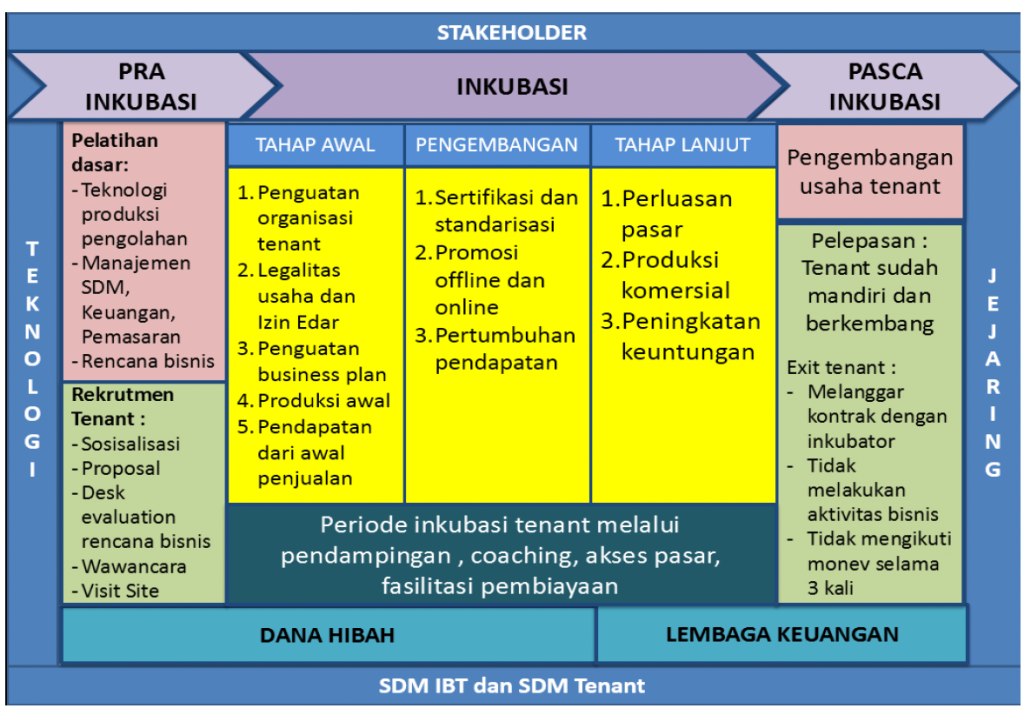
The IUB Business Model is structured into three stages — Pre-Incubation, Incubation, and Post-Incubation.
- Pre-Incubation Stage: This stage focuses on identifying potential entrepreneurs from the UNNES community and the local area. Participants undergo entrepreneurship training, business model workshops, and mentoring to refine their ideas. They receive support in market analysis, customer discovery, and value proposition design.
- Incubation Stage: Over a period of one to two years, tenants receive intensive guidance through business coaching, access to financial support, marketing strategy development, product prototyping, and intellectual property protection. This stage aims to transform ideas into operational businesses.
- Post-Incubation Stage: Graduated tenants are assisted in accessing investors, business partnerships, and export opportunities. They continue to receive periodic mentoring to ensure business continuity and growth.
The focus areas of the UNNES Business Incubator include Information and Communication Technology (ICT) and Food and Health Innovation.
The ICT division supports start-ups developing digital platforms, software solutions, and creative media, while the Food and Health division emphasizes innovation in nutrition, local food products, herbal health, and sustainable packaging.
The incubator occupies a total space of 803 m² at the UNNES LPPM complex, equipped with co-working offices, laboratories (chemistry, nutrition, engineering, and computer labs), training halls, meeting rooms, and consultation spaces. These facilities are designed to support research commercialization and prototype development. Tenants also benefit from free internet access, business consulting, legal assistance, and financial facilitation.
Collaboration lies at the heart of the IUB’s success. The incubator partners with government agencies, MSME and cooperative development centers, private investors, and banks to ensure its tenants have access to the broader entrepreneurial ecosystem. The IUB has also received institutional grants from the Ministry of Research and Higher Education (Ristekdikti) to enhance its infrastructure and services.
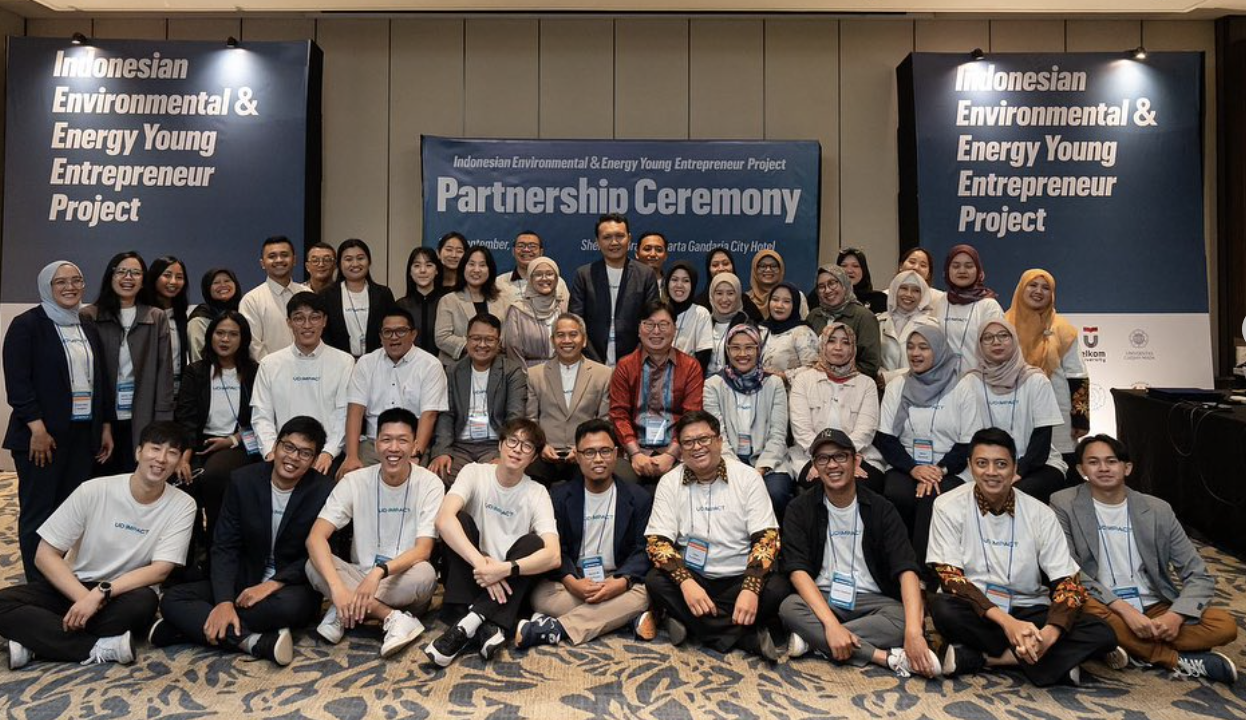
Notable success stories from IUB include collaborations with UD Impat Korea in the Indonesian Environmental & Energy Young Entrepreneur Project and the development of eco-innovation start-ups such as Energel, Mixzama, and Kopi Konservasi Nusantara, which promote sustainable practices and community empowerment.
Through this model, the UNNES Business Incubator has positioned itself as a center of excellence for sustainable business innovation in Central Java. It not only empowers students but also provides a platform for local communities to transform creative ideas into impactful, environmentally conscious enterprises — contributing to inclusive economic growth and social development in Indonesia.