Universitas Negeri Semarang (UNNES) continues to demonstrate its commitment as a Conservation-Oriented University by implementing concrete measures to increase the percentage of sustainable transportation use within its campus. This initiative is part of UNNES’s broader strategy to create a green campus that is environmentally friendly, low-emission, and energy-efficient.
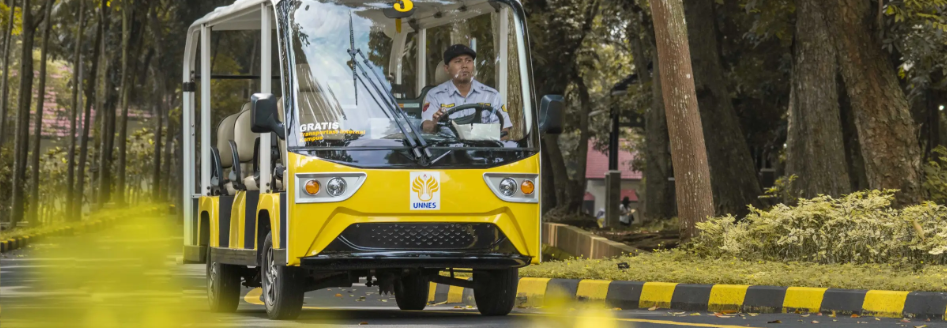
As part of this commitment, UNNES has provided 20 campus shuttle units that are accessible to the public, enabling convenient transportation across all areas of the campus. This service aims to minimize the use of private vehicles and promote environmentally friendly mobility among the academic community.
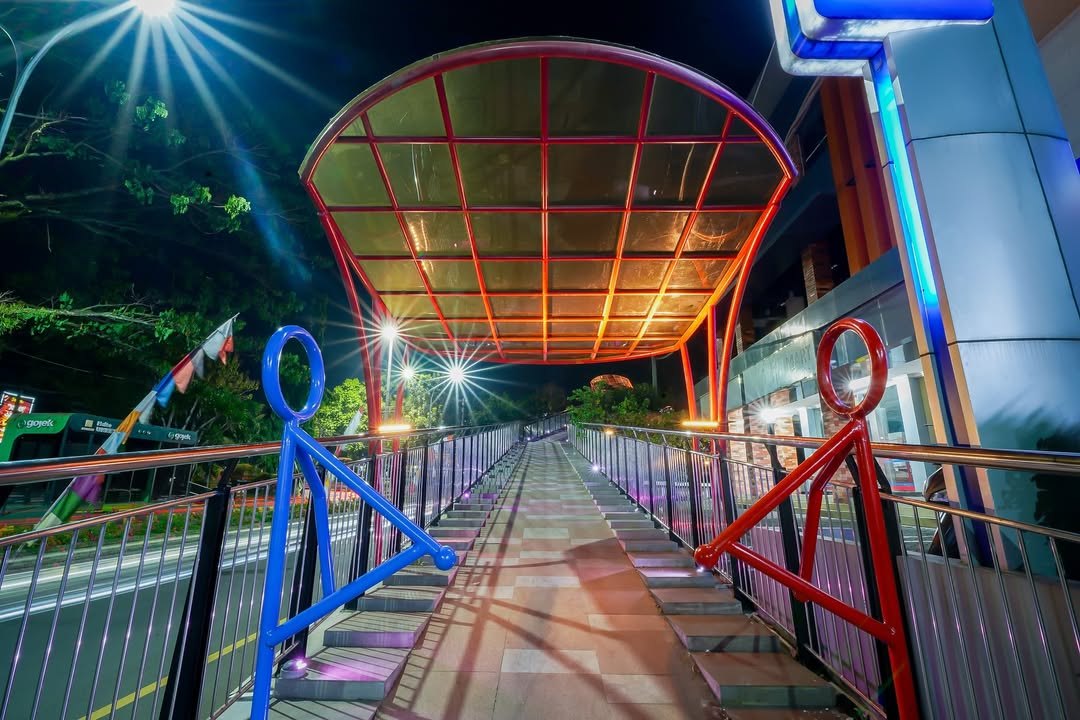
In addition to shuttle services, UNNES has developed safe and comfortable bicycle and pedestrian lanes throughout the campus area to encourage lecturers, staff, and students to switch to non-motorized transportation modes. In several locations, such as the KWU Building area, the university has also implemented a paid parking system as part of its effort to reduce private vehicle use within the campus.
UNNES has also established collaborations with online transportation services (Grab and Gojek) by providing designated pick-up and drop-off zones at strategic campus points. This initiative helps reduce traffic congestion and parking demand within the university area.
To further support the use of eco-friendly vehicles, UNNES has prepared special parking areas for bicycles and is gradually developing electric vehicle (EV) charging stations in several parts of the campus. Moreover, priority parking spaces are provided for energy-efficient vehicles as a form of appreciation for community members who actively contribute to energy and environmental conservation.
Beyond physical infrastructure, UNNES actively promotes the “Green Transportation” campaign to educate the academic community about the importance of sustainable mobility. This campaign has become an integral part of the university’s growing culture of conservation.
Through these various innovations, UNNES strives to become a pioneer in implementing green transportation systems in Indonesian higher education institutions. These efforts align with UNNES’s vision to foster a sustainable academic environment rooted in conservation values and contribute to reducing carbon emissions at the national level.