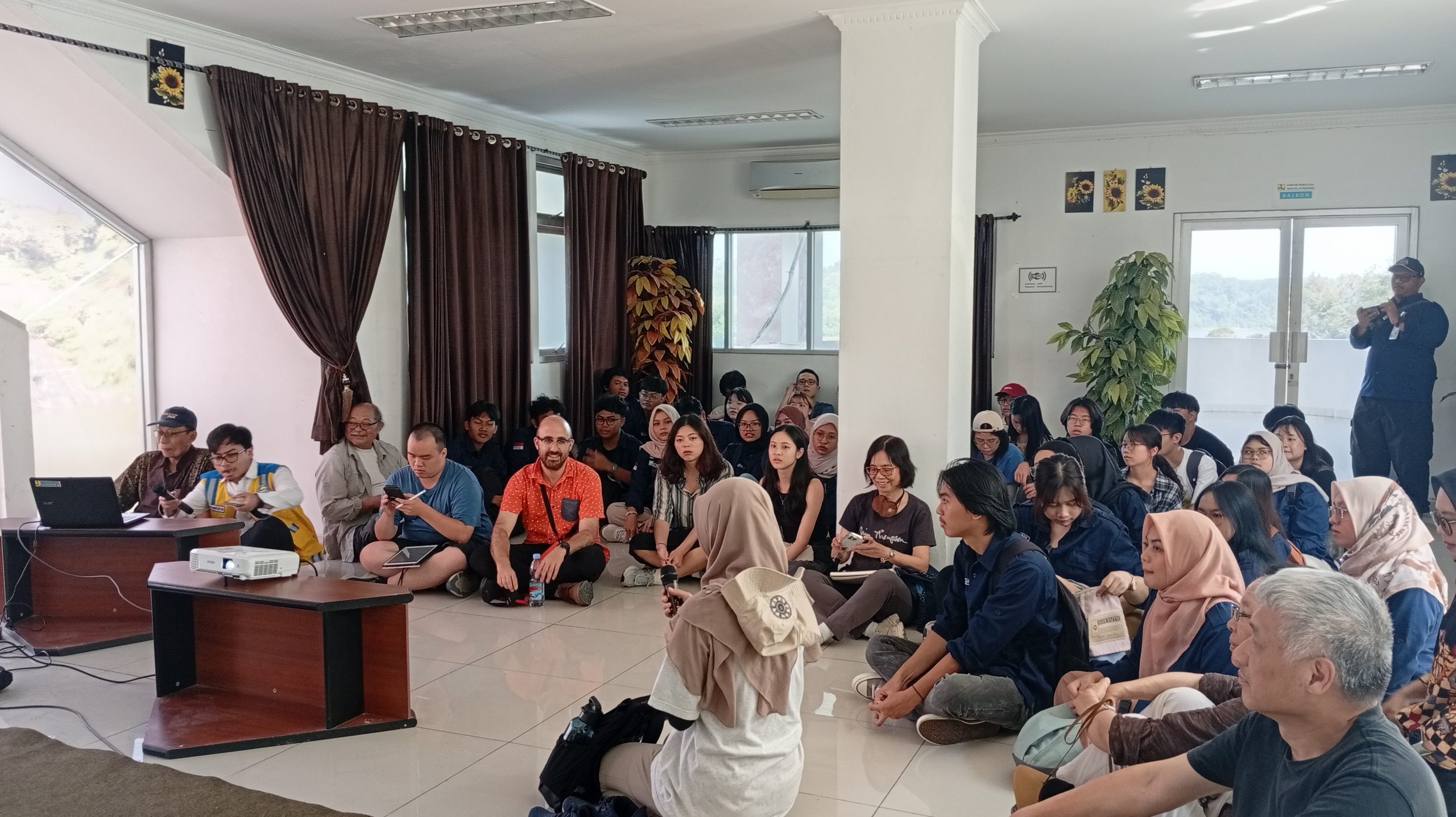
To strengthen students’ understanding of sustainable water resource management, the Geography Study Program of Universitas Negeri Semarang (UNNES) collaborated with National Taiwan Normal University (NTNU) to conduct a Study on Sustainable Water Use at the Jatibarang Reservoir in Semarang. The activity involved 25 students and 6 lecturers from NTNU, alongside students and lecturers from UNNES Geography. The program began with a field orientation around the reservoir, followed by a briefing by representatives from the River Basin Management Office (Balai Besar Wilayah Sungai), which oversees dam operations.
During the presentation, participants gained in-depth insights into the history, functions, and strategic role of the Jatibarang Dam, which has been operational since 2015. Constructed over four years, the dam is now recognized as a National Vital Object. It serves as a clean water reserve, a hydropower generator, and a flood control system for the city of Semarang. With a capacity of 20.4 million cubic meters, the dam can reduce up to one-third of flood risks in the city and supplies clean water for Semarang’s main water utility (PDAM). The reservoir is fed by three key rivers: Kali Kripik, Kali Kreo, and Kali Garang.
This initiative is a practical embodiment of the Sustainable Development Goals (SDGs), particularly Goal 6 (Clean Water and Sanitation) and Goal 13 (Climate Action). By educating young generations from two countries about the importance of water conservation and disaster management technologies based on natural resources, the program strengthens international collaboration and instills global environmental awareness. As part of UNNES’s vision as a conservation university, this study reinforces the institution’s academic commitment to equitable, inclusive, and sustainable development.