Universitas Negeri Semarang (UNNES), as a Conservation University, has reinforced its environmental stewardship by implementing a watershed management strategy tailored to the ecological diversity of rivers across Semarang. This initiative covers the Kaligarang River (DAS Kaligarang), Kreo River, Tapak River, and Babon River, integrating scientific monitoring, community collaboration, and international partnerships to safeguard aquatic ecosystems.
Water Quality and Biodiversity Monitoring
UNNES researchers conduct regular assessments of water quality, measuring parameters such as temperature, pH, turbidity, Dissolved Oxygen (DO), Chemical Oxygen Demand (COD), and nutrient concentrations (nitrate and phosphate). These studies provide critical insights into pollution levels and ecosystem health.
In parallel, UNNES monitors aquatic biodiversity, focusing on species such as ikan mas (carp), small native fish, and riparian vegetation. Biological indicators are used alongside physicochemical data to evaluate ecosystem resilience and guide conservation strategies.
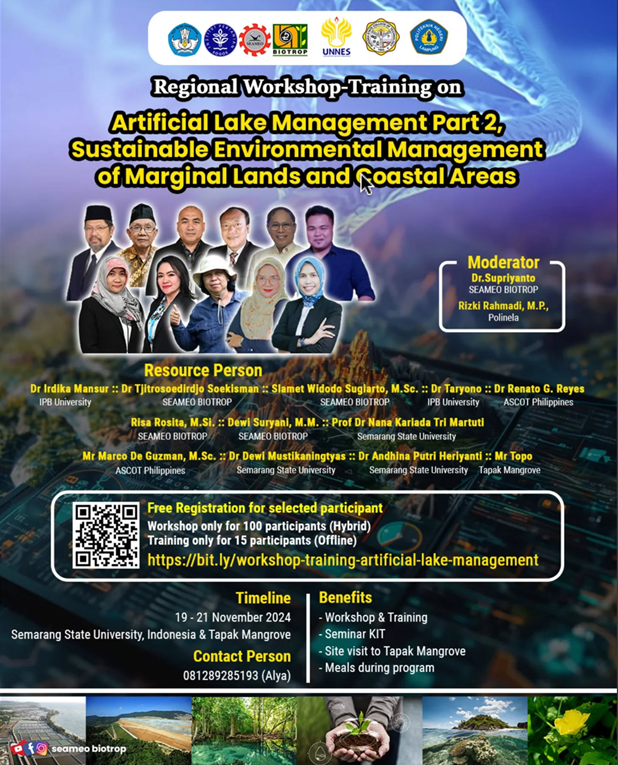
Collaboration with BINTARI Foundation and SEAMEO Biotrop
UNNES collaborates with the BINTARI Foundation, a local NGO, and SEAMEO Biotrop, a regional research center, to monitor small native fish populations including baung fish, nilem, and wader. These species serve as key indicators of river health and biodiversity. The partnership strengthens community-based conservation and integrates local ecological knowledge into scientific research (Bintari Foundation).
Integrated Watershed Management
The watershed strategy also emphasizes riparian vegetation restoration and community engagement. UNNES works with residents to manage water bodies as rainwater reservoirs, flood prevention systems, and biodiversity habitats. International collaborations, such as with NTNU Taiwan, further enhance research on urban flood governance and sustainable water use.
Research and Policy Integration
Supporting studies, such as those published on flood anticipation in Kali Garang (Neliti Publication), provide evidence-based recommendations for watershed governance. These findings are integrated into UNNES’s Conservation University framework, ensuring that academic research informs policy and community practices.