TEACHER’S DAY SEMINAR “Strengthening Education as the Nation’s Moral Compass”

Universitas Negeri Semarang > Sustainable Development Goals Universitas Negeri Semarang > SDGS Goals > SDG 17 - Partnerships for the goals > TEACHER’S DAY SEMINAR “Strengthening Education as the Nation’s Moral Compass”

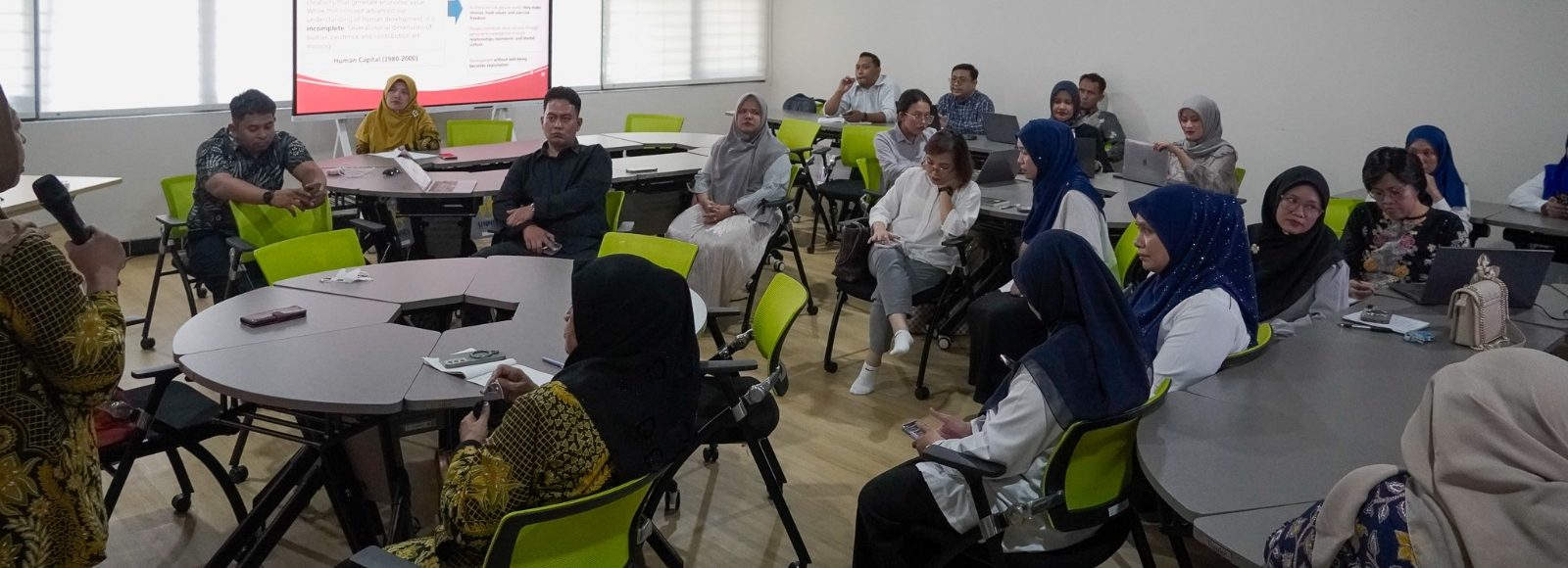
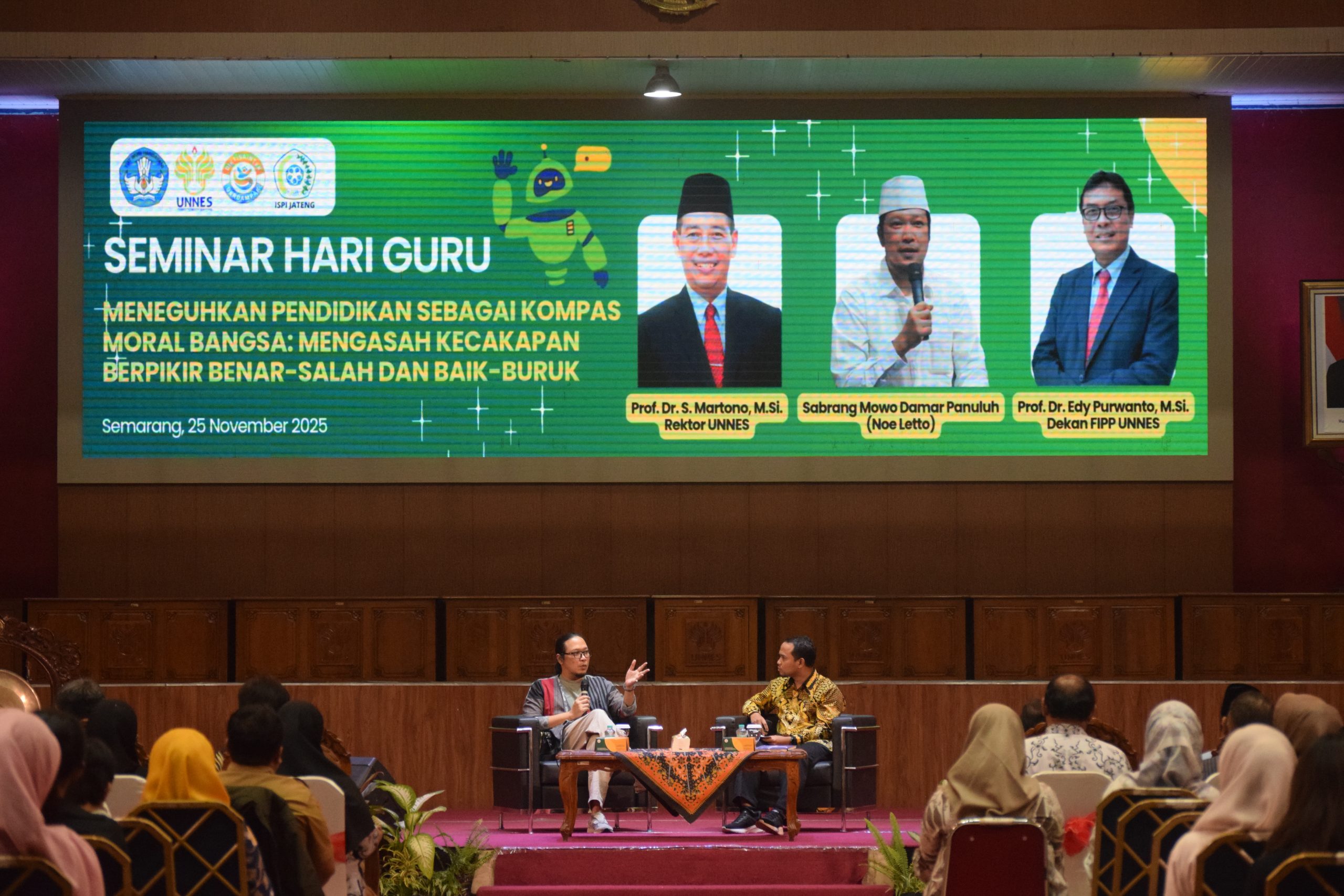
The Faculty of Education and Psychology at Semarang State University (UNNES) held a seminar titled “Strengthening Education as the Nation’s Moral Compass: Sharpening Right-Wrong and Good-Evil Thinking Skills.” The event, held in the UNNES Auditorium, commemorated National Teachers’ Day, which falls on November 25, 2025.

The seminar featured Sabrang Mowo Damar Panuluh, better known as Noe Letto, as the keynote speaker. The event was attended by various groups, including university leaders, UNNES lecturers, representatives from the City/Regency Education Offices in Central Java, ISPI (Indonesian Association of Education Graduates), principals and teachers from Semarang City, deans of FKIP (Teaching and Education Faculty) from across Central Java, educational associations, and undergraduate education students.

In his presentation, Sabrang emphasized that education is an essential and contextual aspect because every nation has its own concept of education. He stated that education is not solely the responsibility of the government, but of the entire nation.

“A nation gives birth to a state, and the state then forms a government. Education cannot be the sole responsibility of teachers; families and communities are also ecosystems within education itself,” he said.

Citing the definition of education in the Big Indonesian Dictionary (KBBI), Sabrang stated that the primary goal of education is to change behavior. This task, he argued, carries significant moral weight, similar to the task of the prophets. He emphasized the need to reexamine the role of teachers in the educational process.

“The teacher’s job is to broaden children’s horizons, so they have perspective and understand the consequences,” he emphasized. He added that being a teacher is not easy because every teacher’s actions have the potential to be imitated by students. The task of education, he continued, is to teach cause and effect, provide experiences of cause and effect, and help students predict cause and effect.

Sabrang also touched on the long history of education in Indonesia. He explained that since the Hindu era, the educational concept of Asram a place for “exhausting oneself” has been known, which later inspired the Islamic boarding school (pesantren) model in the archipelago.

He further emphasized the important role of universities as the vanguard in advancing education. He believed that universities are centers of experimentation that enable the development of science. With scientific advancements, the quality of education is expected to improve, in line with one of the Sustainable Development Goals.

In conclusion, Sabrang emphasized that education should not stop at mastering cognitive aspects but also needs to address behavioral aspects. Behavioral change is best achieved through modeling. Instinctively, humans learn first through modeling before using other methods. He argued that modeling is the most effective way to transfer values, as the primary goal of education is not simply to convey information, but rather to instill values.

“Education is the best method for transferring knowledge and values,” he concluded.
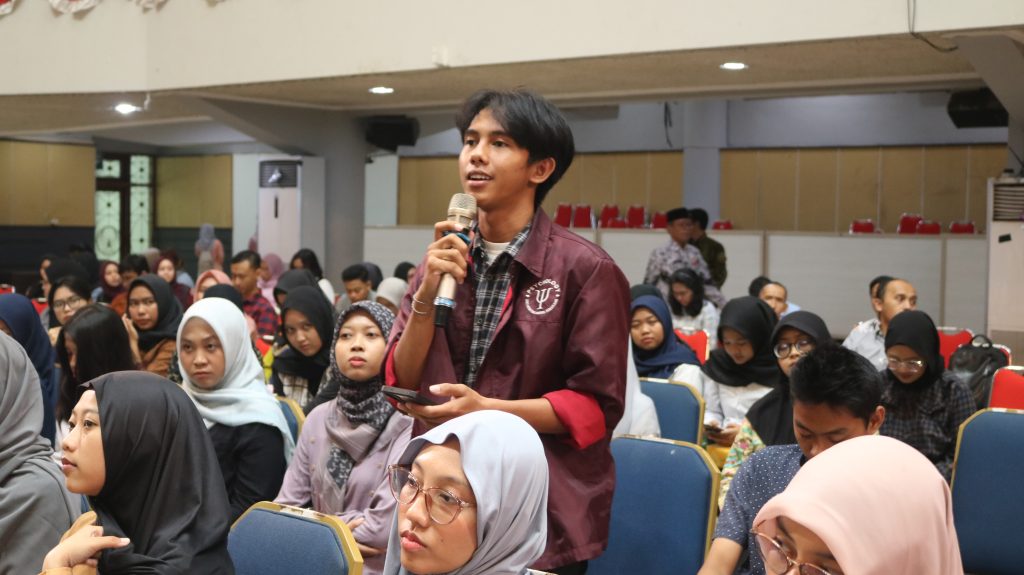
Question and answer session
Source: UNNES’ documentation
Related Posts

Leave a Reply

* Kode Akses Komentar:

* Tuliskan kode akses komentar diatas:

GDPR

  • Privacy Policy

Privacy Policy

At unnes.ac.id, the privacy of our visitors is of extreme importance to us. This privacy policy document outlines the types of personal information that is received and collected by unnes.ac.id and how it is used.

Log Files

Like many other Web sites, unnes.ac.id makes use of log files. The information inside the log files includes internet protocol (IP) addresses, type of browser, Internet Service Provider (ISP), date/time stamp, referring/exit pages, and number of clicks to analyze trends, administer the site, track user’s movement around the site, and gather demographic information. IP addresses and other such information are not linked to any information that is personally identifiable.

Cookies

unnes.ac.id uses cookies to store information about visitors’ preferences, to record user-specific information on which pages the site visitor accesses or visits, and to personalize or customize our web page content based upon visitors’ browser type or other information that the visitor sends via their browser.

Third-party ad servers or ad networks use technology in their respective advertisements and links that appear on unnes.ac.id and which are sent directly to your browser. They automatically receive your IP address when this occurs. Other technologies (such as cookies, JavaScript, or Web Beacons) may also be used by our site’s third-party ad networks to measure the effectiveness of their advertising campaigns and/or to personalize the advertising content that you see on the site.

unnes.ac.id has no access to or control over these cookies that are used by third-party advertisers.

You should consult the respective privacy policies of these third-party ad servers for more detailed information on their practices as well as for instructions about how to opt-out of certain practices. unnes.ac.id’s privacy policy does not apply to, and we cannot control the activities of, such other advertisers or web sites.

If you wish to disable cookies, you may do so through your individual browser options. More detailed information about cookie management with specific web browsers can be found at the browsers’ respective websites.

Consent

By using our website, you hereby consent to our privacy policy and agree to its terms.

Update

This Privacy Policy was last updated on: 2023-02-14. Should we update, amend or make any changes to our privacy policy, those changes will be posted here.

Contact Us

If you have any questions, comments, or concerns about our Privacy Policy or our practices with regards to your personal information, please feel free to contact us through the contact form on our website or by emailing us at humas[at]mail.unnes.ac.id.

This Privacy Policy is intended as a general guide to our practices in collecting and using information. If there is any inconsistency between this Privacy Policy and the terms of the Service Agreement or any other terms that may apply to specific services you use, then those specific service terms shall apply.

Terms of Use

By using our website, you agree to abide by this Privacy Policy. If you do not agree with this Privacy Policy, please do not use our website. We reserve the right to update this Privacy Policy from time to time without prior notice. Please review our Privacy Policy periodically to check for changes. Your continued use of our website following the posting of changes to this Privacy Policy means that you accept the changes.

Thank you for reading our Privacy Policy. We are committed to protecting the privacy of our website visitors and will continue to update our Privacy Policy to ensure optimal protection.