Tulung Klaten – Improving teacher professionalism has now become a central focus in efforts to strengthen the quality of national education. As the frontliners in the learning process, teachers are required to continuously adapt to the dynamics of the times, particularly in addressing the challenges of the 21st century that emphasize the importance of numeracy literacy and higher-order thinking skills for students. Therefore, teachers’ ability to design questions that support these two aspects is crucial. This initiative is also a concrete contribution to supporting Sustainable Development Goal (SDG) 4: Quality Education, which aims to ensure inclusive, equitable, and quality education while promoting lifelong learning opportunities for all.
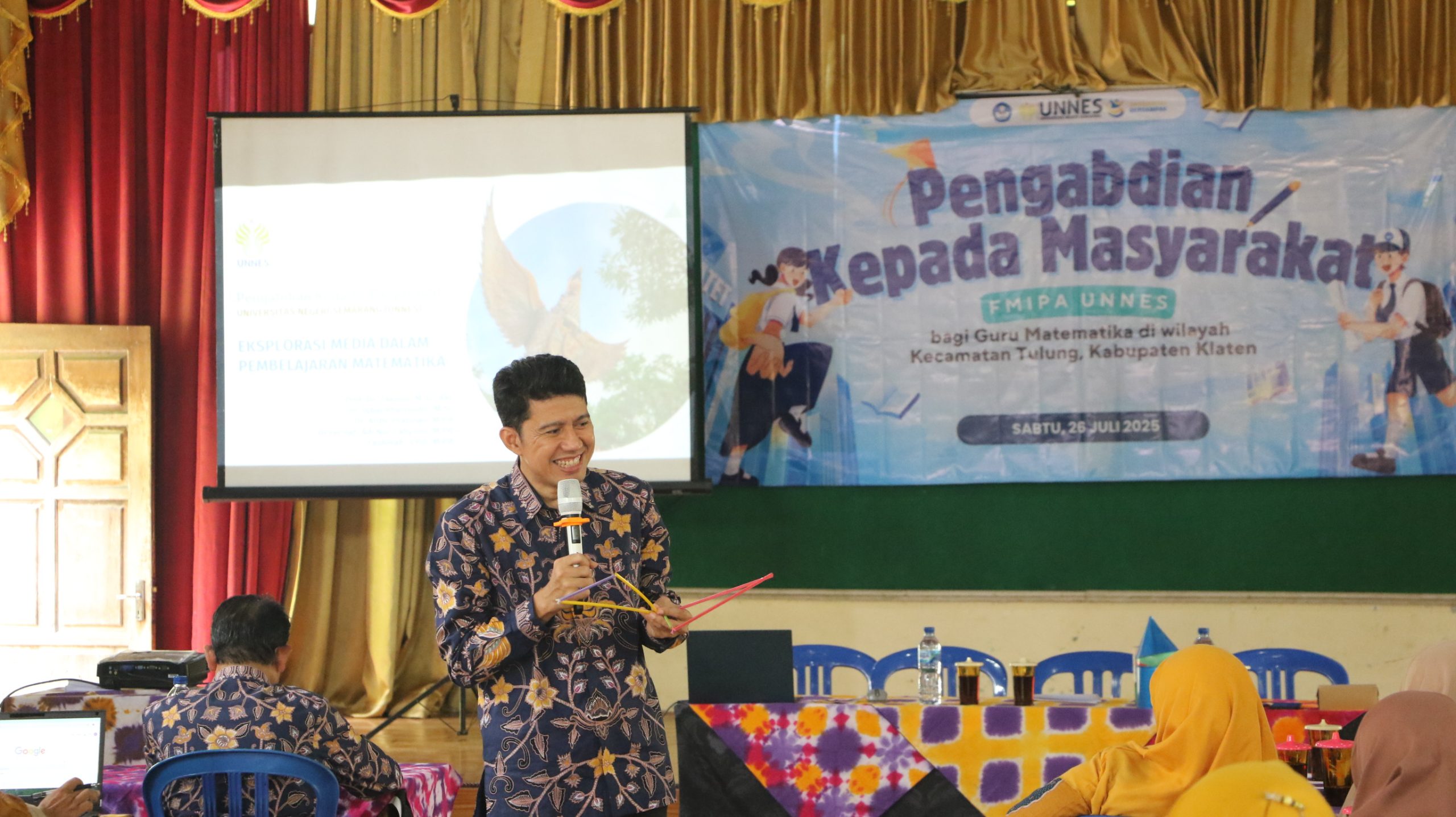
Responding to this need, a team of lecturers from the Mathematics Cluster, Faculty of Mathematics and Natural Sciences (FMIPA), Semarang State University (UNNES), organized a community service program as part of the implementation of the Tri Dharma of Higher Education. The program was held on July 26, 2025, with the goal of encouraging teachers’ creativity and capacity in developing numeracy literacy and higher-order thinking questions. The community service team was led by Dr. Arief Agoestanto, M.Si., with members Ahmad Badawi, M.Pd., M. Habiburrohman, M.Si., Dr. Bambang Eko S., M.Pd., Dr. Isnaini R., M.Si., and Amidi, M.Pd.
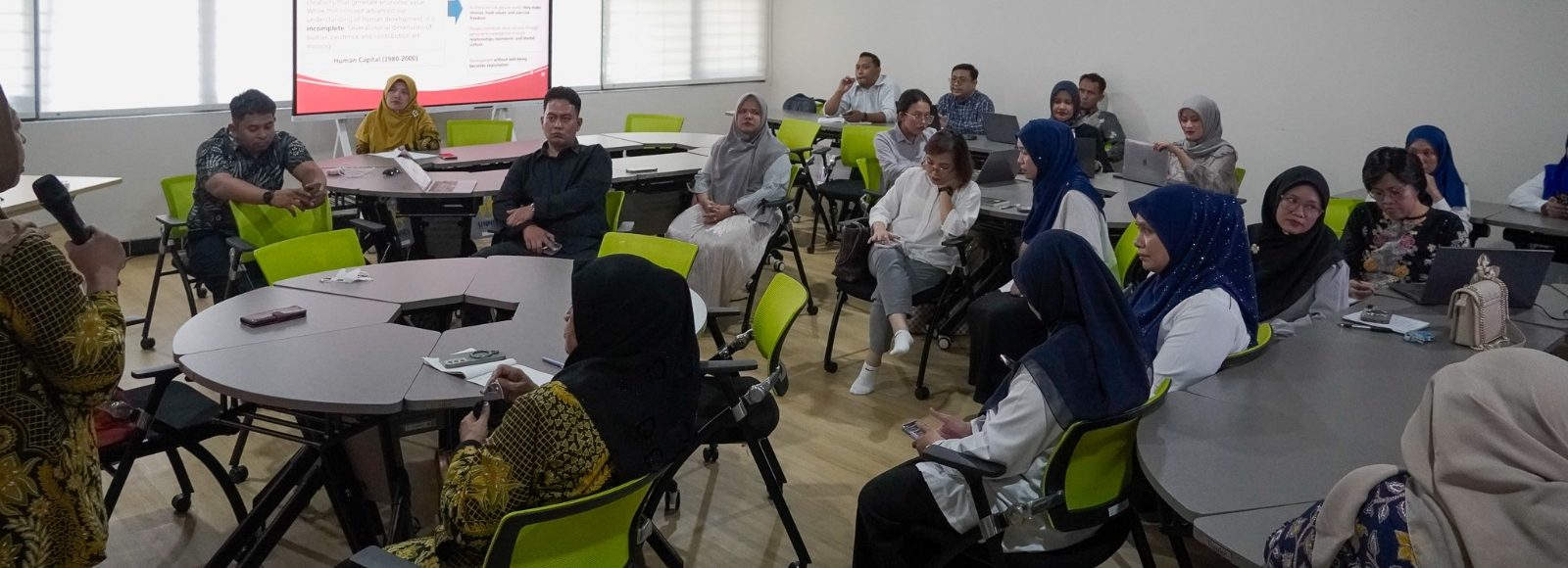
The program took place at SMP Negeri 2 Tulung and was actively attended by all teachers of the school. During the activity, Dr. Arief Agoestanto, M.Si., as the main speaker, delivered a presentation providing both socialization and an in-depth understanding of how to develop numeracy literacy and higher-order thinking questions. He also presented various practical examples that are relevant to today’s learning needs.
The activity continued with an interactive discussion and Q&A session, opening space for reflection and idea exchange between the speaker and teachers. Afterwards, the UNNES team provided direct assistance in the design of questions, as well as assignments as hands-on practice of the materials delivered. Additional support was also provided by other team members who shared insights on developing learning media and quality assessment strategies.
High enthusiasm was demonstrated by the participating teachers, who actively explored their potential in designing subject-specific questions. The intensive mentoring made the process not only a one-way activity but also collaborative and practical. Through this initiative, teachers are expected to continuously innovate in designing questions, media, and assessments that strengthen numeracy literacy and higher-order thinking skills in line with the dynamics of the times and the rapid development of technology. This program reflects UNNES’s strong commitment to enhancing the quality of national education while making a tangible contribution to achieving SDG 4: Quality Education.