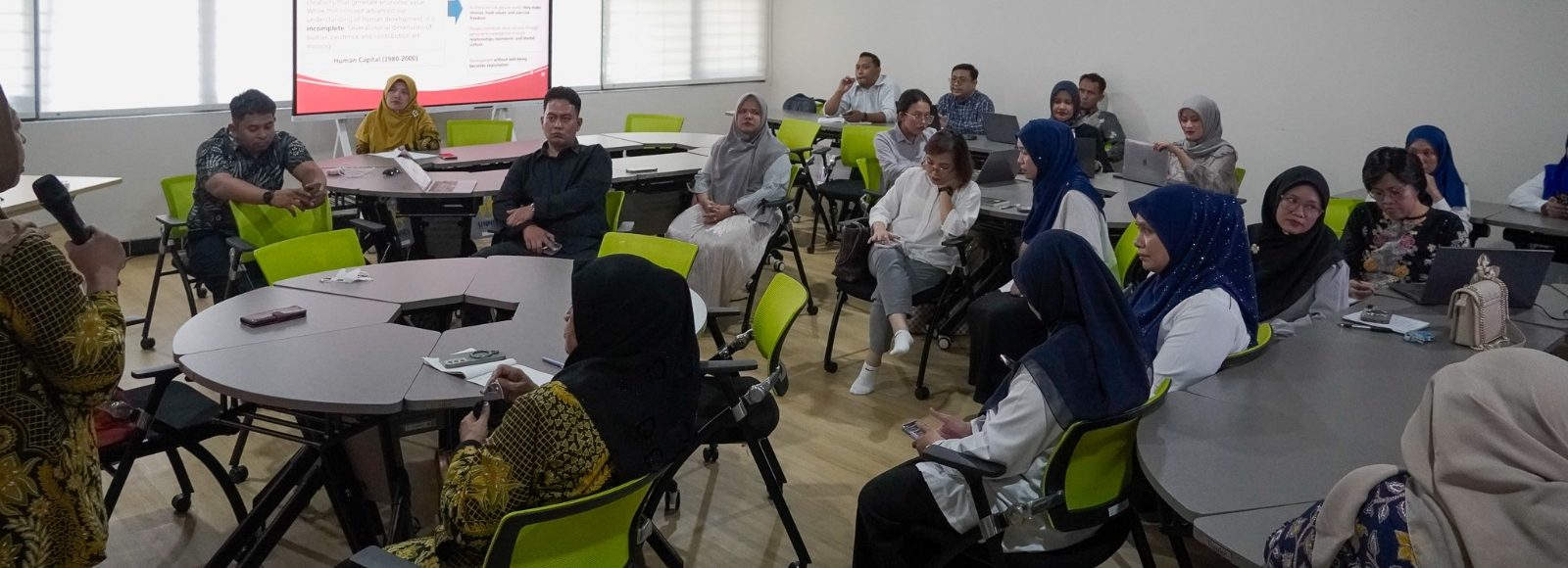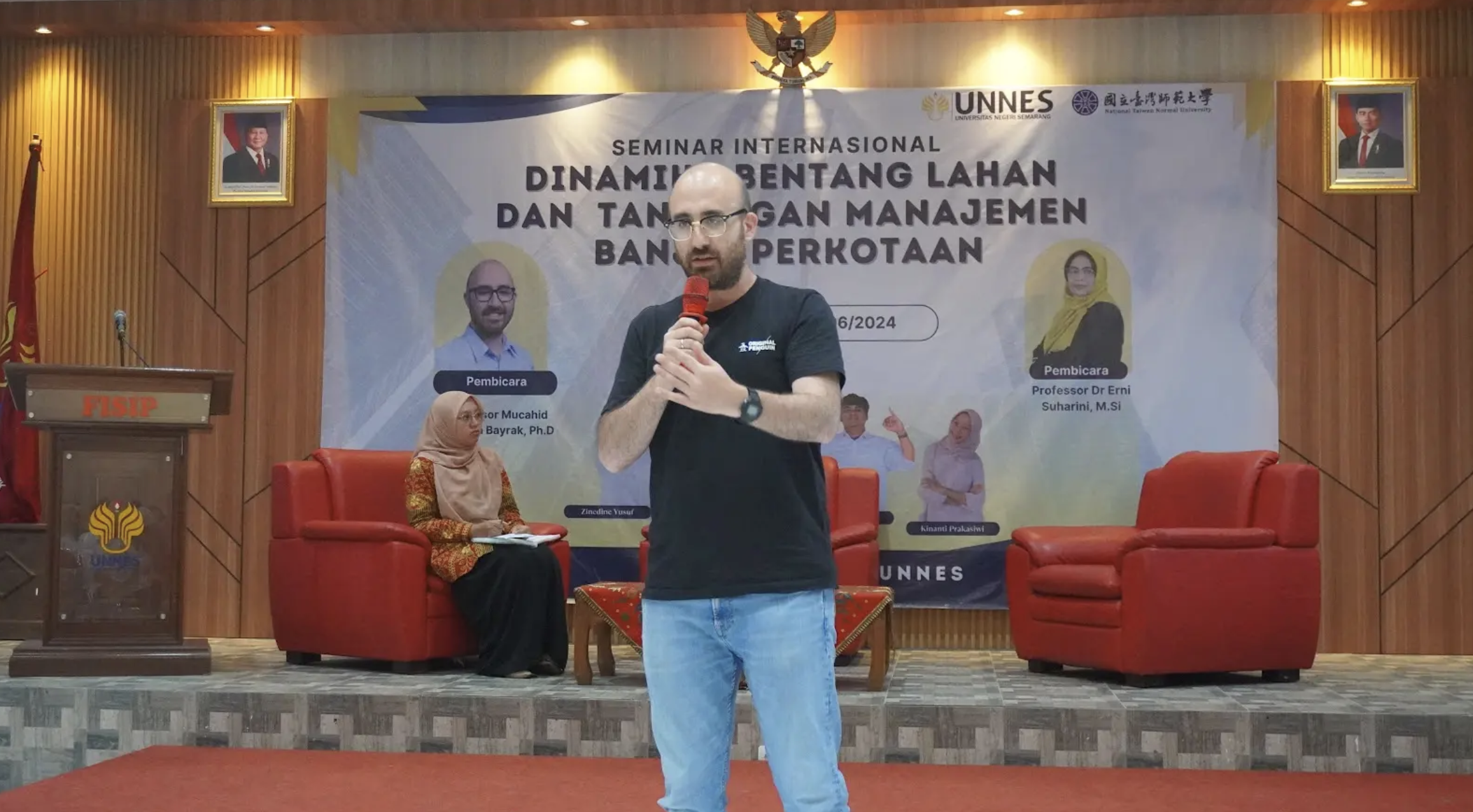
The Geography Study Program of the Faculty of Social Sciences, Universitas Negeri Semarang (FISIP UNNES), in collaboration with National Taiwan Normal University, successfully held an international seminar entitled “Landscape Dynamics and Challenges of Urban Flood Management” on Friday, June 13, 2025, at 1:00 PM WIB, located at the 3rd Floor Auditorium, Building C7, FISIP UNNES. The seminar served as a tangible form of international academic collaboration in addressing increasingly complex urban environmental issues, especially related to flood governance in urban areas.
The seminar was officially opened by Dr.scient.med. Fadly Husain, M.Si., Vice Dean I for Academic and Student Affairs of FISIP UNNES. The event featured two expert speakers: Prof. Mucahid Mustafa Bayrak, Ph.D. from National Taiwan Normal University and Prof. Dr. Erni Suharini, M.Si., both of whom delivered in-depth presentations on landscape change, climate crisis, and flood disaster mitigation strategies in urban areas. In addition to the main sessions, the seminar also included student presentations showcasing the results of their field research conducted the previous day in Tambakrejo Village, Semarang—providing a hands-on, experiential learning opportunity. This activity aims to strengthen cross-perspective understanding and encourage collaborative solutions in addressing urban geographical challenges in the era of global climate change.
In his presentation, Prof. Mucahid Mustafa Bayrak, Ph.D. discussed global sustainability challenges by highlighting how Taiwan can serve as a model in translating sustainability research into real action. Starting with the fundamental understanding of sustainable development—which emphasizes meeting present needs without compromising the future—the presentation critiqued development approaches focused solely on economic growth. Key issues raised included the trade-offs between social, environmental, and economic aspects, which are often imbalanced. Also discussed was the need for deep structural changes in the modern capitalist system, which is seen as a root cause of global ecological and social crises.
Taiwan was presented as a significant case study due to its recognition of indigenous rights, commitment to renewable energy, and support for grassroots movements. Taiwan stands out in East Asia for providing democratic space and academic freedom to explore locally-based sustainable development practices. The indigenous communities’ holistic approach to the environment—integrating spiritual, cultural, and social values—was presented as an alternative to the Western development model, which is currently facing multiple crises. The presentation encouraged a paradigm shift: not just “managing” the environment, but restructuring our worldview and social systems toward a fairer and more sustainable future.
This activity holds strong relevance to the Sustainable Development Goals (SDGs), especially SDG 11 (Sustainable Cities and Communities) and SDG 13 (Climate Action). By addressing issues such as flood management, landscape transformation, and community roles in climate adaptation, the seminar fostered cross-national and interdisciplinary dialogue to formulate sustainable solutions for future cities. Such academic collaborations reflect FISIP UNNES’s commitment to making meaningful contributions to global challenges through education, research, and international partnerships.