Strengthening International Networks, USM and UNNES Hold 2025 Sustainability Program

Universitas Negeri Semarang > Sustainable Development Goals Universitas Negeri Semarang > News > News > Strengthening International Networks, USM and UNNES Hold 2025 Sustainability Program

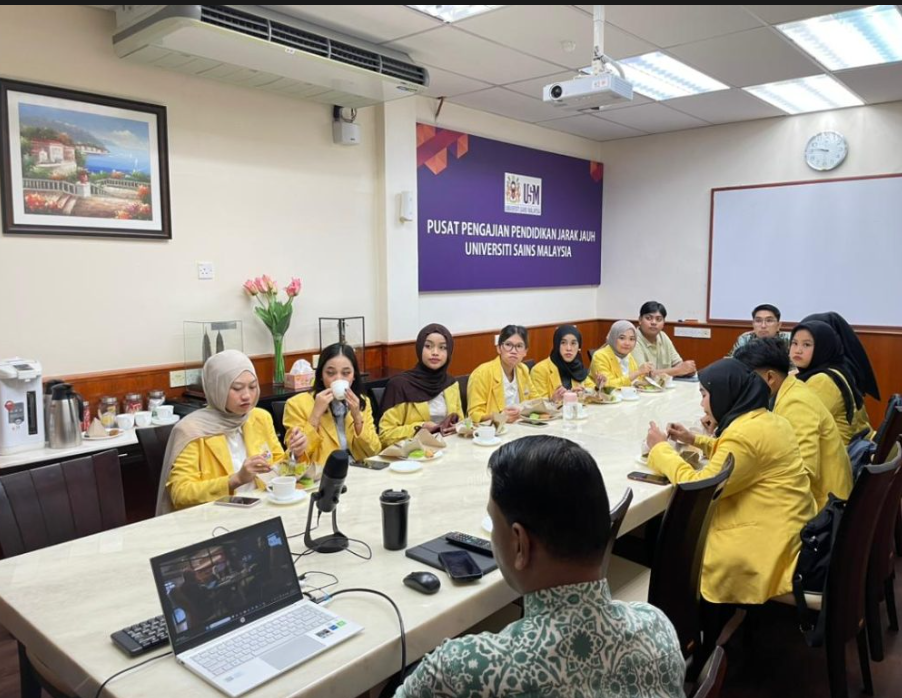
Malaysia – University Sains Malaysia (USM) and Semarang State University (UNNES) strengthened their strategic partnership through the “International Program for Introducing the 2025 Sustainability Agenda.” This intensive five-day program, held from November 10 to 14, 2025, brought together 10 UNNES students in a series of academic and field activities to deepen their understanding of sustainable development and affirm USM’s role as a pioneer in the sustainability agenda in the region.
Participants engaged not only in lectures and academic discussions but also directly observed best practices in the community. An opening lecture from the Center for Islamic Development Management Studies, led by Dr. Wan Norhaniza, explored the concept of the green economy and responsible resource utilization. Another session, led by Dr. Normaliza from the Industry and Community Networks Section, focused on water and waste management, aligning with SDG 6.
The direct application of the theory was demonstrated through field visits to the Kelulut Honey Project and the Volvariella Fungus Cultivation Project. Here, students reviewed sustainable beekeeping practices, local honey production, and innovative agricultural techniques that offer solutions for food security and community economic empowerment.
Lydia Felisa, a participant from UNNES, appreciated the program, which gave her a new perspective on Malaysia’s approach to sustainability. “USM’s efforts to engage local communities demonstrate a concrete and sustainable model for implementing the SDGs,” she said.
Shada Muyassar echoed this sentiment, emphasizing that the combination of lectures, discussions, and field activities significantly strengthened theoretical understanding. “Interactions with the community and project coordinators provided a clear picture of the real challenges in implementing sustainable initiatives,” she added.
From the organizer’s perspective, Daniel Anak Dennis from USM saw the program’s great potential for strengthening academic networks and exchanging ideas. Meanwhile, Taufik Jefri highlighted the personal development benefits for local students, including improved leadership skills, communication skills, and enhanced cross-cultural understanding.
The program between USM and UNNES is not just a typical student exchange, but a microcosm of SDG 17 implementation in practice. This partnership operationally fulfills several specific targets under SDG 17, enhancing the multi-stakeholder Global Partnership for Sustainable Development, and fostering and promoting effective public partnerships. The collaborative program between USM and UNNES is a concrete manifestation of SDG 17, moving beyond rhetoric. At the heart of this partnership is a multi-stakeholder ecosystem that synergistically involves academics, students, industry players, and local communities. The transfer of concrete knowledge and green technologies, such as sustainable agricultural practices and resource management, strengthens its foundation. All of these mechanisms serve as catalysts that accelerate the achievement of other goals, such as quality education and sustainable cities. Beyond mere academic exchange, this initiative invests in building the capacity of young people as future leaders. The resulting network of cross-border understanding creates crucial social capital for solving global challenges. Ultimately, this strategic partnership demonstrates that achieving sustainable development goals requires inclusive cooperation and collective action. The collaboration between USM and UNNES through this program not only broadens students’ horizons but also builds a network of young people who are aware and actively respond to global sustainability challenges, demonstrating that higher education is a key driving force in achieving the SDGs.
Related Posts

Leave a Reply

* Kode Akses Komentar:

* Tuliskan kode akses komentar diatas:

GDPR

  • Privacy Policy

Privacy Policy

At unnes.ac.id, the privacy of our visitors is of extreme importance to us. This privacy policy document outlines the types of personal information that is received and collected by unnes.ac.id and how it is used.

Log Files

Like many other Web sites, unnes.ac.id makes use of log files. The information inside the log files includes internet protocol (IP) addresses, type of browser, Internet Service Provider (ISP), date/time stamp, referring/exit pages, and number of clicks to analyze trends, administer the site, track user’s movement around the site, and gather demographic information. IP addresses and other such information are not linked to any information that is personally identifiable.

Cookies

unnes.ac.id uses cookies to store information about visitors’ preferences, to record user-specific information on which pages the site visitor accesses or visits, and to personalize or customize our web page content based upon visitors’ browser type or other information that the visitor sends via their browser.

Third-party ad servers or ad networks use technology in their respective advertisements and links that appear on unnes.ac.id and which are sent directly to your browser. They automatically receive your IP address when this occurs. Other technologies (such as cookies, JavaScript, or Web Beacons) may also be used by our site’s third-party ad networks to measure the effectiveness of their advertising campaigns and/or to personalize the advertising content that you see on the site.

unnes.ac.id has no access to or control over these cookies that are used by third-party advertisers.

You should consult the respective privacy policies of these third-party ad servers for more detailed information on their practices as well as for instructions about how to opt-out of certain practices. unnes.ac.id’s privacy policy does not apply to, and we cannot control the activities of, such other advertisers or web sites.

If you wish to disable cookies, you may do so through your individual browser options. More detailed information about cookie management with specific web browsers can be found at the browsers’ respective websites.

Consent

By using our website, you hereby consent to our privacy policy and agree to its terms.

Update

This Privacy Policy was last updated on: 2023-02-14. Should we update, amend or make any changes to our privacy policy, those changes will be posted here.

Contact Us

If you have any questions, comments, or concerns about our Privacy Policy or our practices with regards to your personal information, please feel free to contact us through the contact form on our website or by emailing us at humas[at]mail.unnes.ac.id.

This Privacy Policy is intended as a general guide to our practices in collecting and using information. If there is any inconsistency between this Privacy Policy and the terms of the Service Agreement or any other terms that may apply to specific services you use, then those specific service terms shall apply.

Terms of Use

By using our website, you agree to abide by this Privacy Policy. If you do not agree with this Privacy Policy, please do not use our website. We reserve the right to update this Privacy Policy from time to time without prior notice. Please review our Privacy Policy periodically to check for changes. Your continued use of our website following the posting of changes to this Privacy Policy means that you accept the changes.

Thank you for reading our Privacy Policy. We are committed to protecting the privacy of our website visitors and will continue to update our Privacy Policy to ensure optimal protection.