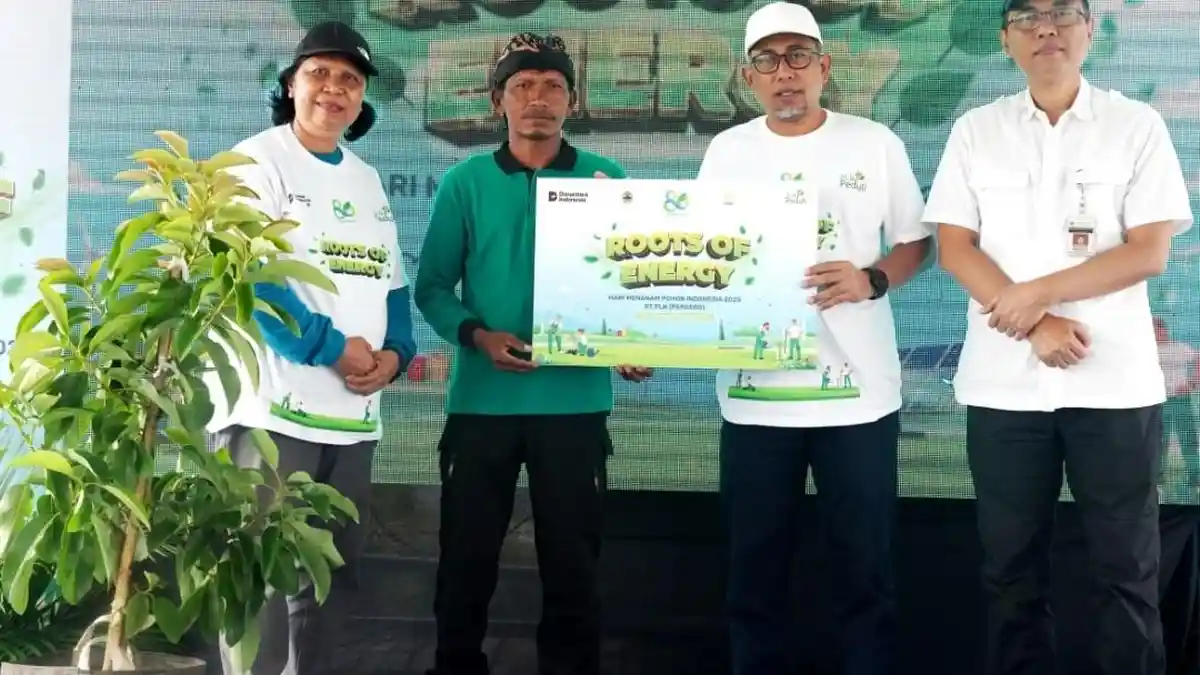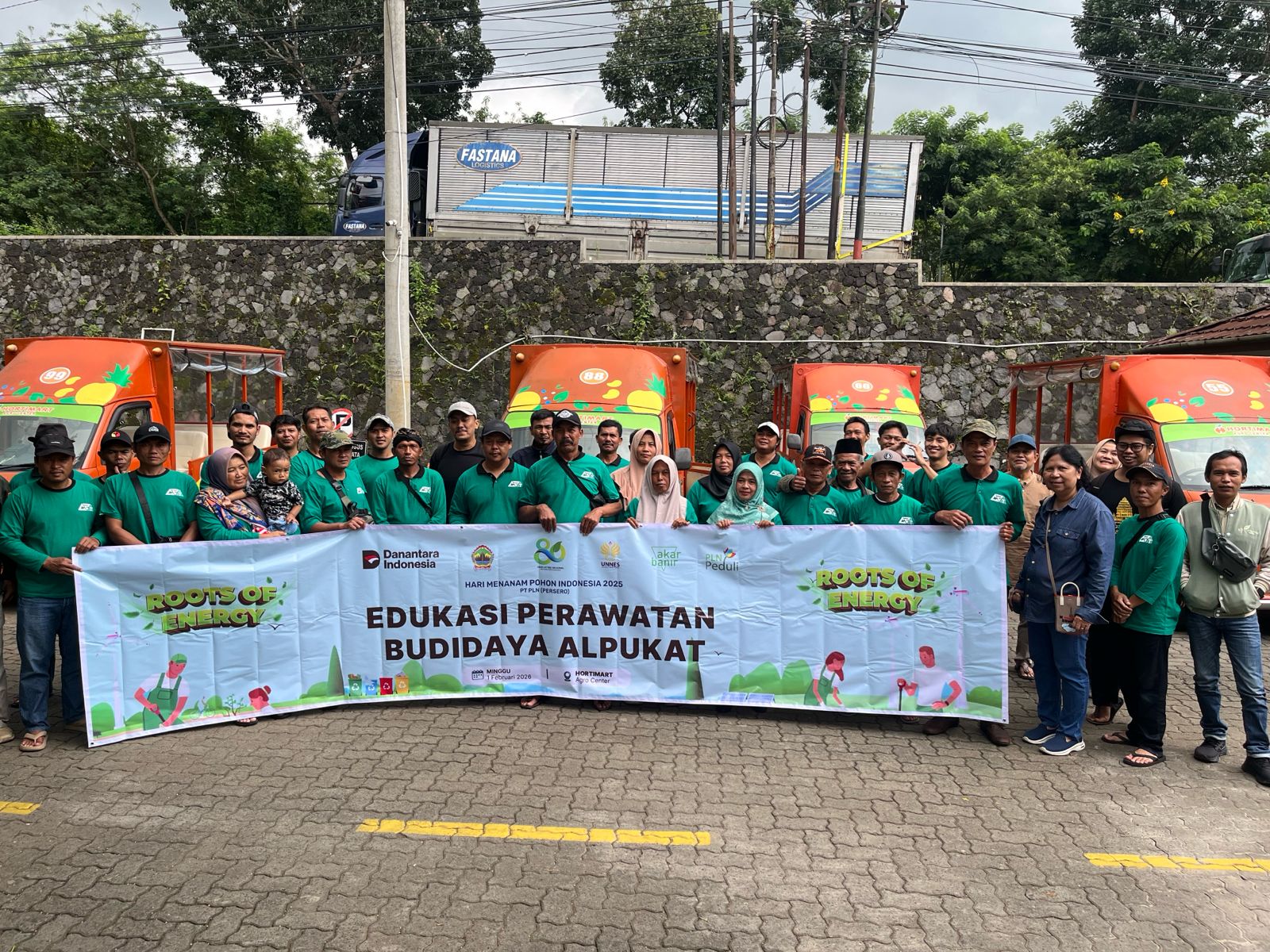
In commemoration of Indonesia’s National Tree Planting Day (HMPI) 2025, PT PLN (Persero) UID Central Java and D.I. Yogyakarta collaborated with the Subdirectorate of Conservation at Universitas Negeri Semarang (UNNES) and the Akar Banir Indonesia Foundation to organize an Avocado Cultivation Maintenance Training program. This initiative followed an earlier avocado planting activity carried out on the slopes of Mount Ungaran.
Head of the UNNES Subdirectorate of Conservation, Prof. Dr. Nana Kariada T.M., M.Si., explained that the HMPI 2025 series began with the planting of 600 avocado trees in Talun Hamlet, Candi Village, Bandungan District, Semarang Regency. He emphasized that the success of tree planting efforts depends largely on consistent and long-term maintenance.
“Planting is relatively simple, but what truly requires commitment is maintaining the trees. We hope the avocados will not only serve as conservation vegetation that strengthens the catchment area, but also contribute to improving the community’s welfare,” he stated.
He further noted that the initiative directly supports the Sustainable Development Goals (SDGs). The program contributes to SDG 13 (Climate Action) by increasing vegetation cover, enhancing carbon sequestration, and strengthening ecosystem-based climate adaptation. It also aligns with SDG 15 (Life on Land) through efforts to restore land functions, conserve biodiversity, and promote sustainable land ecosystem management in rural areas.
A total of 32 members of the Muda Utomo Lestari Farmers Group participated in a follow-up learning visit to Hortimart Agro Center in Bawen. During the visit, farmers observed modern avocado cultivation practices, including irrigation systems, fertilization methods, planting distance management, and the use of Internet of Things (IoT) technology such as soil moisture sensors integrated with drip irrigation systems.
The program continued with a presentation and discussion session led by Pratomo from the Obor Tani Foundation. The session covered ideal environmental conditions for avocado growth, fertilization and pruning techniques, pest and disease control, and marketing strategies for harvest products.
Waldy, Head of the Muda Utomo Lestari Farmers Group, expressed that the training was highly beneficial for members. “There is strong enthusiasm among the community to plant avocados. However, this enthusiasm must be supported by technical knowledge and skills in plant maintenance so that the trees can grow optimally and produce quality yields,” he said.
Through this training, avocado cultivation is expected to be managed sustainably, adapt to climate change, and generate both ecological and economic benefits for the surrounding community, in line with broader sustainable development objectives.