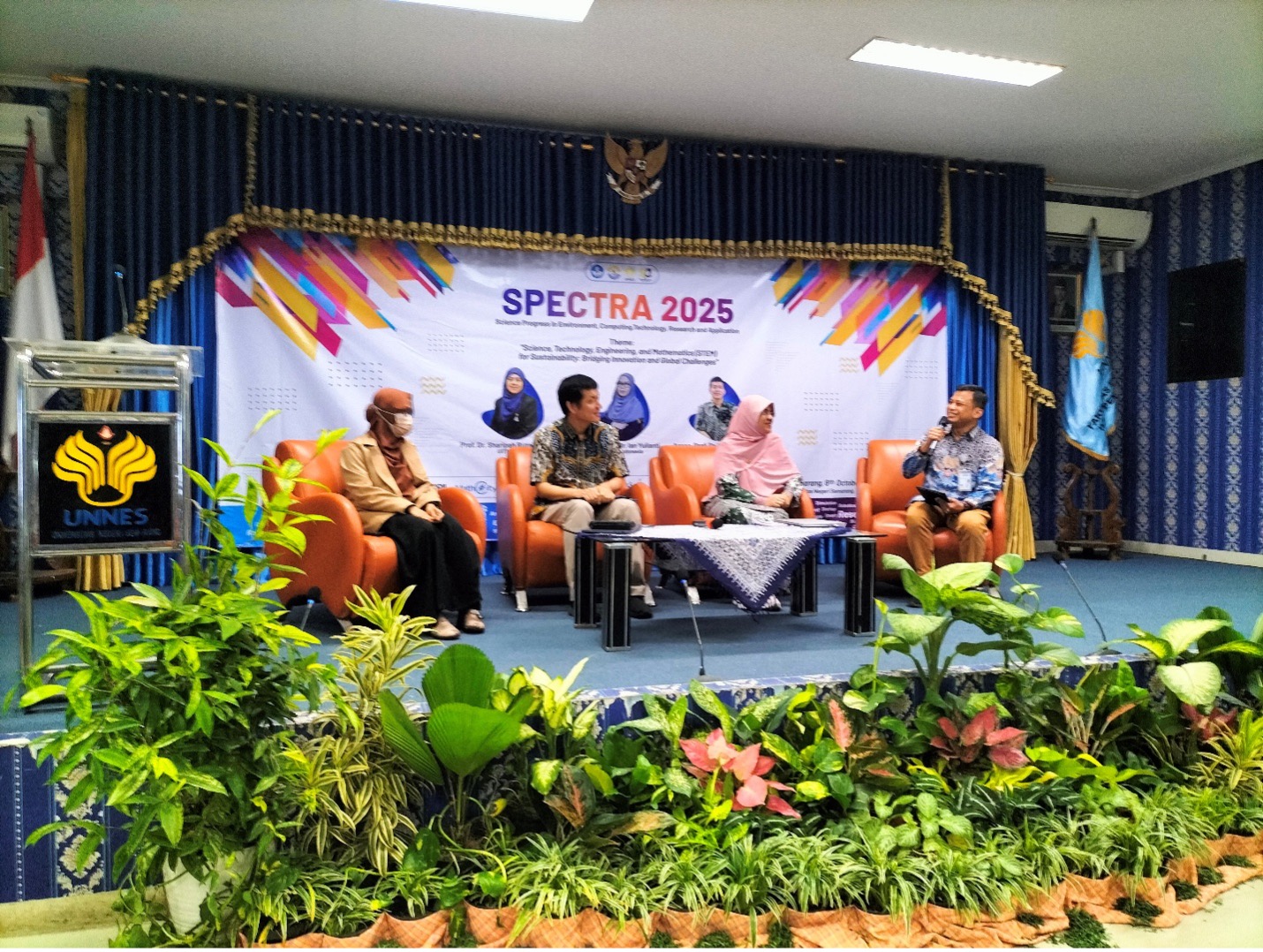
The SPECTRA 2025 International Conference (Science, Technology, Engineering, and Mathematics for Sustainability), hosted by the Faculty of Mathematics and Natural Sciences (FMIPA), Semarang State University (UNNES), took place successfully on Wednesday, October 8, 2025. Carrying the main theme “STEM for Sustainability: Bridging Innovation and Global Challenges,” this international academic forum demonstrated UNNES’s strong commitment to aligning scientific innovation with global sustainability goals, in harmony with the United Nations Sustainable Development Goals (SDGs) framework.
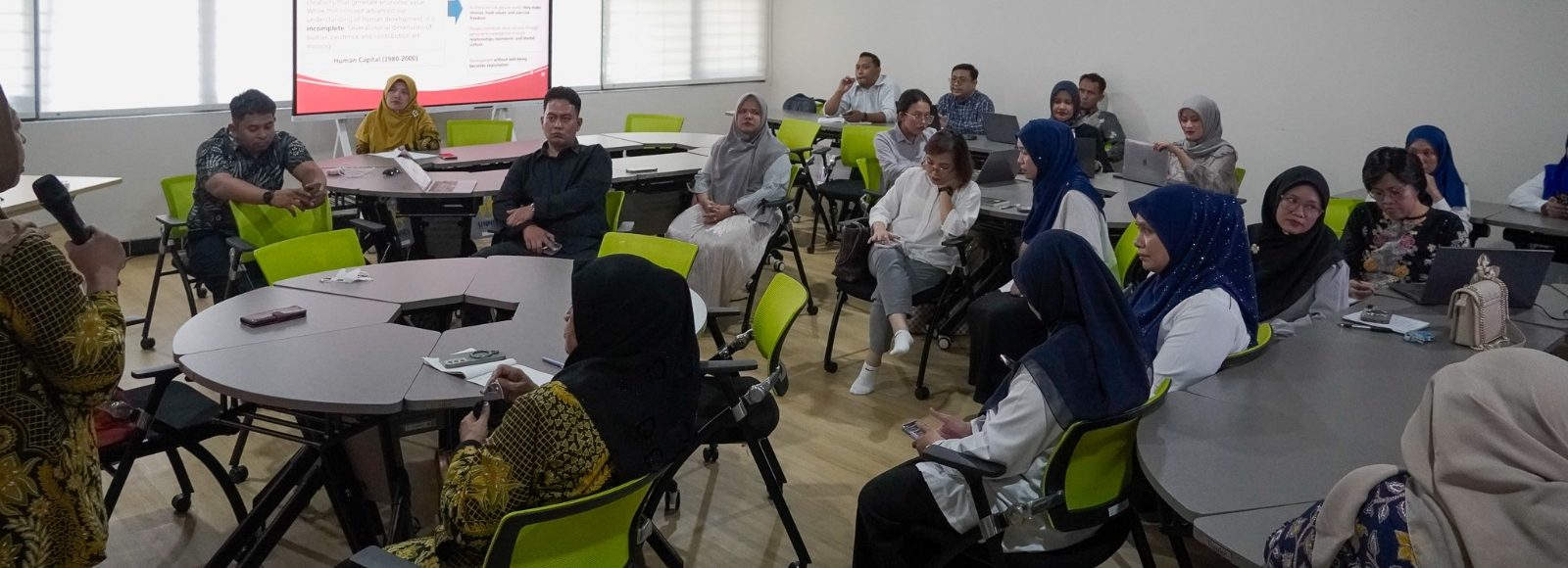
Conducted in a hybrid format, SPECTRA 2025 gathered participants both onsite at the UNNES Sekaran campus and online from various countries. The conference brought together 323 participants, including 178 presenters and 145 non-presenters, representing 15 provinces across Indonesia, as well as Malaysia, Japan, and Brunei Darussalam. The event became a collaborative platform for scientists, educators, and researchers to exchange innovative research and solutions addressing global sustainability challenges, particularly those related to SDG 4 (Quality Education), SDG 7 (Affordable and Clean Energy), SDG 9 (Industry, Innovation, and Infrastructure), and SDG 13 (Climate Action).
Distinguished international experts enriched the event, including Prof. Dr. Ruzaina Syed Aris (Universiti Teknologi MARA, Malaysia), Assoc. Prof. Dr. Satoshi Kusaka (Naruto University, Japan), and Assoc. Prof. Dr. Ian Yulianti, M.Eng. (FMIPA UNNES). Other invited speakers from University of Brunei Darussalam, Miyazaki University (Japan), and Semarang State University contributed insightful perspectives and fostered opportunities for cross-border collaboration in advancing sustainability-oriented STEM education and research.
In his opening address, Prof. Dr. Sugianto, University Secretary of UNNES, highlighted that SPECTRA 2025 embodies the university’s real action toward strengthening global scientific cooperation and supporting SDG achievement. He emphasized that SPECTRA is “not merely a conference, but a call for academic engagement—uniting science, technology, and innovation under the values of sustainability.” This aligns directly with UNNES’s efforts to foster interdisciplinary collaboration that supports education quality, industrial innovation, renewable energy, and climate resilience in line with the 2030 Agenda for Sustainable Development.
Led by Dr. Ellianawati, M.Sc., the organizing committee successfully realized this global event through collaborative synergy and sustainable leadership. Strategic partnerships with MathCityTrail (Dr. rer.nat. Adi Nur Cahyono), STEM EduCenter (Arif Widiyatmoko, Ph.D.), PUI-PT Child-Friendly Center for Higher Education Innovation (Prof. Dr. Isti Hidayah), and corporate partners such as PT Wiralab Analitika Solusindo, PT Smart Mitra Solution, and Ecoprint UNNES played a vital role in achieving the conference’s success. This collaboration reflects SDG 17 (Partnerships for the Goals), underscoring the importance of collective action for sustainable progress.
Evolving from the International Conference on Mathematics, Science, and Education (ICMSE), SPECTRA 2025 marked a transformative milestone for FMIPA UNNES in strengthening interdisciplinary and international scientific cooperation. Upholding the spirit of “Fall seven times, stand up eight,” this conference encouraged scholars and educators to remain resilient, adaptive, and innovative in pursuing global sustainability through STEM-based solutions.
Adding cultural richness, SPECTRA 2025 also showcased traditional dance and angklung performances by FMIPA UNNES’s Student Arts Unit (UKM Seni). These performances represented Indonesia’s cultural diversity and highlighted the synergy between science, art, and cultural conservation, aligning with SDG 11 (Sustainable Cities and Communities) and UNNES’s identity as a conservation-minded university.
Through its unifying spirit of “Science for Sustainability, Innovation for Humanity,” SPECTRA 2025 reaffirmed UNNES’s dedication to advancing science and innovation that not only benefits the nation but also contributes to global well-being, in full alignment with the Sustainable Development Goals (SDGs).