Practitioner Lectures on Environmental Physics Strengthen Collaboration to Support the SDGs

Universitas Negeri Semarang > Sustainable Development Goals Universitas Negeri Semarang > Unit > FMIPA > Practitioner Lectures on Environmental Physics Strengthen Collaboration to Support the SDGs

The Physics Education Study Program, Faculty of Mathematics and Natural Sciences (FMIPA), Universitas Negeri Semarang (UNNES), organized a series of practitioner lectures for the Environmental Physics course on 19 and 26 November 2025. Conducted online via Zoom, the lectures featured experienced school teachers and conservation practitioners who are also alumni of UNNES. This initiative reflects the university’s commitment to implementing SDG 4 by promoting innovative, relevant, and inclusive learning in higher education.

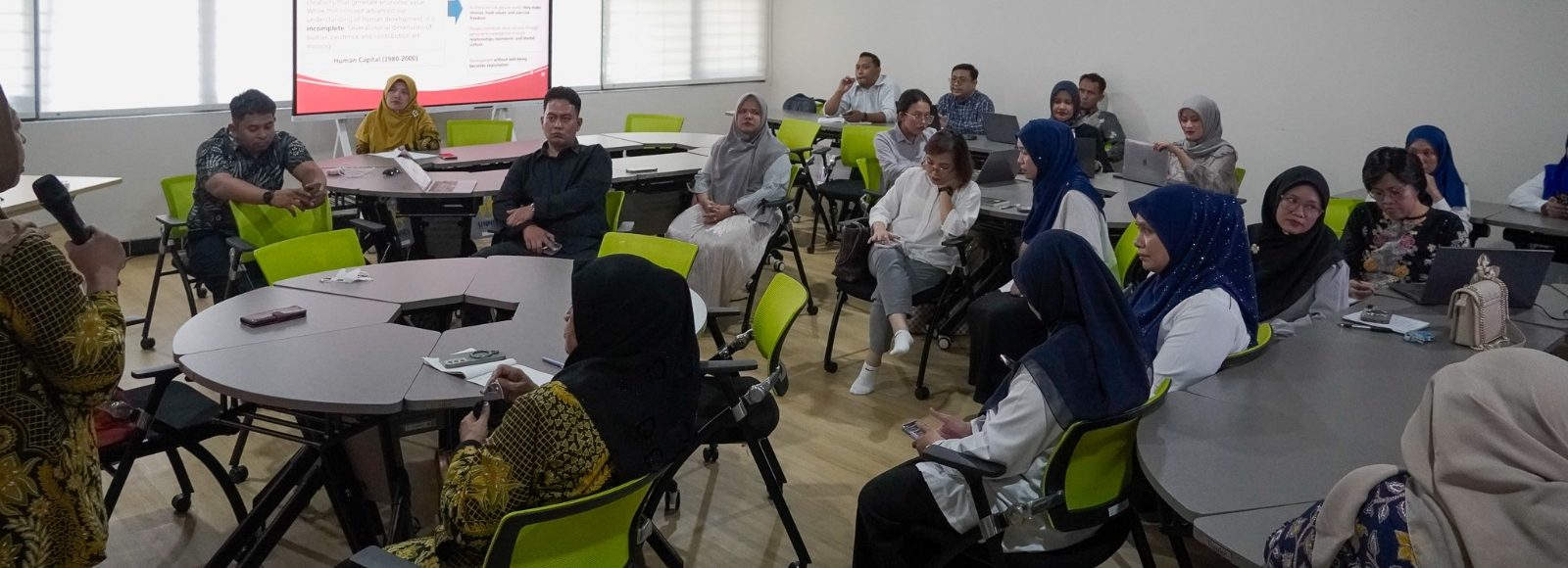
The first practitioner lecture, held on 19 November 2025, featured Siti Handayani, M.Pd., a senior Physics teacher at SMAN 1 Semarang with more than 25 years of teaching experience. She shared insights into the common challenges of Physics learning, which is often perceived as difficult due to its strong emphasis on mathematical calculations. To address this issue, she introduced an Environment-Based Learning approach that integrates natural, social, and cultural environments as learning resources in Physics education. This approach encourages students to develop scientific thinking and environmental awareness, thereby contributing to SDG 12 on responsible consumption and production.

Through contextual learning activities, exploratory processes, and the creation of authentic student products, this approach demonstrates that effective Physics learning does not always require sophisticated laboratory facilities. She emphasized that teacher creativity plays a crucial role in motivating students and fostering meaningful learning experiences.

During the same session, Physics Education students presented creative projects that transformed waste materials into Physics teaching aids. These innovations demonstrated the practical application of the reduce, reuse, and recycle (3R) principles and received positive appreciation for their relevance to environmental education and sustainability.

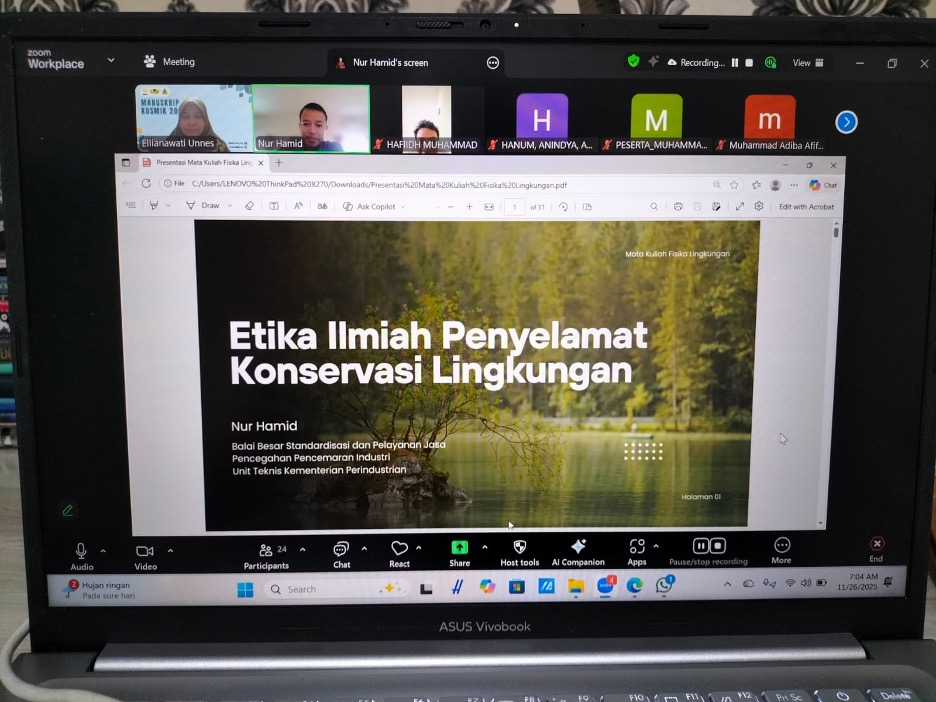
The second practitioner lecture, held on 26 November 2025, featured Nur Hamid, S.Si., a conservation practitioner and civil servant at the Ministry of Industry, currently serving at the Center for Standardization and Industrial Pollution Prevention Services (BBSPJPPI) in Semarang. In his presentation on scientific ethics and conservation, he emphasized the importance of ethical principles in scientific research and professional practice. He also highlighted the responsibility of scientists and educators to promote environmental conservation and sustainable practices, in line with SDG 13 on climate action.

Overall, the practitioner lecture series provided students with valuable insights into the practical implementation of environmental physics in schools and the ethical dimensions of conservation. The program also supports SDG 17 by strengthening partnerships between the university, alumni, schools, and government institutions in advancing sustainable development goals. Documentation of the practitioner lectures has been archived and is available through the internal learning platform for academic reflection and future reference.
Related Posts

Leave a Reply

* Kode Akses Komentar:

* Tuliskan kode akses komentar diatas:

GDPR

  • Privacy Policy

Privacy Policy

At unnes.ac.id, the privacy of our visitors is of extreme importance to us. This privacy policy document outlines the types of personal information that is received and collected by unnes.ac.id and how it is used.

Log Files

Like many other Web sites, unnes.ac.id makes use of log files. The information inside the log files includes internet protocol (IP) addresses, type of browser, Internet Service Provider (ISP), date/time stamp, referring/exit pages, and number of clicks to analyze trends, administer the site, track user’s movement around the site, and gather demographic information. IP addresses and other such information are not linked to any information that is personally identifiable.

Cookies

unnes.ac.id uses cookies to store information about visitors’ preferences, to record user-specific information on which pages the site visitor accesses or visits, and to personalize or customize our web page content based upon visitors’ browser type or other information that the visitor sends via their browser.

Third-party ad servers or ad networks use technology in their respective advertisements and links that appear on unnes.ac.id and which are sent directly to your browser. They automatically receive your IP address when this occurs. Other technologies (such as cookies, JavaScript, or Web Beacons) may also be used by our site’s third-party ad networks to measure the effectiveness of their advertising campaigns and/or to personalize the advertising content that you see on the site.

unnes.ac.id has no access to or control over these cookies that are used by third-party advertisers.

You should consult the respective privacy policies of these third-party ad servers for more detailed information on their practices as well as for instructions about how to opt-out of certain practices. unnes.ac.id’s privacy policy does not apply to, and we cannot control the activities of, such other advertisers or web sites.

If you wish to disable cookies, you may do so through your individual browser options. More detailed information about cookie management with specific web browsers can be found at the browsers’ respective websites.

Consent

By using our website, you hereby consent to our privacy policy and agree to its terms.

Update

This Privacy Policy was last updated on: 2023-02-14. Should we update, amend or make any changes to our privacy policy, those changes will be posted here.

Contact Us

If you have any questions, comments, or concerns about our Privacy Policy or our practices with regards to your personal information, please feel free to contact us through the contact form on our website or by emailing us at humas[at]mail.unnes.ac.id.

This Privacy Policy is intended as a general guide to our practices in collecting and using information. If there is any inconsistency between this Privacy Policy and the terms of the Service Agreement or any other terms that may apply to specific services you use, then those specific service terms shall apply.

Terms of Use

By using our website, you agree to abide by this Privacy Policy. If you do not agree with this Privacy Policy, please do not use our website. We reserve the right to update this Privacy Policy from time to time without prior notice. Please review our Privacy Policy periodically to check for changes. Your continued use of our website following the posting of changes to this Privacy Policy means that you accept the changes.

Thank you for reading our Privacy Policy. We are committed to protecting the privacy of our website visitors and will continue to update our Privacy Policy to ensure optimal protection.