SOCIALIZATION OF POTENTIAL OPTIMIZATION BY PPK ORMAWA HMPPE 2025 IN BRANJANG VILLAGE, WEST UNGARAN DISTRICT, SEMARANG REGENCY, CENTRAL JAVA
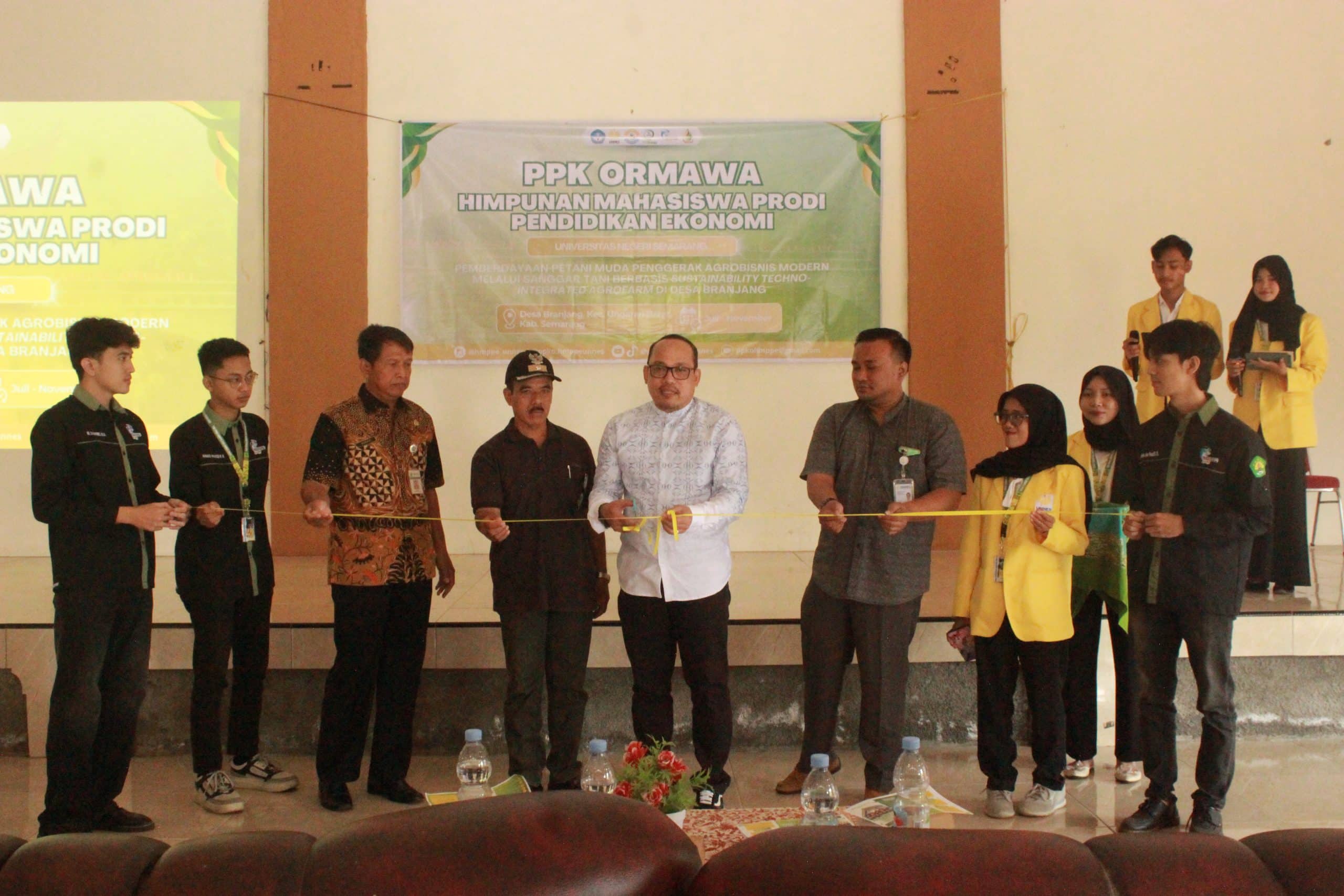
PPK Ormawa HMPPE FEB UNNES 2025 was held in Branjang Village, Semarang Regency, beginning with a socialization activity to optimize village potential, which was carried out at the Branjang Village Hall. This activity is the starting point for implementing a series of community service programs planned by student organizations with village partners. The opening atmosphere felt full of nuances of enthusiasm and hope for the realization of real synergy between the campus and the local community. At the opening, the implementation team of PPK Ormawa HMPPE FEB UNNES carried the theme “Optimizing the Potential of Branjang Village through the Development of Coconut and Palm Commodities,” which is the first step in the implementation of a student service program designed to help the community recognize, manage, and develop local potential that has not been optimally worked on.
This activity was attended by various parties, including the Vice Dean for Academic and Student Affairs Agung Yulianto, S.Pd, M.Si, Supervisor Teguh Hardi Raharjo, M.Pd, Chairman of Ormawa Ahmad Wafiq Rafi Ardani, Representative from the Agricultural Extension Center of West Ungaran District, Mr. Muhadi, S.Tr.P., village officials, and the community of Branjang Village. This activity is strategic because it is intended to make PPK Ormawa a formal forum for student organizations to conduct sustainable community service. At the same time, the focus is practically directed to excavating and mapping the village’s potential. Formulation of work programs that are responsive to village needs and the preparation of collaboration mechanisms between campuses, BUMDes, and other stakeholders. Agung Yulianto expressed his appreciation for the enthusiasm of students who attended directly to contribute to the community. He emphasized that this kind of activity is a tangible form of the role of students as agents of change. “Students not only study in the lecture hall, but also in the community. This is a tangible manifestation of the role of students in helping the community develop its potential,” he said to the applause of the participants who attended.
In the socialization session, Mr. Muhadi, S.Tr . P from the West Ungaran Agricultural Extension Center, provided material on optimizing village natural products, especially coconut and palm commodities. He explained that the two commodities have high economic value if appropriately managed. “So far, the community has only sold raw materials. In fact, if it is processed, the results can be much more profitable. We want to encourage this so that the community, especially village youth, wants to learn and try new things,” he explained. Some residents also shared their experiences while managing coconut crops, which were then used as a topic of discussion to find solutions and development opportunities. One of the participants, Mr. Aspari, admitted that he gained a lot of new knowledge from the activity. “I learned that coconut can be processed into many products. In the past, we only sold round coconuts, but it turns out that there are many ways to make it more profitable,” he said.
More broadly, this commitment to community service is firmly in line with Sustainable Development Goals (SDGs) number 8, which encourages Inclusive and Sustainable Economic Growth, Job Opportunities, and Decent Work for all. Focusing on increasing the added value of the village’s superior commodities is a strategic step to realize the principles of the SDGs directly at the grassroots level. Real inspiration for the potential success of this approach can be witnessed in various parts of Indonesia. For example, Kampung Aren in Cimenyan, Bandung, has succeeded in building a creative economy cluster by processing sap into multiple products such as ant sugar and palm vinegar, significantly increasing people’s income. Another example is the miracle knitted by the Panggung Lestari BUMDes in Panggungharjo Village, Bantul, which builds economic independence from waste management, with a turnover of billions of rupiah per year. These local successes are concrete and encouraging evidence that the collaborative steps that began in Branjang Village today are not a dream, but a measurable first step towards economic independence, encouraging the birth of new entrepreneurs, and ultimately transforming the abundant natural potential into sustainable prosperity for all residents..