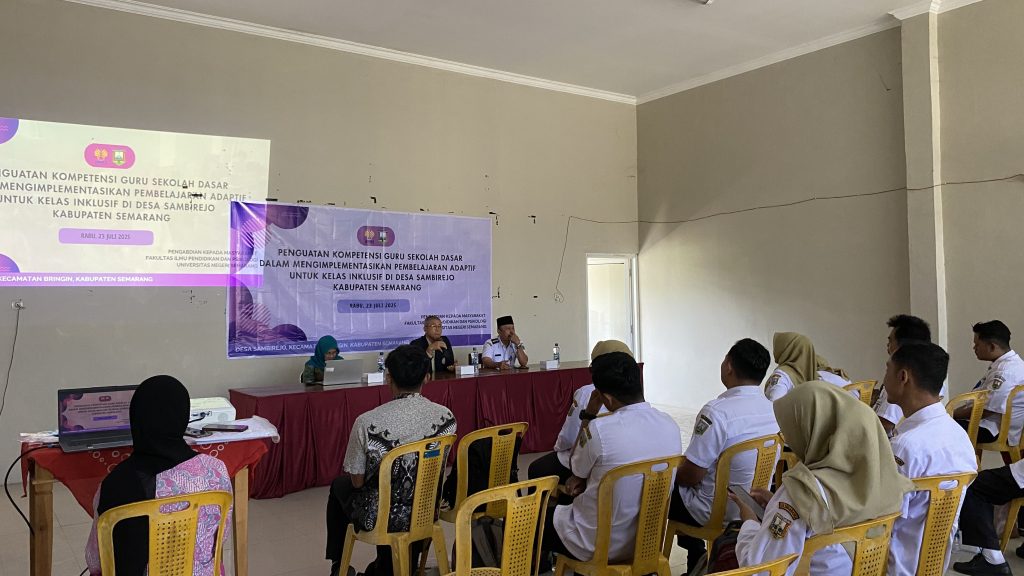
SEMARANG – A team of lecturers from the Psychology Study Program, Faculty of Education and Psychology (FIPP), Universitas Negeri Semarang (UNNES) responded to the challenge of inclusive education at the elementary level by organizing a community service program that directly targeted teachers. This activity was held in Sambirejo Village, Bringin District, Semarang Regency, on Wednesday, July 23, 2025.
Under the title “Strengthening the Competence of Elementary School Teachers in Implementing Adaptive Learning for Inclusive Classes,” this program was attended by around 20 teachers from SDN Sambirejo 01 and 02. The goal was to equip educators with practical knowledge and effective strategies to create a learning environment suitable for all students.
Yogi Swaraswati, S.Psi., M.Si., Chair of the service implementation team, emphasized that teachers play a central role. “Teachers who are competent in adaptive learning will be able to create a more inclusive learning experience, ensuring that all students, including those with special needs, have equal learning opportunities,” said Yogi.
This activity was greeted with enthusiasm. One participant expressed concerns that had been experienced in the field. “We feel greatly helped. Until now, information on how to teach children with special needs has been very limited, especially in villages. We need more training like this to be more confident in dealing with diversity in the classroom,” he said.
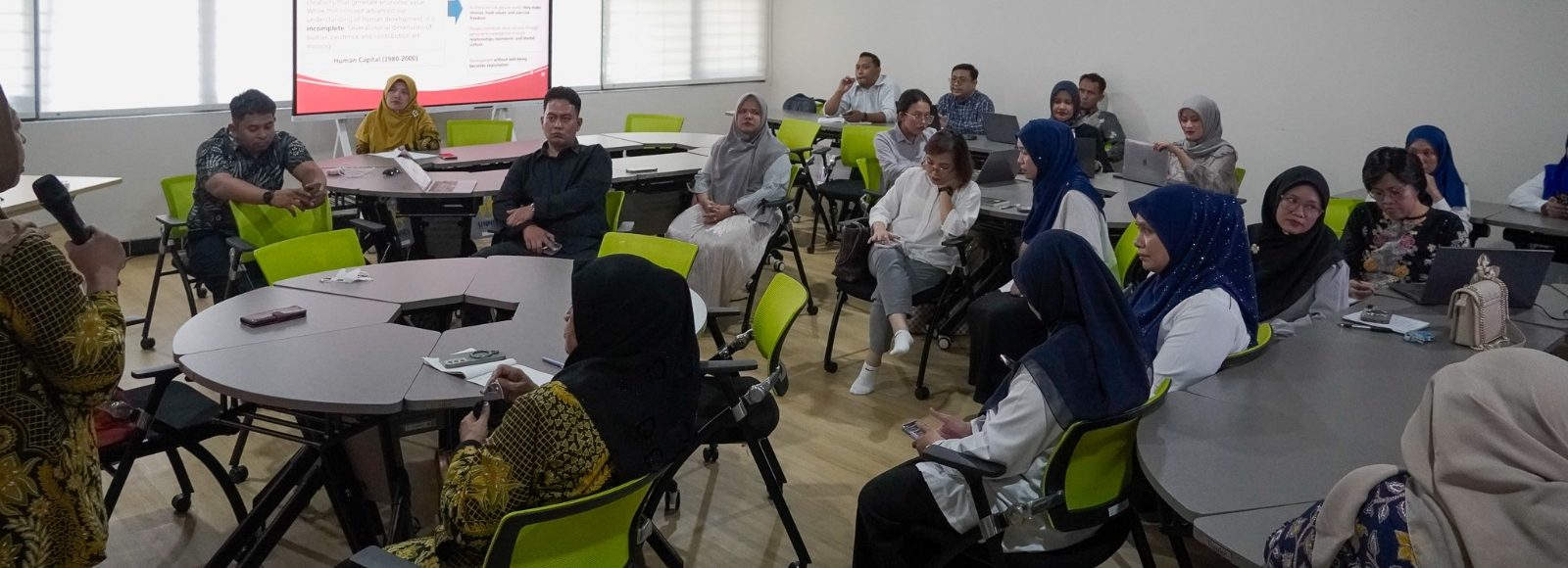
To answer these needs, the speakers presented a series of in-depth materials. Aftina Nurul Husna, S.Psi., M.A., who opened the session with basic concepts, emphasized the urgency of inclusive education.
“Inclusive education is very much needed for Indonesian children with special needs. Inclusive education not only aims to achieve social justice, but affirms the belief that differences and diversity among humans are not obstacles, but opportunities to learn together,” explained Aftina.
This principle was then applied in practical sessions, such as simple student assessment skills by Liftiah, S.Psi., M.Si., Ph.D., Psychologist, as well as practical strategies for adaptive learning and classroom management by Miftahun Najah S.Psi., M.A.
This community service initiative has a local impact and represents FIPP UNNES’s concrete commitment to supporting Sustainable Development Goal (SDG) number 4: Quality Education. By empowering teachers to be competent in managing student diversity, this initiative is a concrete step towards realizing a more effective, equitable, and inclusive education system for all children.
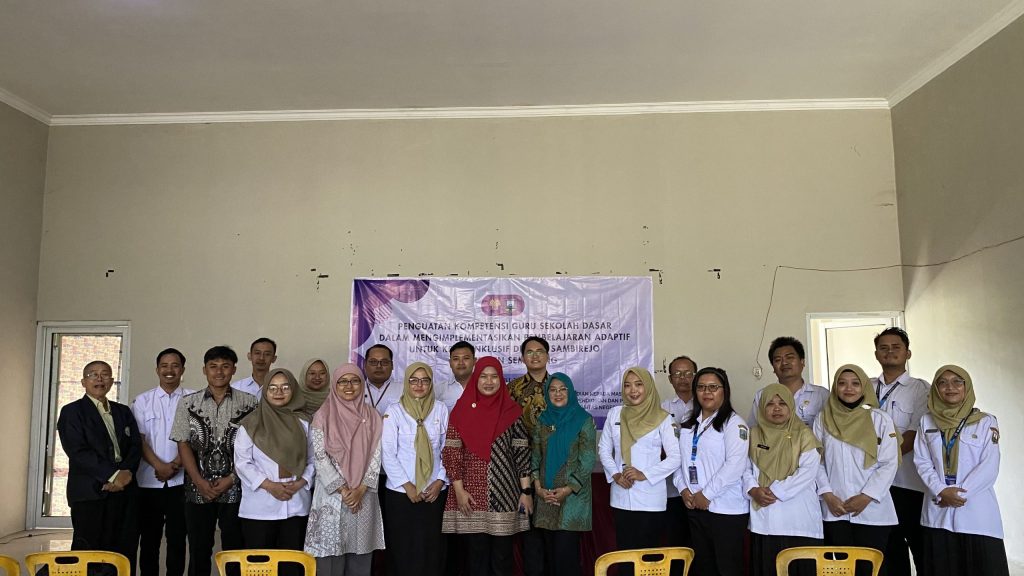
This activity, which was fully funded by FIPP UNNES, successfully strengthened the synergy between the campus and the community. This is clear evidence of the contribution of higher education institutions in developing inclusive and transformative basic education at the village level.