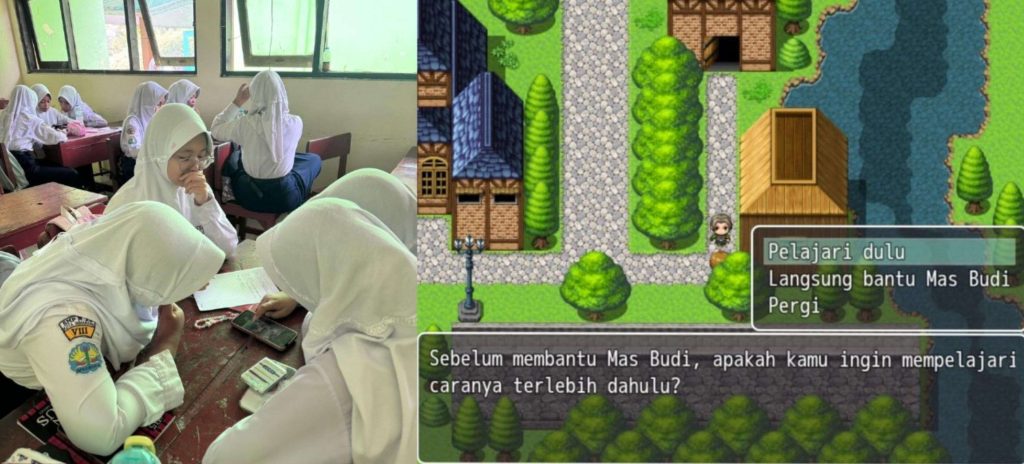
The Student Creativity Program in Social Humanities Research (PKM-RSH) team from Universitas Negeri Semarang (UNNES) has once again showcased creative educational innovation through the development of a game-based learning medium called MATHRIA: Mathematics Role-Playing Game Adventure. This innovation introduces a mathematics learning platform in the form of a Role-Playing Game (RPG) that integrates mathematical concepts, STEM (Science, Technology, Engineering, and Mathematics) principles, and Indonesian rural life, creating an engaging, contextual, and meaningful learning experience for students.
The program was developed by a team of students from the Mathematics Education Study Program and the Information Systems Undergraduate Program, led by Rafi Rahmatulloh, under the supervision of Mr. Adi Satrio Ardiansyah, S.Pd., M.Pd. The team members include Muhammad Rafi’ul Annam, Tsabitul Azmi, Salsa Bila Titiana, and Elisa Mutiara Fatmadewi.
Rafi explained that MATHRIA is designed as an educational adventure game that immerses players in a virtual simulation of rural Indonesia. In the game, students assume the role of the main character who undertakes various missions and challenges based on mathematical topics, particularly set theory, contextualized through daily village activities—such as trading in the market, managing farmland, and designing simple irrigation systems. Each challenge integrates STEM-based problem-solving elements, allowing students not only to sharpen their mathematical reasoning but also to understand the practical application of science and technology in real-world contexts.
The innovation was inspired by the observation that mathematics is often perceived as abstract and monotonous in conventional classrooms. By integrating game-based learning, adventure storytelling, and local cultural contexts, MATHRIA aims to bridge the gap between theoretical understanding and real-life application, while also cultivating students’ appreciation for mathematics and Indonesian local wisdom.
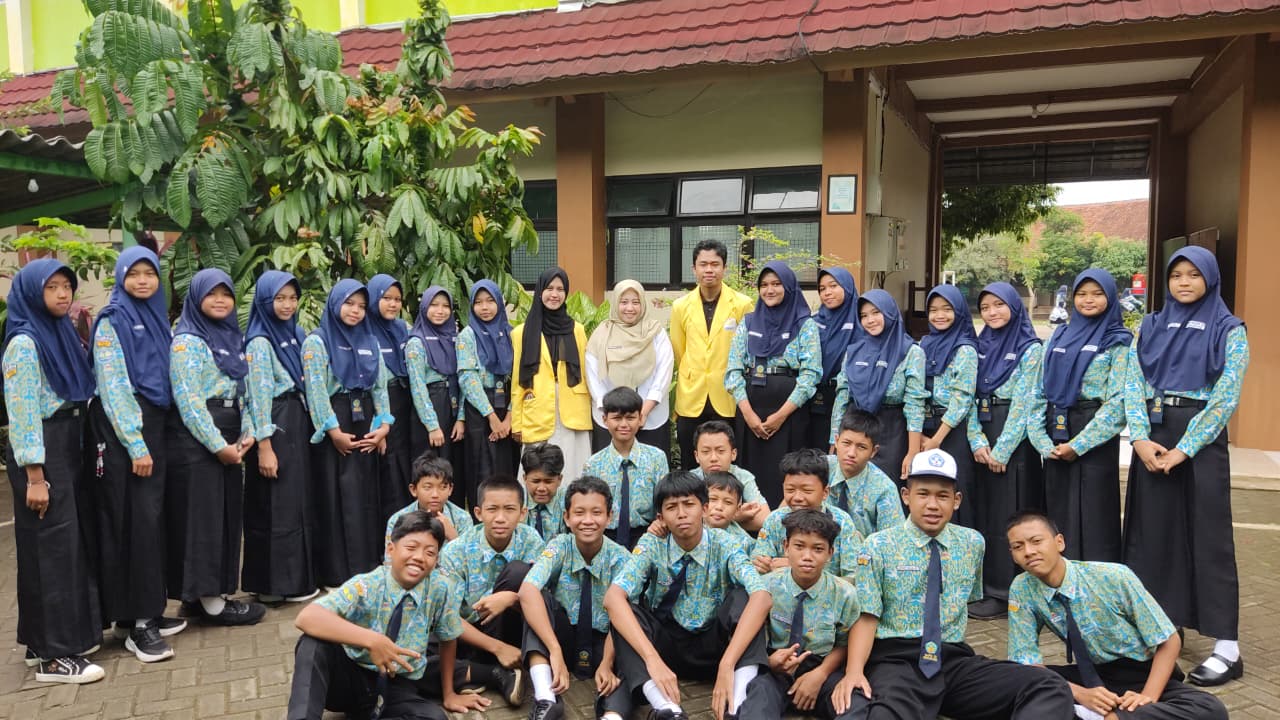
Initial trials conducted at SMP Negeri 23 Semarang demonstrated promising outcomes. The learning media significantly increased student engagement during the learning process and helped them grasp set theory concepts more concretely. Mathematics teachers at the school responded positively, acknowledging MATHRIA as an innovative and relevant learning tool that effectively combines enjoyment, education, and cultural values.
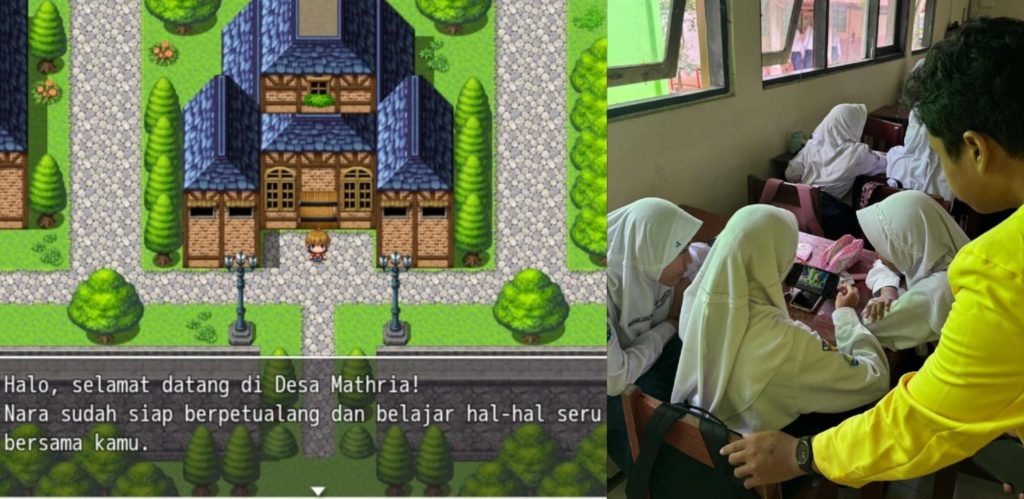
Through MATHRIA, UNNES reinforces its commitment to nurturing future educators who are adaptive, creative, and culturally grounded, capable of designing learning innovations that meet the challenges of 21st-century education while preserving local identity.