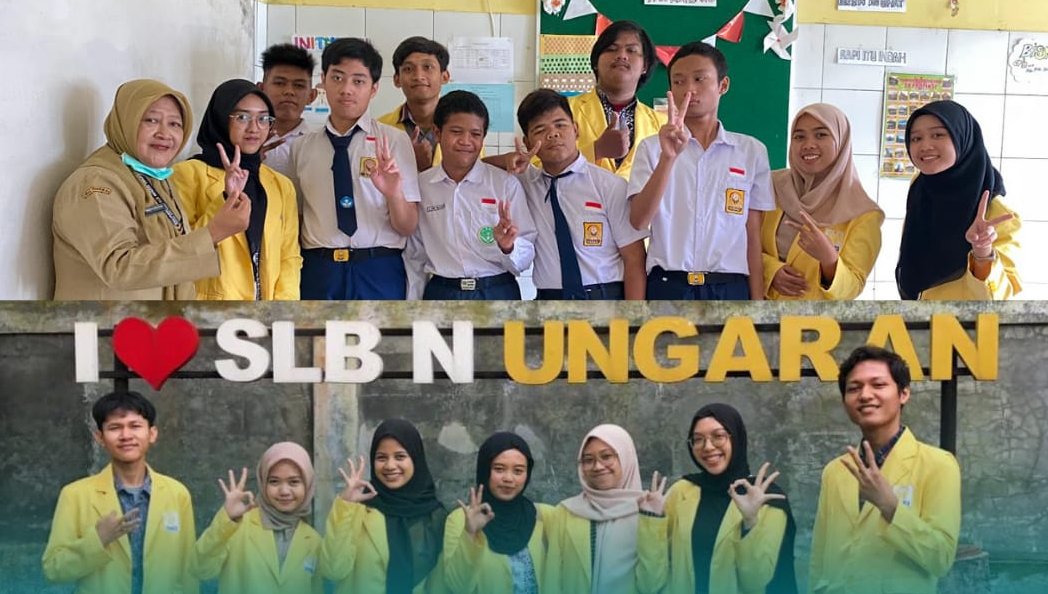
Semarang, October 2025 — As part of their ongoing efforts to promote inclusive and equitable education for all, students of the Mathematics Education Study Program, Universitas Negeri Semarang (UNNES) conducted a school visit to SLBN Ungaran on Monday, May 26, 2025. This activity was organized as a practical component of the Inclusive Mathematics Education course, aiming to provide students with direct exposure to learning environments that serve children with disabilities.
The visit, supervised by Dr. Sugiman, M.Si., lecturer of the Inclusive Mathematics Education course, began with an opening session followed by an orientation led by Mrs. Wiji Rahayu, M.Pd., the Principal of SLBN Ungaran. During the orientation, students were introduced to the school’s teaching approaches and strategies designed to meet the diverse needs and characteristics of students with disabilities.
Throughout the visit, students had the opportunity to observe inclusive mathematics learning practices, use various teaching aids developed in the classroom, and engage in discussions with teachers. The teachers shared valuable insights and experiences in overcoming challenges during mathematics instruction, particularly in adapting materials and methods to accommodate different learning abilities.
This visit serves as a real-world learning experience that reinforces the principles of inclusive education—ensuring that every child, regardless of ability, has the right and opportunity to learn and enjoy mathematics. It reflects UNNES’s strong commitment to supporting SDG 4 (Quality Education), which emphasizes inclusive and equitable education as a foundation for sustainable development.
By interacting directly with educators and students in a special needs school environment, the Mathematics Education students gained a deeper understanding of inclusive teaching methods, empathy, and professional readiness to become future educators who can foster equitable learning spaces.
Through this activity, UNNES continues to play an active role in realizing the Sustainable Development Goals, particularly SDG 4 (Quality Education) and SDG 10 (Reduced Inequalities), by preparing future teachers who are not only skilled in mathematics education but also sensitive to diversity and committed to building an inclusive education system for all.