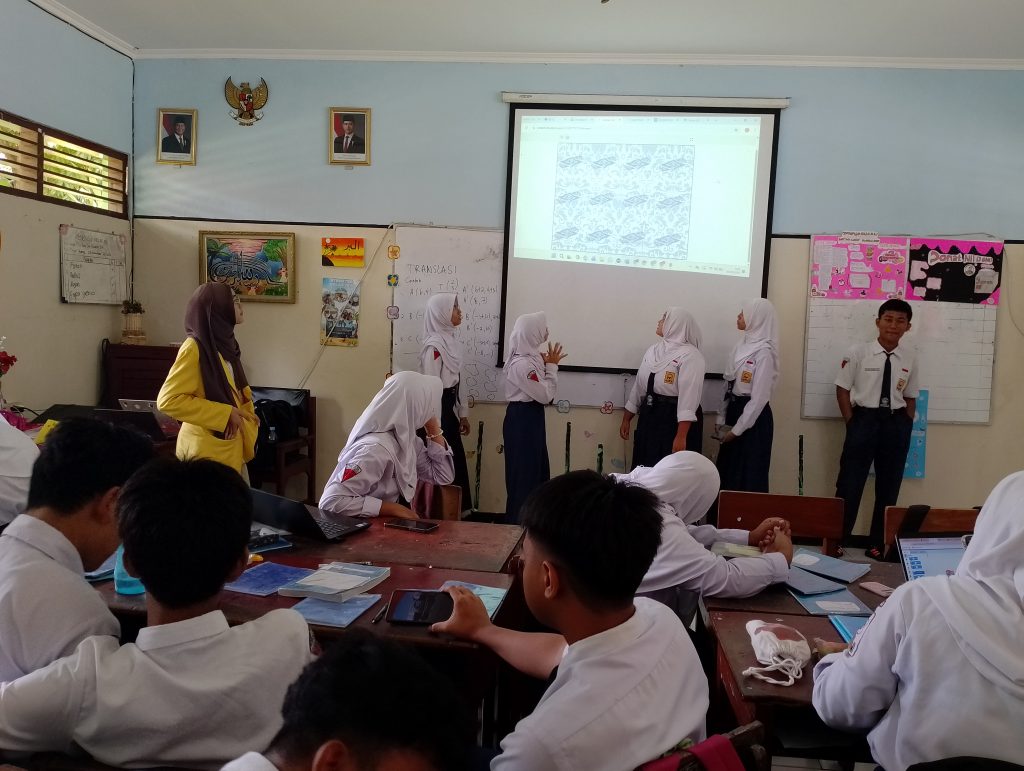
Responding to Indonesia’s low mathematics performance reflected in the PISA 2022 results (score 366, ranking 63 of 81 countries), a group of students from Universitas Negeri Semarang (UNNES) has developed an innovative educational solution named Transformatech. This innovation addresses students’ limited mastery of computational thinking—where studies (Supiarmo & Susanti, 2021) reveal that most learners can identify patterns but struggle to progress toward abstraction and algorithmic reasoning.
Funded under the Student Creativity Program (PKM) – Social Humanities Research (RSH) by the Indonesian Association of Mathematics and Natural Science Faculties (AMLI), the project combines culture, mathematics, and technology in a systematic and measurable learning framework.
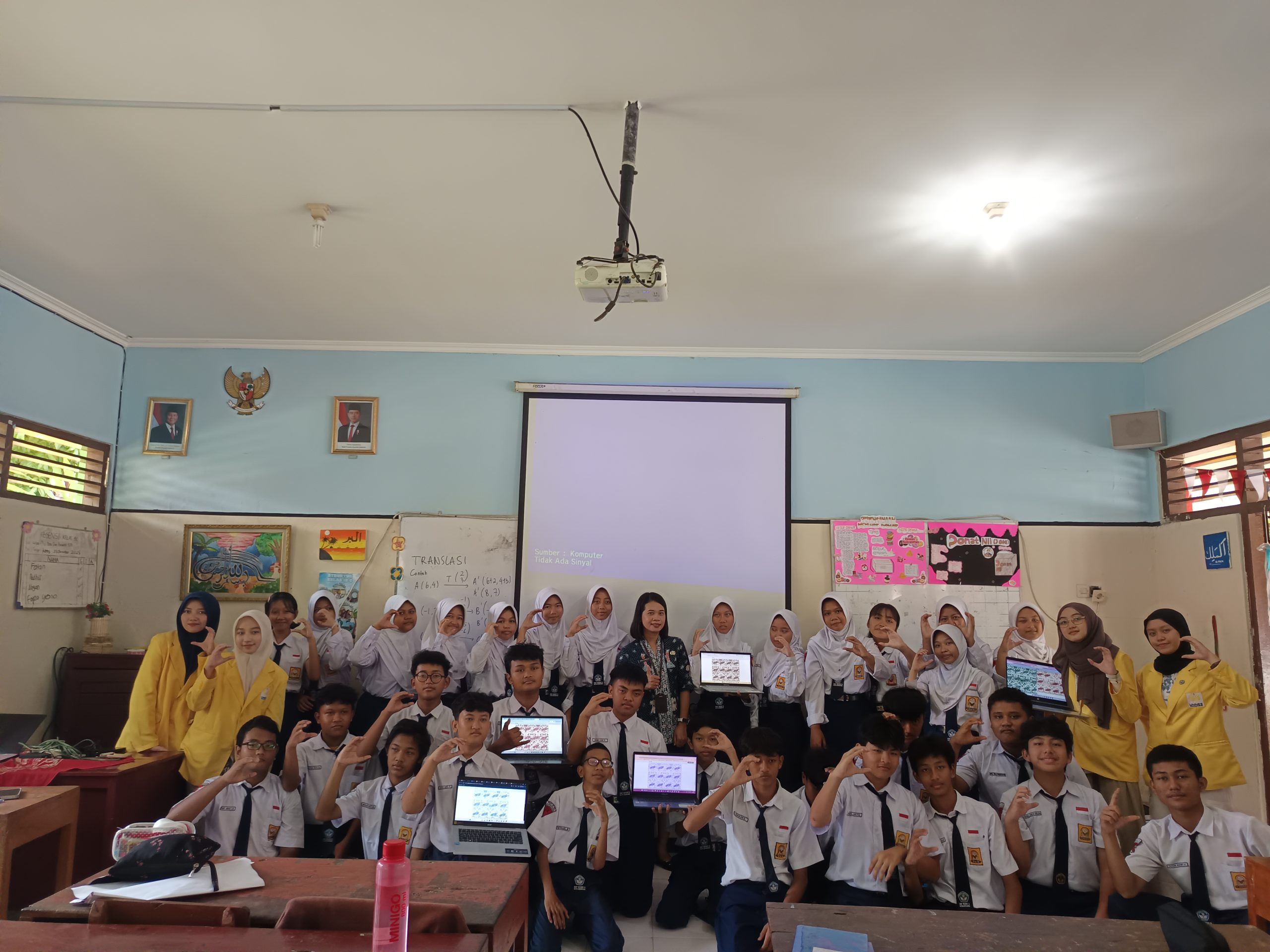
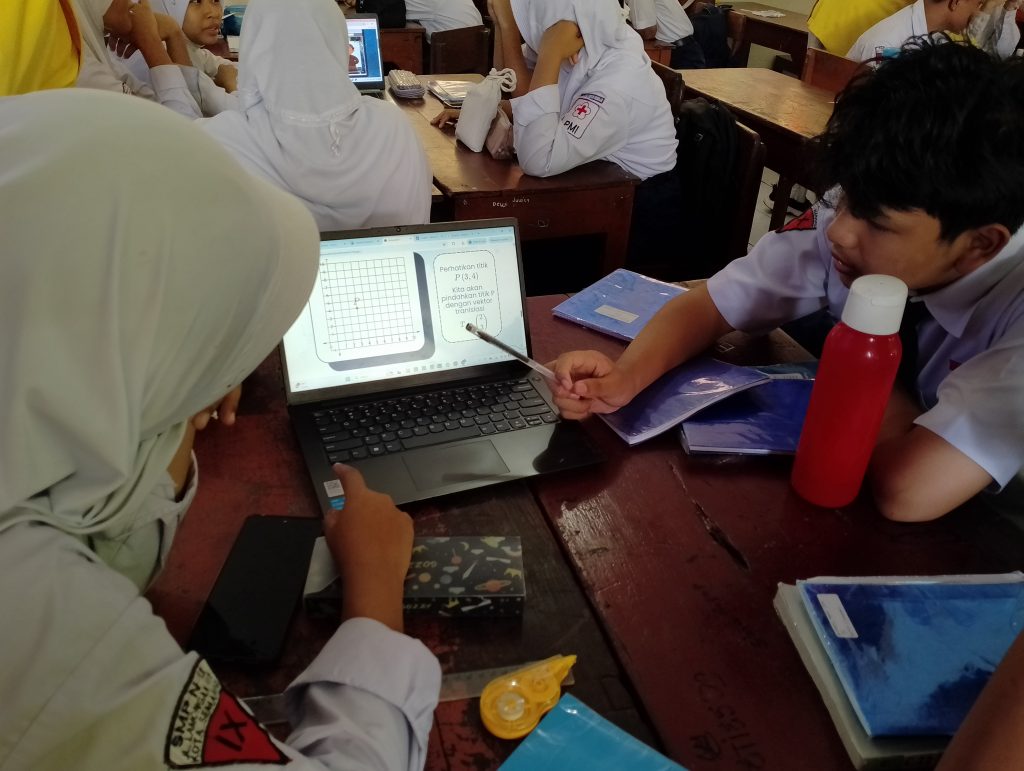
The research team, consisting of Resty Kartika Sari (team leader), Maylafayza Salsabila Zen, Danella Putri Wulandari, Cahya Sari Ardiani, and Avita Dewi Sila Wardani—all from the Mathematics Education Study Program, FMIPA UNNES, and supervised by Mr. Adi Satrio Ardiansyah, S.Pd., M.Pd., designed Transformatech as an interactive web-based learning platform for the topic of Geometric Transformations, implemented at SMP Negeri 13 Semarang.
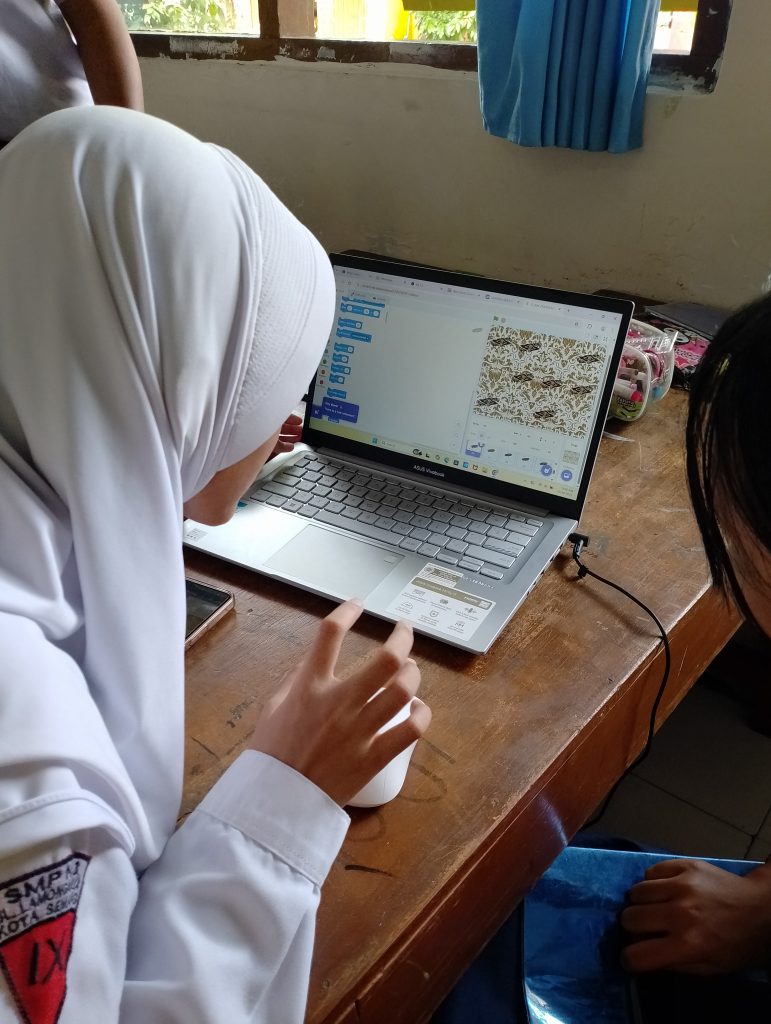
Transformatech stands out for its dual pedagogical approach.
First, it employs Differentiated Learning, accommodating diverse learning styles through visual content (videos), auditory resources (podcast-style recordings), and kinesthetic experiences (Scratch-based simulations).
Second, it integrates Challenge-Based Learning (CBL), where students are not merely solving equations but are challenged in collaborative groups to design Nusantara batik patterns applying geometric transformation principles. The creative design process is conducted through visual code blocks using the Scratch platform, merging cultural heritage with computational reasoning.
As a social-humanities research initiative, the project’s focus extends beyond product creation toward evaluating its human impact. The research examines media validity (expert validation), practicality (teacher perception), student response (interest and motivation), and the effectiveness of the product in improving students’ computational thinking skills.
This innovation exemplifies UNNES’s tangible commitment to nurturing adaptive future educators capable of designing effective, data-driven, and interactive learning solutions rooted in local culture. Transformatech showcases how mathematics, technology, and Indonesian heritage can converge to address national education challenges through creative and evidence-based pedagogical design.