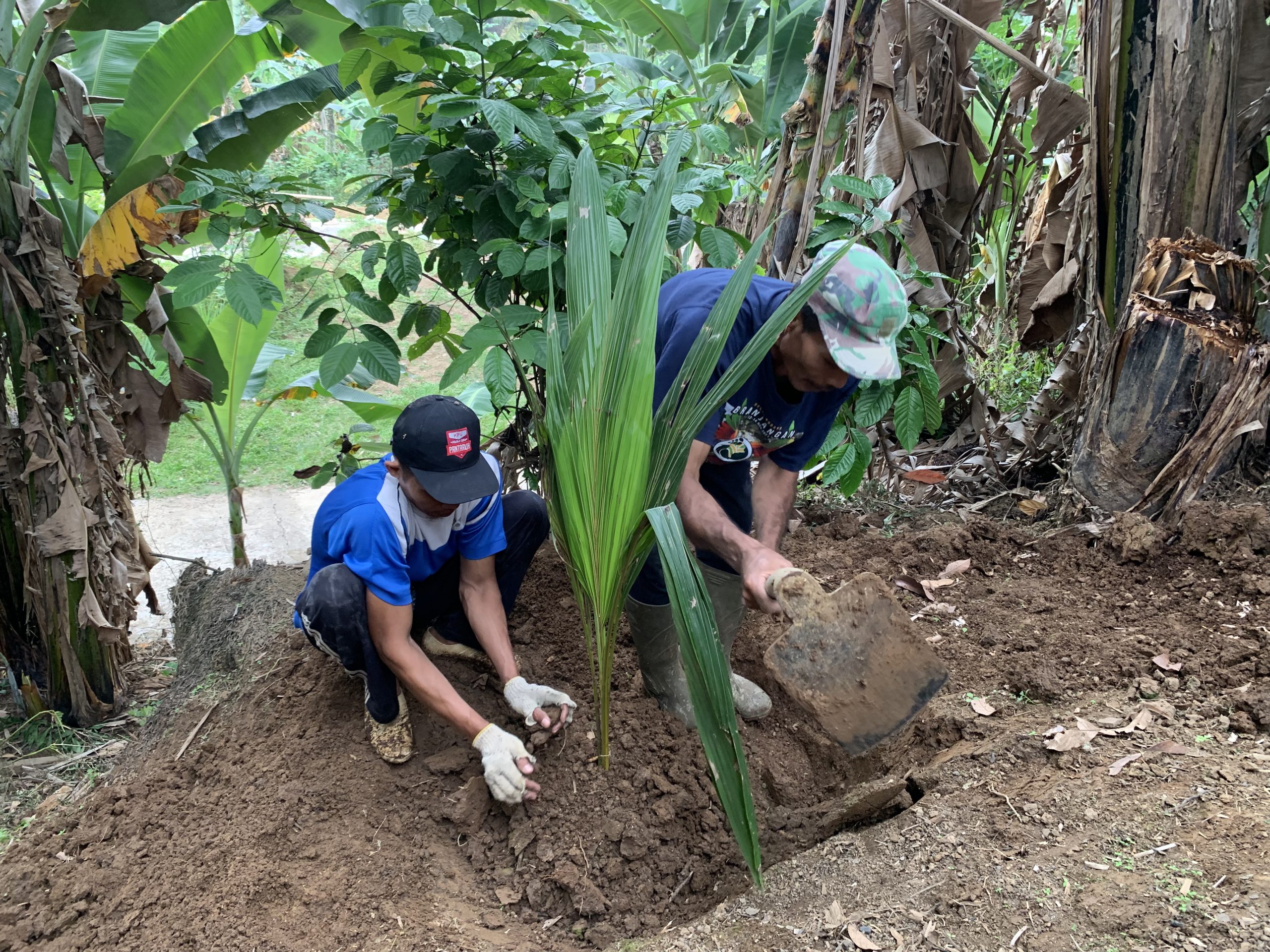
On Saturday, August 30, 2025, at the land owned by Mr. Suwanto in Dersuni Hamlet, Branjang Village, West Ungaran, Semarang Regency, training on the selection of superior seedlings and the planting of palm and coconut trees took place. This activity was organized by the Gading Mayang Farmers Studio with full support from PPK Ormawa HMPPE FEB UNNES, aiming to increase the capacity of young farmers in developing regional superior commodities. Palm and coconut were chosen as superior commodities because they have high economic value and excellent cultivation sustainability potential. Therefore, the selection of superior seeds is the main key to the success of cultivation. Healthy and quality seedlings will produce strong plants, resistant to pest attacks, and have optimal productivity. This training provides practical skills for participants in recognizing the characteristics of superior seeds and planting techniques that support maximum plant growth.
The training was guided by Teguh Hardi Raharjo, M.Pd., who was accompanied by members of Ormawa and the Ormawa PPK Task Force. The participants, the majority of whom were members of the Gading Mayang Farmers Sanggar, participated in this activity with enthusiasm. They gain insight into the selection of superior seedlings by paying attention to the physical condition of the seedlings, such as uniform stems, healthy leaves, and good roots. In addition, the aspect of the suitability of seeds with soil conditions and agroclimate is also a focus in the selection of palm seeds, while for coconut seedlings, the size and shape of the fruit, as well as resistance to pests are the main concerns. One of the participants revealed, “We are very excited to participate in this training because the correct selection of seedlings determines the future success of the plant.” This training not only equips them with technical knowledge, but also opens up insights into the importance of sustainability and positive impact on the environment. Technical support was also provided by village officials and the Agricultural Extension Center, with Mr. Muhadi S.Tr.P., an agricultural extension officer of Branjang Village, who also acted as a resource person. In the training material, planting techniques are also explained in detail, including the right methods to optimize the land and increase crop yields. This aims to reduce the risk of cultivation failure and support environmental sustainability.
Teguh Hardi Raharjo, as the supervisor, added, “This training not only provides economic benefits, but also contributes to environmental sustainability through sustainable cultivation, which can increase carbon sequestration and improve land use in Semarang Regency.” The Chairman of Ormawa HMPPE FEB UNNES, Ahmad Wafiq Rafi Ardani, also gave a testimony, “This training is Ormawa’s commitment to support sustainable agriculture in the village. Through this activity, we hope to build synergy between students, the community, and various related parties, as well as open new insights for participants regarding the selection of quality seeds and appropriate planting techniques.” This activity is directly related to SDGs 8, which focuses on decent job creation and economic growth. Through this training, young farmers not only gain essential technical skills, but are also empowered to become local economic drivers. The selection of superior seeds and proper planting techniques will increase agricultural yields, which in turn can increase farmers’ income and create new opportunities in the agribusiness sector. By increasing production capacity in a sustainable manner, this activity paves the way for the creation of more and more decent jobs, which are urgently needed in rural areas.
For example, the development of superior commodities such as palm and coconut can create new business opportunities, both in the production and processing of agricultural products. This has the potential to support the village economy, providing wider access for local communities to earn better income. Thus, this training not only supports the improvement of farmers’ skills, but also plays a role in encouraging inclusive and sustainable regional economic growth. With great hope, this activity ended with optimism that young farmers at Sanggar Tani Gading Mayang will become agents of change in modern agriculture, prioritizing the quality of seeds and appropriate planting techniques for the advancement of local agriculture and community welfare.