


Universitas Negeri Semarang (UNNES) has demonstrated a strong institutional commitment to implementing energy efficiency and sustainability principles in all aspects of campus infrastructure
development. This commitment is outlined in the Rector’s Circular Letter Number B/28595/UN37/PA.00.00/2024 concerning Green Buildings at UNNES, particularly in points 1, 5, 7, and 8 which mandates that every renovation and new construction project aligns with the principles of smart and green building.
1. Commitment to Sustainable and Efficient Building Management
UNNES emphasizes that every building within its environment must be designed and managed to achieve measurable efficiency in the use of resources while contributing to the reduction of greenhouse gas emissions. Each project must fulfill the requirements of green building implementation at every stage (planning, construction, operation, and maintenance) to ensure energy and water efficiency, health, comfort, and environmental harmony. This approach positions UNNES as a model for sustainable campus infrastructure aligned with national policies and SDG 7 objectives.
5. Implementation of Carbon Neutrality Through Energy and Water Efficiency
The university’s carbon neutrality agenda is operationalized through two primary mechanisms: (i) The designation and enforcement of green building standards across the campus, ensuring that all facilities meet sustainable design requirements; and (ii) The promotion of energy and water efficiency programs, which include monitoring energy consumption, optimizing operational schedules, and adopting technologies that reduce energy intensity.
These steps represent UNNES’s concrete contribution to climate change mitigation and adaptation through improved building management systems.
7. General Policy on Energy Efficiency
The general energy efficiency policy applies to all building types within UNNES. It encompasses seven strategic areas (i) Development and execution of an institutional energy management plan; (ii) Enhancement of energy use efficiency levels across all facilities; (iii) Implementation of integrated energy systems and control mechanisms; (iv) Continuous energy monitoring and supervision; (v) Regular maintenance and operational optimization of building systems; (vi) Increased use of renewable energy sources, particularly solar energy; and (vii) Provision and maintenance of green open spaces to support microclimate regulation.
This holistic policy ensures that energy efficiency is embedded into the entire life cycle of UNNES’s infrastructure assets.
8. Specific Implementation of Energy Efficiency Measures
At the operational level, UNNES enforces several concrete actions to enhance energy efficiency, including (i) Setting operational hours for all campus buildings to control unnecessary energy use; (ii) Conducting regular maintenance of energy-utilizing equipment to ensure optimal performance; (iii) Gradual replacement of conventional lighting with energy-efficient LED systems; and (iv) Selecting air conditioning systems that are efficient, appropriately sized, and environmentally friendly, ensuring both energy savings and indoor comfort.
Elements of Green Building Implementation at Universitas Negeri Semarang (UNNES)
Universitas Negeri Semarang (UNNES) consistently implements the principles of smart and green building in all construction and renovation activities across its campuses. This approach is an integral part of the university’s commitment as a Universitas Konservasi and directly supports the achievement of Sustainable Development Goal 7 (Affordable and Clean Energy).
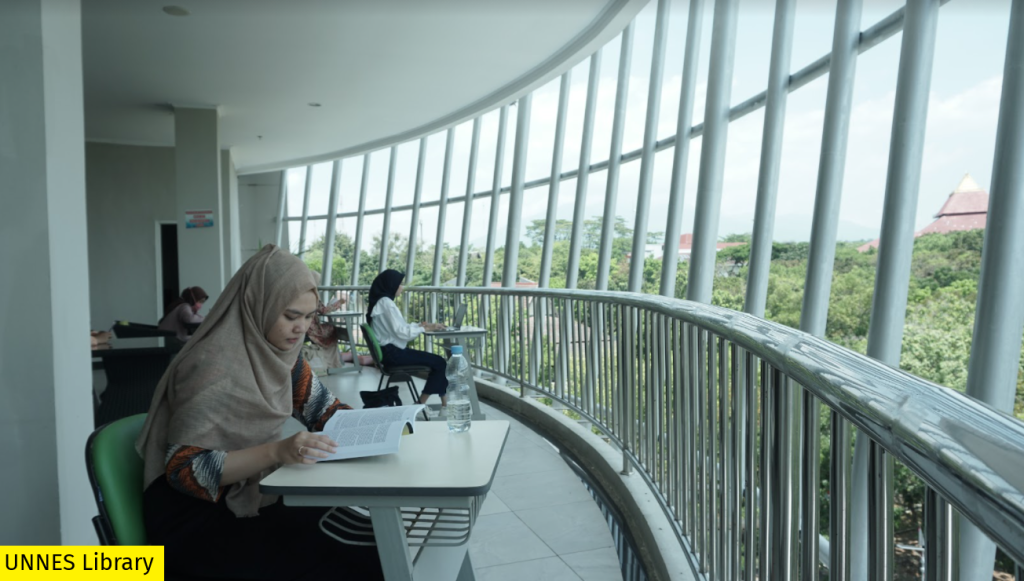
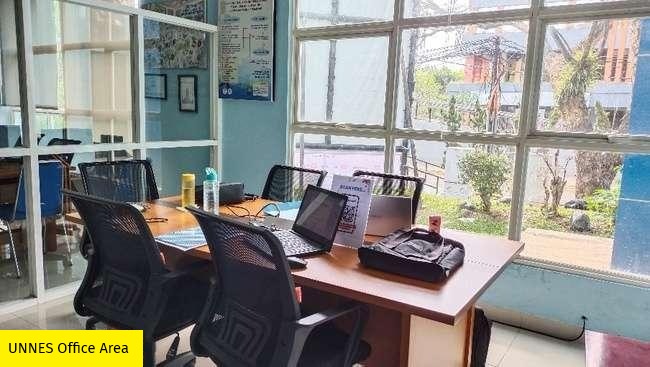
The design of UNNES buildings prioritizes the maximization of natural lighting and ventilation to reduce energy consumption. Architectural features such as the combination of rooster walls and reflective materials are strategically applied to allow cross-ventilation and optimal daylight penetration. Classrooms, laboratories, and administrative spaces are designed to utilize full natural daylight during working hours, significantly minimizing the dependence on artificial lighting and air-conditioning systems.
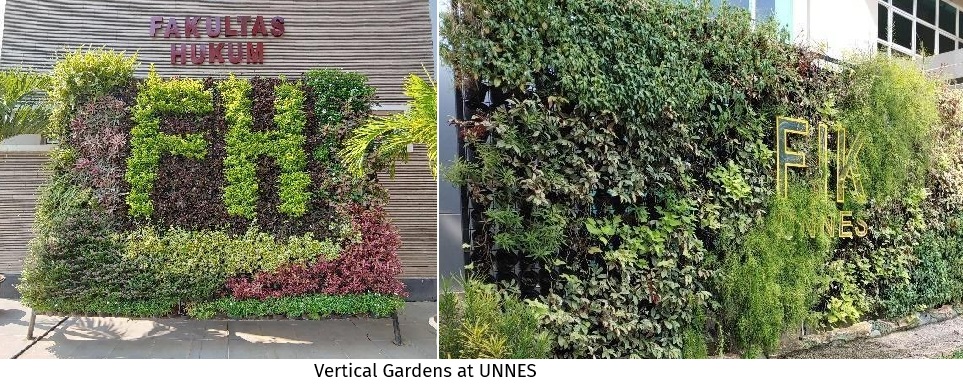
In addition to passive design strategies, UNNES incorporates green landscape integration through indoor and outdoor vertical gardens that improve thermal comfort and air quality within and around buildings. These green elements are present in key facilities. These vertical gardens play a crucial role in enhancing building aesthetics, regulating temperature, and contributing to the overall ecological balance of the campus environment.
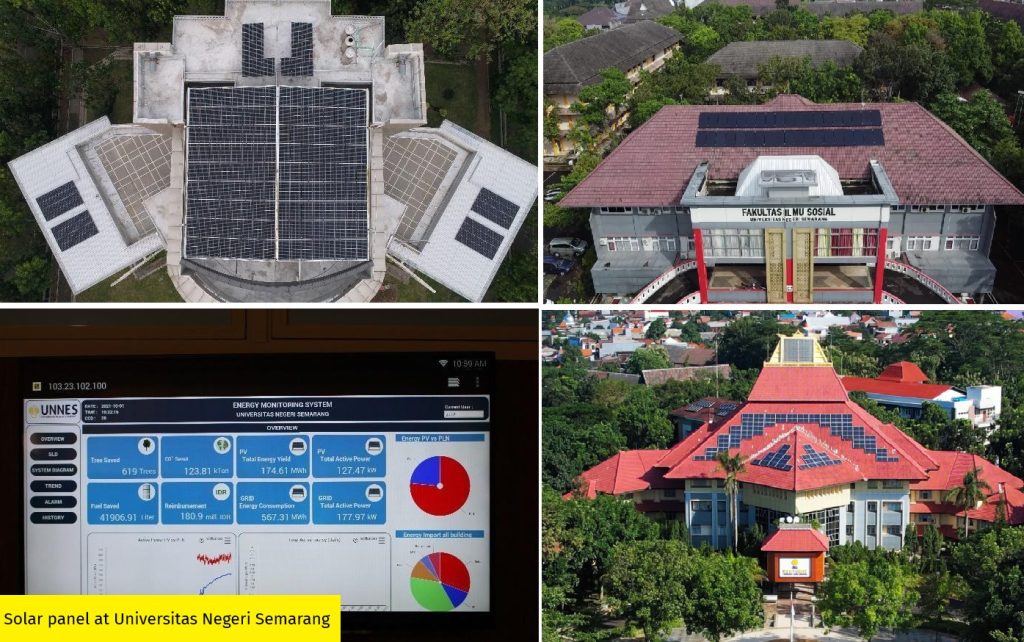
UNNES also promotes renewable energy utilization through the installation of solar photovoltaic systems across major campus buildings. Currently, more than 1,200 solar panels are installed on rooftops of 14 main buildings, including the Rectorate, IT Centre (TIK), Library, Entrepreneurship Building, LP2M, LP3, and eight faculty dean buildings (FBS, FISIP, FEB, FMIPA, FIPP, FIS, FH, and Faculty of Sports). These systems are integrated into an on-grid energy monitoring and management system that allows real-time tracking of energy generation and consumption. This initiative significantly reduces the university’s reliance on electricity from the national grid (PLN) and contributes to the overall reduction of carbon emissions from campus operations.
Through these architectural and technological strategies, UNNES ensures that each building functions efficiently, supports occupant well-being, and contributes to environmental sustainability. The combination of passive design (natural lighting and ventilation), active systems (solar panels and smart monitoring), and ecological features (vertical gardens and green spaces) exemplifies the university’s comprehensive commitment to the principles of energy conservation, carbon neutrality, and sustainable campus development.
Open Space Management and Utilization at Universitas Negeri Semarang (UNNES)
Universitas Negeri Semarang (UNNES) consistently maintains a campus environment that harmonizes built structures with expansive open spaces to support its identity as a Universitas Konservasi. Based on 2024 calculations, UNNES has a total campus area of 2,195,623 m², with the total ground floor area of buildings at 74,458 m², resulting in an open space ratio of approximately 96.6%. This exceptionally high proportion reflects UNNES’s strong commitment to environmental conservation, energy efficiency, and sustainable spatial planning.
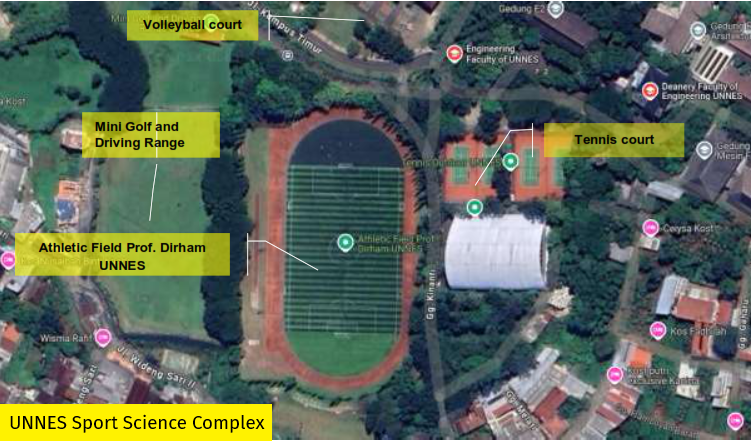
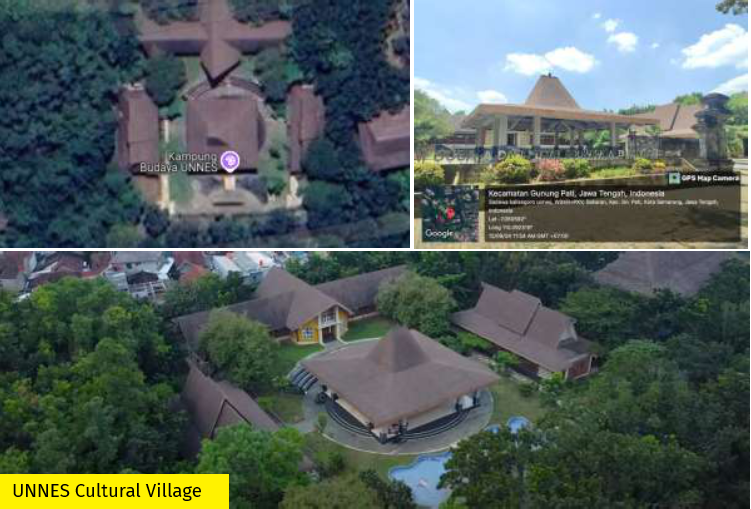
Open spaces at UNNES are designed to serve multiple ecological, educational, and social functions. These areas not only enhance the microclimate and biodiversity of the campus but also provide inclusive spaces for academic and community activities. Major open areas include the Faculty of Sport Science Complex (45,552 m²), which encompasses the Prof. Dirham Athletic Field, volleyball and tennis courts, and a mini golf driving range frequently used for both university and regional sporting events. The UNNES Pond (4,977 m²) functions as a natural water reservoir and scenic recreation area, while the UNNES Cultural Village (8,803 m²) offers a cultural and educational space surrounded by campus forest vegetation.
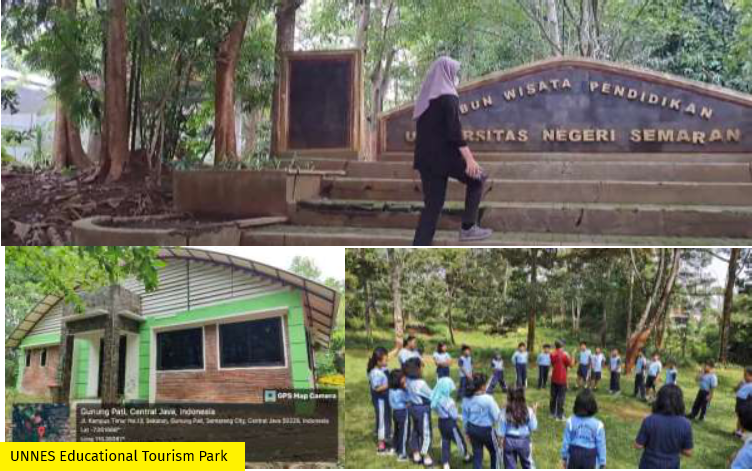
The Educational Tourism Park (41,133 m²) serves as an innovative outdoor learning environment featuring a tree planting site, greenhouse, butterfly breeding center, and plant cultivation facilities. Other significant open areas include the Faculty of Sport Science Swimming Pool, Rectorate Field, Building C Field, and Ulul Albab Mosque Green Area, all designed to promote wellness, community engagement, and environmental balance. The Main Gate Pedestrian Area and Building G Park provide green corridors that connect central administrative zones with the Conservation Monument and surrounding landscape.
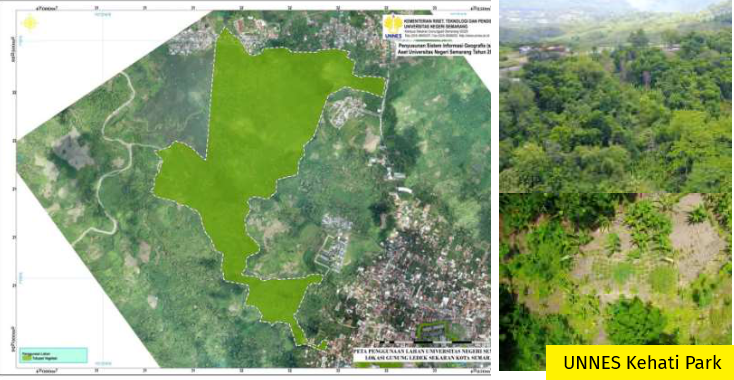
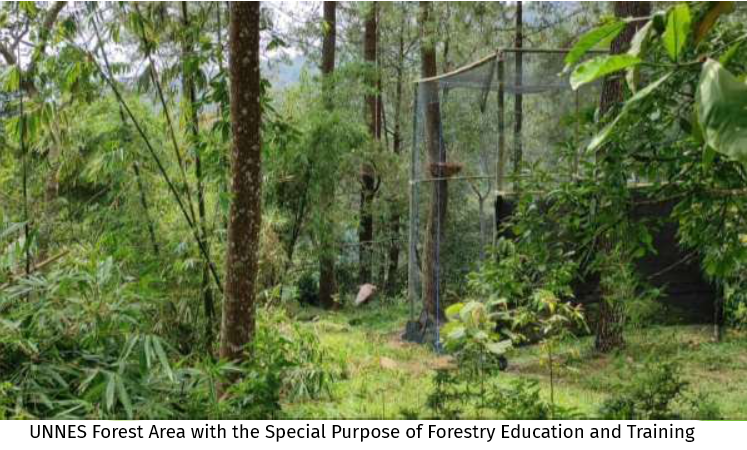
A central highlight of UNNES’s open space system is the UNNES Kehati Park (Kawasan Keanekaragaman Hayati), which covers an expansive 695,935.80 m². This biodiversity park, located in Gunung Ledek, Sukorejo, serves as a living laboratory for conservation education and ecological research. Complementing this, the Forest Area with the Special Purpose of Forestry Education and Training (KHDTK) in Kendal Regency covers 684,200 m² (68.42 ha), designated under the Ministry of Environment and Forestry Decree No. 1134 of 2024. This area supports forestry education, biodiversity preservation, and practical training for environmental students.
UNNES’s open spaces are also vibrant centers of community interaction and student engagement. The university regularly opens these areas to the public for various activities such as cycling, mass gymnastics, jogging, international woodball competitions, hydroponic education tours, and cultural exhibitions. These inclusive uses exemplify UNNES’s commitment to ensuring that its green spaces not only contribute to ecological sustainability but also foster social and educational enrichment.