The commitment of Universitas Negeri Semarang (UNNES) to environmental conservation extends far beyond policy — it is deeply embedded in everyday campus life. This commitment is grounded in the Rector’s Regulation of Universitas Negeri Semarang Number 21 of 2022 on the Guidelines for Campus Water Conservation Governance, which serves as the main framework for sustainable water management across the university.
The regulation outlines the principles and procedures for water conservation, reuse, and protection of water resources within the campus. In practice, it has been successfully implemented across various university units. As of 2024, the implementation rate of the wastewater utilization program reached 74%, covering 20 out of 27 targeted sites, including swimming pools, laboratories, mosques, and dormitories.
Water Recycling for Diverse Campus Needs
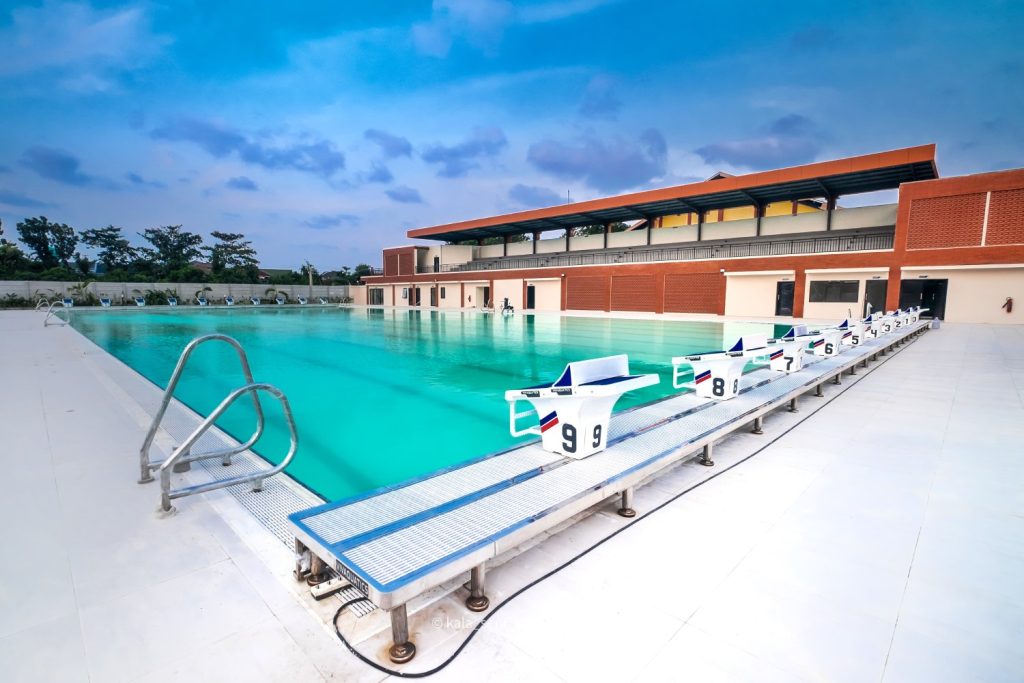
The Faculty of Sports Science (FIK) has been a pioneer in water recycling practices. Its swimming pool uses an advanced filtration-based system to recycle water efficiently, maintaining cleanliness while reducing the need for new water.
Moreover, almost all faculties at UNNES have now adopted rainwater harvesting systems. Rainwater collected from rooftops is stored in large tanks and reused for plant irrigation and sanitation purposes. This initiative not only improves water efficiency but also embodies the university’s commitment to ecological responsibility and conservation.
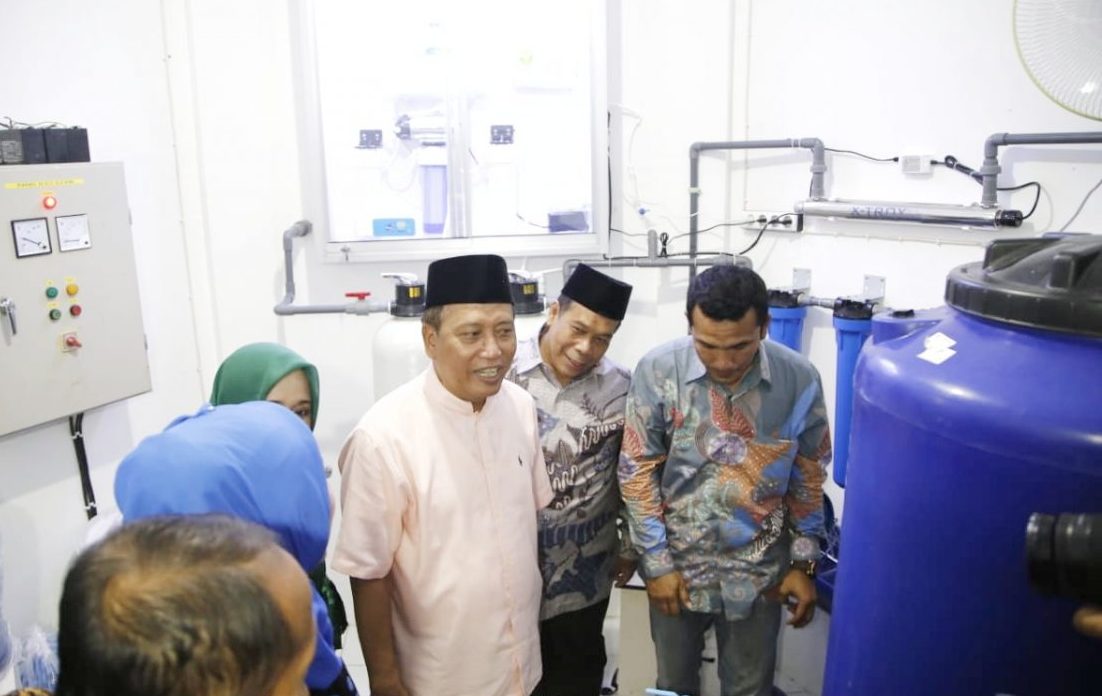
Several faculties, including the Faculty of Mathematics and Natural Sciences (FMIPA) and the Campus Health Service Center (PUSLAKES), operate wastewater treatment installations (IPAL).
Wastewater from biology and chemistry laboratories, as well as medical facilities, is treated through filtration and neutralization processes before being reused — mainly for watering plants and maintaining green open spaces around the campus.
Through this system, UNNES ensures that chemical and medical waste is properly managed and does not harm the surrounding environment, while also supporting ecosystem sustainability within the university.
Reusing River and Ablution Water for Greening
UNNES also utilizes water from the Contok River to support campus greening, particularly around the female dormitory complex. The treated river water is used to water plants and maintain the surrounding landscape.
In addition, campus mosques such as Asshidiqi, Ulul Albab, and Salman Al-Farisi have implemented ablution water recycling systems, in which water from ritual washing is filtered and reused to irrigate plants around mosque areas.
These practices not only reduce the consumption of clean water but also transform religious spaces into centers of environmental awareness and education.
Through these initiatives, UNNES reinforces its identity as a Conservation University that consistently practices sustainable water management and green innovation.
Institutional policies have effectively translated into tangible, daily actions by students, staff, and faculty, turning water conservation and recycling into a shared culture and lifestyle within the green campus community.