UNNES Library Now Open to the Public, Accessible Online 24 Hours a Day
Universitas Negeri Semarang (UNNES) has now opened access to the UNNES Library for the general public during working hours and provides digital services that can be accessed online 24 hours a day. This policy represents UNNES’s commitment to supporting literacy, research, and the openness of academic information in the digital era.
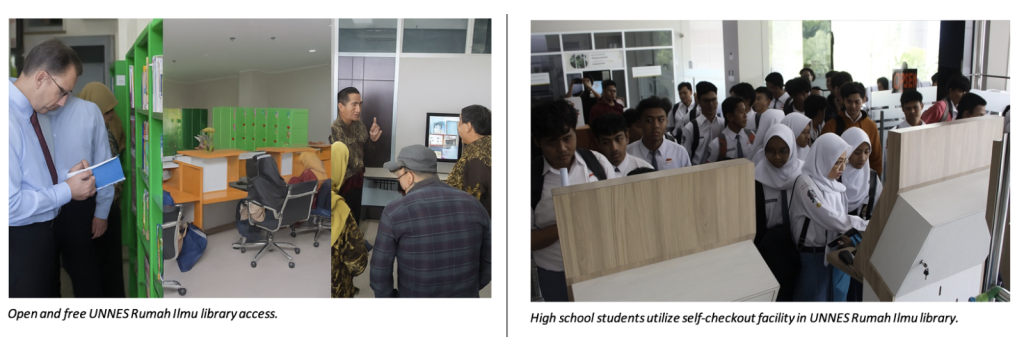
This policy is regulated through the Rector’s Circular Letter of UNNES Number B/28392/UN37/TA.01.02/2024 concerning the Night Service Team of Rumah Ilmu Library Universitas Negeri Semarang, and circular letter concerning the Utilization of the Library and Free E-Book Access at Universitas Negeri Semarang. Both regulations affirm that the library facilities, both physical and online, can now be utilized not only by the UNNES academic community but also by the public who need scientific references and learning resources.
The library is now open to the public from Monday to Friday, 08.00–15.30 WIB, providing general collections, reading rooms, and access to scientific databases. “We want to make the UNNES Library an open literacy center. Anyone can come, read, and utilize sources of knowledge while still adhering to academic rules and ethics,”
In addition, through the portal https://otomasi.unnes.ac.id/, the public can access digital catalogs, scientific journals, academic repositories, and e-book collections 24 hours a day. This system was developed to support distance learning and to provide convenience for users outside the campus.
This policy aligns with UNNES’s vision as a conservation-minded and internationally reputable university that upholds the principles of openness and educational sustainability. With broader access, the UNNES Library is expected to become one of the public knowledge centers in Semarang City, encouraging a reading culture and scientific research among the wider community.
UNNES Library: The Embodiment of a Green Digital Library on a Conservation Campus
As a conservation-oriented university, Universitas Negeri Semarang (UNNES) continues to innovate in creating a friendly, inclusive, and sustainable learning environment. One tangible manifestation of this commitment is the UNNES Library, which has now developed into a Green Digital Library — a green library based on digital technology.
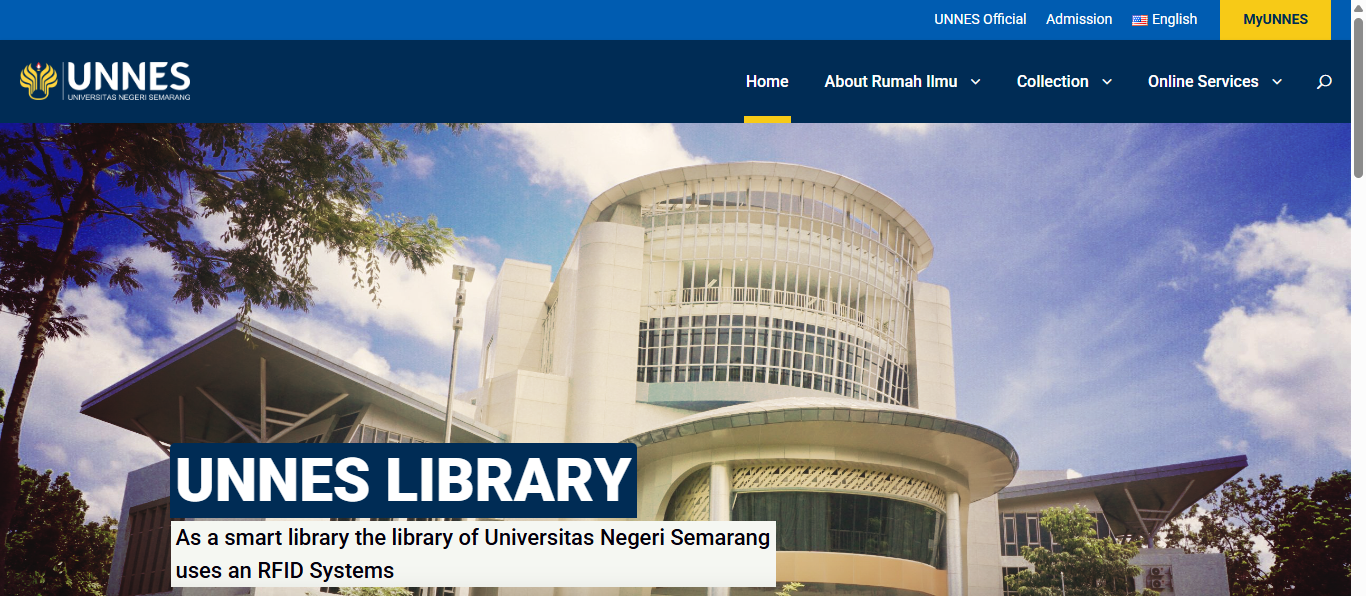
The UNNES Library not only functions as a place for storing and borrowing books but also serves as a center for literacy, research, and digital innovation. With a modern building design that embraces the concept of conservation, the library utilizes natural lighting, cross ventilation, and open green areas to create a comfortable learning atmosphere that is also energy-efficient.
In supporting learning in the digital era, the UNNES Library provides a variety of electronic services, such as access to e-journals, e-books, digital repositories, and an online catalog (OPAC) that can be accessed anytime through the internet. The self-service book circulation system and QR codes make it easier for students to borrow, renew, and search for references independently.
In addition to digital facilities, the UNNES Library also provides thematic reading rooms and collaborative discussion spaces designed to encourage creativity and interaction among students. There are also inclusive rooms for persons with disabilities, multimedia rooms, lactation rooms, and a literacy gallery that showcases works by the academic community.
Through the green and smart library approach, UNNES is committed to realizing a library that not only stores knowledge but also fosters ecological awareness and conservation ethics among academics. With the combination of digital technology and environmental preservation values, the UNNES Library has become a real symbol of transformation toward a Green and Smart Campus with an international outlook.
UNNES Library: An Open and Inclusive Literacy Center for the Academic Community and the Public
As a conservation-oriented university, Universitas Negeri Semarang (UNNES) continues to innovate in expanding access to education and literacy. One concrete manifestation of this commitment is the existence of the UNNES Library, which has now developed into a Green Digital Library — a green library based on digital technology that can be accessed by various groups, both the academic community and the general public.
The UNNES Library not only serves as a place for storing books and scientific journals but also acts as a center for knowledge, research, and academic collaboration. With modern service systems such as the online catalog (OPAC), digital repository, access to international e-journals and e-books, and a self-service circulation system using QR codes, this library makes it easier for visitors to obtain information quickly and efficiently.
“We open access as widely as possible for anyone who wants to learn and develop literacy. Every day, an average of 950 visitors come from the UNNES academic community, while around 220 visitors come from the general public, ranging from students, researchers, to literacy communities,” said the Head of the Library Technical Implementation Unit (UPT).
In addition to comfortable air-conditioned reading rooms, the UNNES Library also has collaborative discussion zones, multimedia rooms, inclusive reading spaces for persons with disabilities, lactation rooms, and open reading gardens. These facilities support a productive and enjoyable learning atmosphere, in line with the spirit of the Green Campus and Conservation University.
Currently, the UNNES Library has more than 200,000 printed collections and thousands of digital collections that can be accessed through the UNNES Digital Library and Institutional Repository (UNNES e-Repository) platforms. These collections include textbooks, reference books, scientific works, research reports, and reputable international journals.
With environmentally friendly architecture and continuously developed digital service systems, the UNNES Library has become a symbol of higher education transformation based on conservation and inclusivity. Its existence strengthens UNNES’s role not only as a university that produces knowledge but also as a public space open to the exchange of ideas and the preservation of knowledge.