The Historic Postgraduate Building of UNNES: A Witness to the Transformation of Higher Education in Semarang
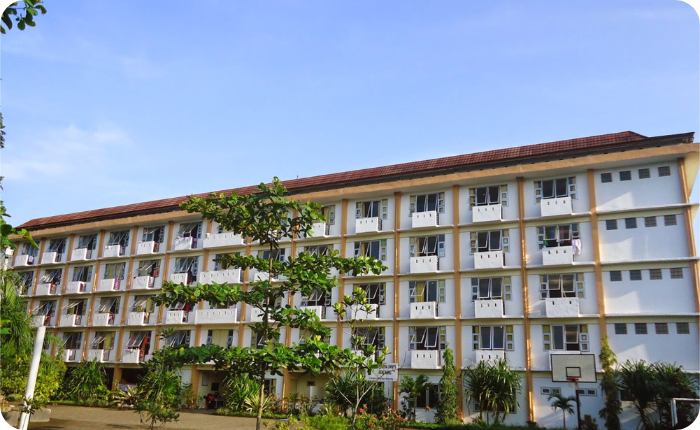
Semarang, September 20, 2025 – The old building standing majestically in the Bendan Ngisor Campus area of Semarang City has once again attracted public attention. This building is one of the historical landmarks owned by the Graduate School of Universitas Negeri Semarang (UNNES), which used to be the center of all academic and administrative activities for the master’s (S2) and doctoral (S3) programs.
Located at Jl. Lamongan Tengah No. 2, Bendan Ngisor, this building has become an important part of UNNES’s long journey since the Graduate School was established in 1997. It was here that various academic activities such as seminars, thesis defenses, and the first dissertation examinations were held. The building even witnessed UNNES’s transformation from IKIP Semarang into a university in 1999, marking a new chapter in higher education in Central Java.
As the campus developed, in February 2017, the Graduate School’s activities were officially moved to the Kelud Utara III Campus to accommodate the growing number of students and the need for modern facilities. Nevertheless, the building in Bendan Ngisor has been preserved and is now used for administrative purposes and certain academic training activities.
The existence of this building holds significant meaning because it represents the history and academic identity of UNNES as a conservation-minded university. In addition to symbolizing the journey of postgraduate education in Semarang, the Bendan building also holds memories for thousands of alumni who once studied there.
To this day, the university continues its efforts to preserve the building as part of the campus’s historical heritage. Maintenance and light revitalization are carried out to ensure that the structure remains sturdy without altering its original character. With its historical value and academic contribution, the UNNES Graduate School building in Bendan Ngisor stands as tangible evidence of how higher education grows together with time and history in the city of Semarang.
Temple Replicas at the UNNES Department of History: A Space for Learning and Preserving the Archipelago’s Heritage
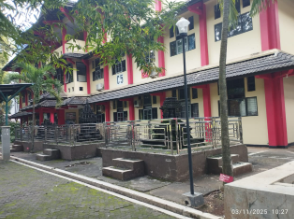
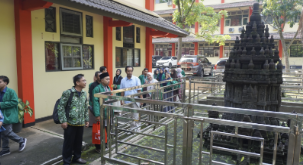
The Department of History at Universitas Negeri Semarang (UNNES) presents a unique and inspiring learning environment through the existence of historical building replicas within the campus. Among these replicas are Singasari Temple, Prambanan Temple, and Plaosan Temple, which were constructed in detailed resemblance to the originals as educational media for studying Indonesia’s history and culture.
The presence of these three temple replicas serves as an open laboratory for students to learn about architecture, symbolic meaning, and the development of classical civilization in the archipelago. Not only as academic tools, but this area also frequently becomes an educational destination for schools and the general public who wish to learn more closely about the richness of the nation’s cultural heritage.
According to lecturers from the UNNES Department of History, the existence of these temple replicas is a concrete form of conservation-based education, which is a distinctive characteristic of UNNES. Through visual and experiential approaches, students are expected not only to understand history from books but also to experience the cultural atmosphere and values contained in the relics of the past.
In addition to serving as a learning medium, the temple replicas also beautify the Department of History area and have become an educational icon of the campus that reflects UNNES’s commitment to preserving Indonesia’s cultural heritage while strengthening the concept of the Green Campus and Conservation University.
UNNES Archival Building: A Center for Document Preservation and the Historical Footprints of the Conservation University
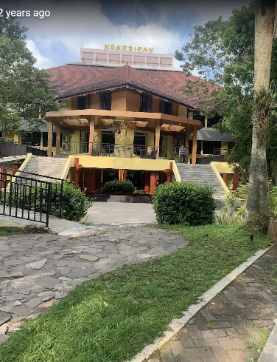
Universitas Negeri Semarang (UNNES) continues to demonstrate its commitment to establishing professional and sustainable university governance through the construction of the UNNES Archival Building. This building functions as a center for storing, managing, and preserving institutional archives, as well as serving as an essential part of efforts to safeguard the university’s collective memory.
As an institution that upholds the values of conservation, UNNES recognizes that archives are not merely collections of documents, but records of the university’s academic, administrative, and historical journey. The UNNES Archival Building was designed with a modern and eco-friendly archival concept, equipped with a secure storage system, reading rooms, and document digitization facilities to support the transformation toward a smart campus.
The existence of this building not only supports administrative activities but also serves as a source of learning and research for students, particularly those studying history, information science, and archival studies. Through this facility, the academic community can learn how data and documents are managed professionally in accordance with the principles of Good University Governance.
In addition, the UNNES Archival Building stands as an important symbol of the institution’s identity and sustainability. The archives stored within it document various achievements, innovations, and significant events that shape UNNES’s journey as a Conservation University with an International Outlook.
With the operation of this Archival Building, UNNES reaffirms its commitment not only to preserving nature and culture but also to safeguarding institutional memory and history as a legacy of knowledge for future generations.
UNNES Cultural Village: A Living Space for Tradition Preservation and Conservation Education
Universitas Negeri Semarang (UNNES) has a village within its campus. What is it? Let’s take a closer look at this unique feature of UNNES. According to the Great Dictionary of the Indonesian Language (KBBI), a kampung is defined as a group of houses that form part of a city, usually inhabited by people with lower incomes. However, the village within UNNES is not just an ordinary village.
UNNES has built a facility called the Cultural Village (Kampung Budaya). This village consists of several buildings, including a large joglo-roofed pavilion measuring 20 x 20 meters in the central area. The pavilion was built as a venue for performing arts such as wayang (shadow puppetry), drama, dance, and other art forms.
Surrounding the pavilion are three buildings forming a U-shape. The buildings on the right and left sides serve as “homes” for fine arts and crafts products created by UNNES students. Each year, students from the Department of Fine Arts hold their art exhibitions in these buildings.
Behind the pavilion stands a building that functions as an indoor theater. The performance space is equipped with production rooms, as well as advanced lighting and audio systems. With this facility, performance organizers are expected to be able to stage professional and engaging shows.
Before entering the Cultural Village area, visitors are greeted by traditional Javanese carvings adorning the front area. These carvings are beautiful and elegant, as if welcoming guests who are about to enjoy a performance.
The Cultural Village is not exclusive! It can also be used for activities other than performances. UNNES students often use the Cultural Village for practice sessions before dance or drama examinations.
In addition, the Cultural Village can also be used for meetings. UNNES students frequently use the pavilion for coordination meetings because of its cool air and open accessibility — provided that order, cleanliness, and proper manners are maintained.
The Cultural Village was once used by students of the English Literature Study Program as a filming location for a short movie titled Anthony and Cleopatra. Bambang Margo Susanto and his four colleagues involved in the film project decided to use this campus facility due to its excellent architecture and suitability for art performances.