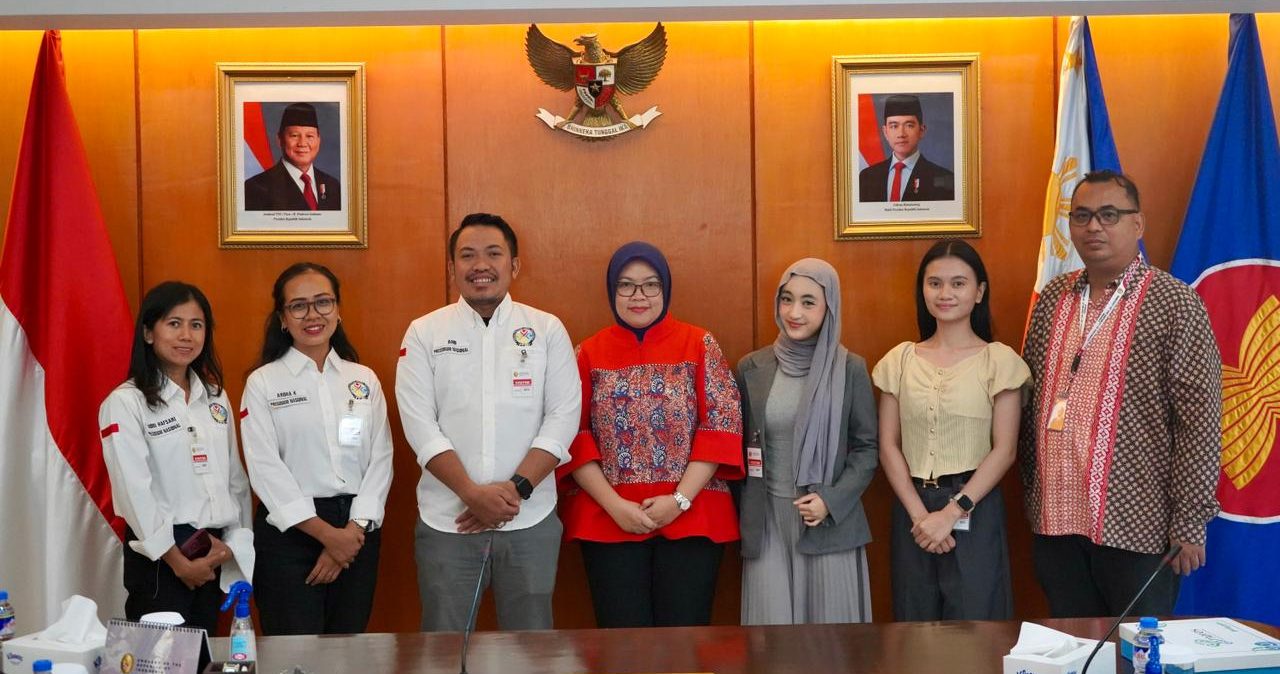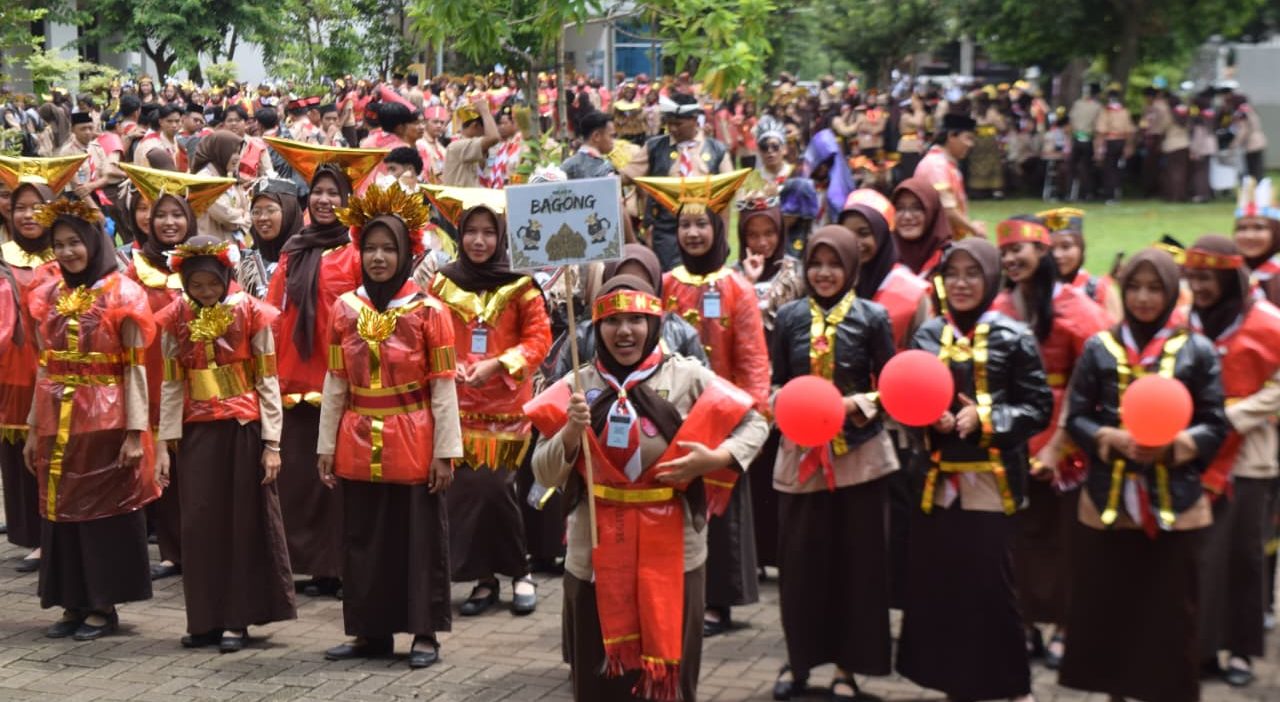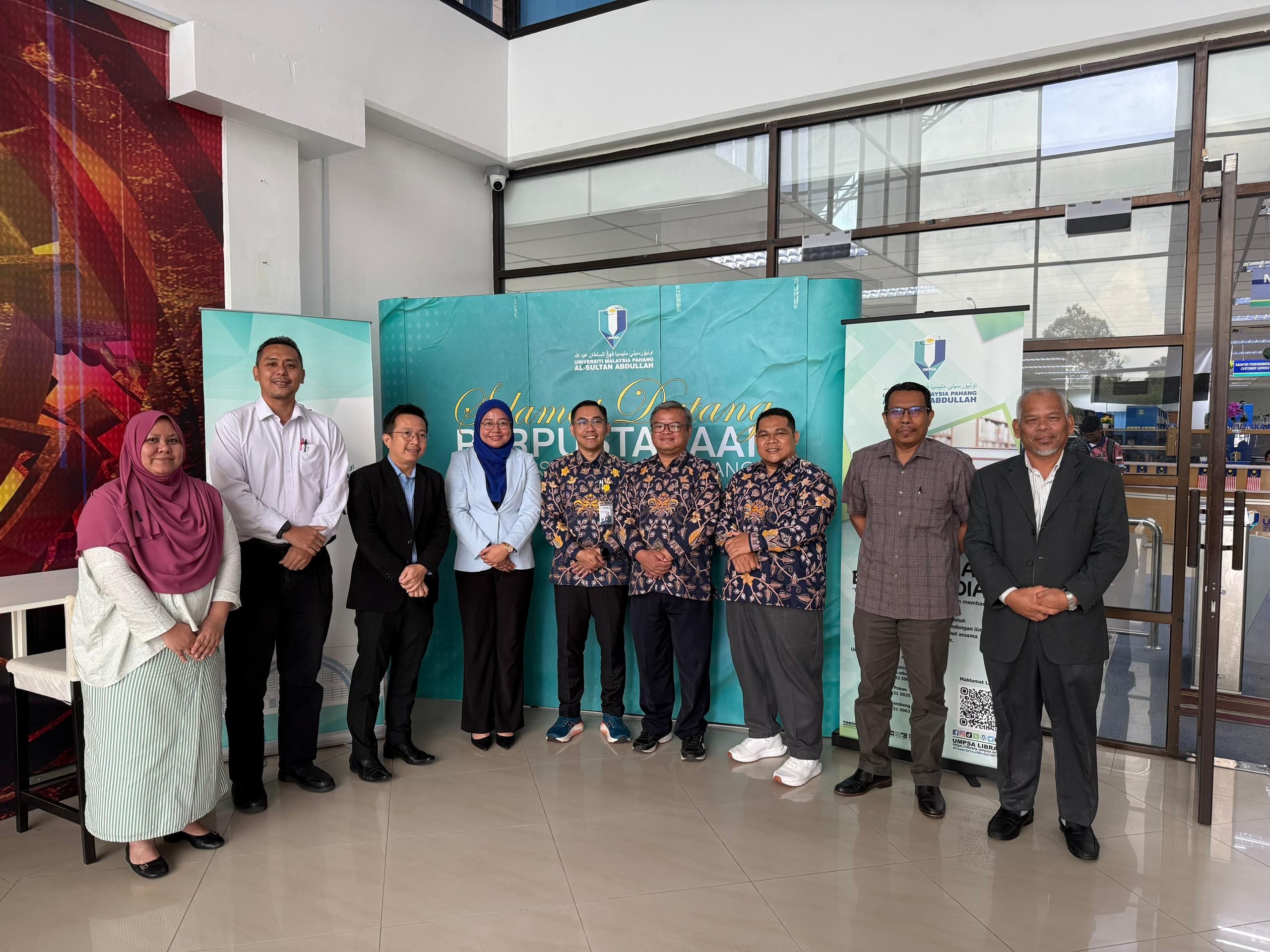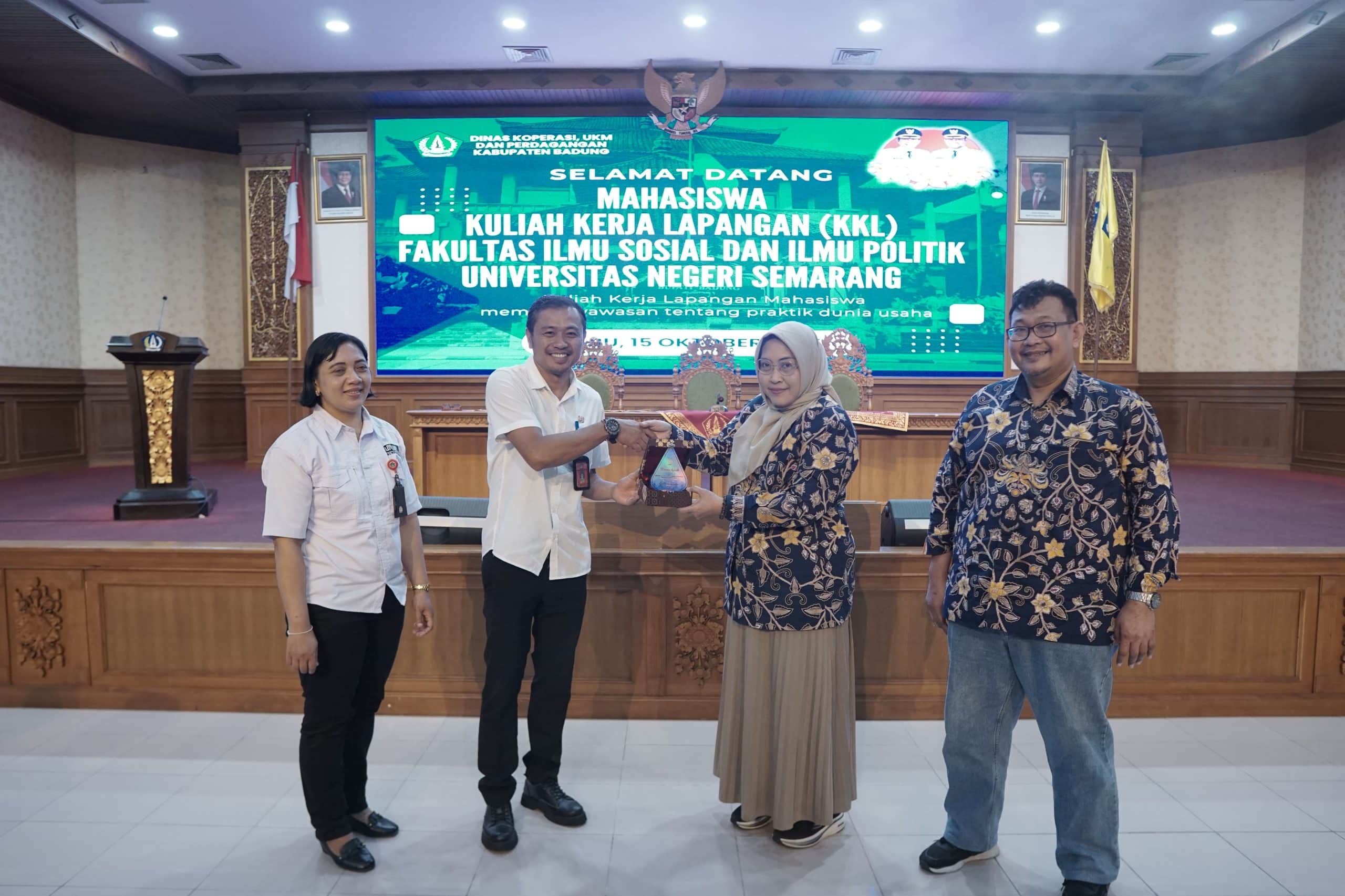
Badung, Bali — A total of 211 fifth-semester students and nine lecturers from the Political Science Study Program, Faculty of Social and Political Sciences, Universitas Negeri Semarang (UNNES), conducted a Field Study (Kuliah Kerja Lapangan / KKL) as part of the course Study of Socio-Political Phenomena at the Badung Regency Government, Bali Province, on October 15, 2025.
This activity served as an experiential learning initiative designed to provide students with firsthand understanding of local government dynamics, public policy formulation, and socio-political governance practices at the regional level.
The event ran smoothly and orderly, with students demonstrating high enthusiasm throughout the visits and discussions. They actively engaged in dialogues with government officials, showing critical thinking and curiosity regarding local socio-political and policy issues.
The group visited two main institutions: the Investment and One-Stop Integrated Service Office (DPMPTSP) and the Office of Cooperatives, MSMEs, and Trade of Badung Regency. Through discussions and field observations, students gained in-depth insights into the regional government’s strategies for attracting investment, developing the MSME sector, and maintaining an economy based on local wisdom and sustainability.
In his remarks, the Head of the Badung Regency DPMPTSP Office emphasized that strengthening institutional capacity and delivering efficient public services are key elements in realizing the Sustainable Development Goals (SDGs) — particularly Goal 16: “Peace, Justice, and Strong Institutions.”
Meanwhile, at the Office of Cooperatives, MSMEs, and Trade, students learned about the importance of entrepreneurship development among the younger generation. The officials highlighted that students, including those from social and political disciplines, should embrace entrepreneurial values to create new job opportunities and drive the national creative economy.
“Entrepreneurship is not merely about economics — it is about independence, innovation, and courage to take an active role in development. Students must view entrepreneurship as a tangible form of contribution to society and the nation,” said a representative from the Badung Office of Cooperatives, MSMEs, and Trade.
During the discussion session, many students showed great enthusiasm by asking about the local government’s strategies to balance economic growth, environmental sustainability, and cultural preservation. Their curiosity reflected a strong interest in equitable and culturally aware public policy practices.
The Head of the Political Science Study Program, Dr. Martien Herna Susanti, S.Sos., M.Si., expressed appreciation for the successful implementation of the activity and the warm welcome from the Badung Regency Government.
“Through this field study, we aim for students to critically read socio-political realities and understand how local cultural values can harmonize with modern governance practices. Badung Regency exemplifies how economic development can remain grounded in local wisdom,” said Dr. Martien.
She further emphasized that this activity aligns with UNNES’s commitment to supporting the achievement of the SDGs, particularly in promoting transparent, inclusive, and accountable public institutions.
“We hope this experience not only broadens students’ academic perspectives but also nurtures awareness of the importance of building strong, integrity-based, and community-oriented institutions,” she added.
Through this field study, students are expected to develop critical analytical skills in understanding socio-political phenomena and to realize how culture, democracy, entrepreneurship, and governance can synergize to achieve sustainable development goals in Indonesia.