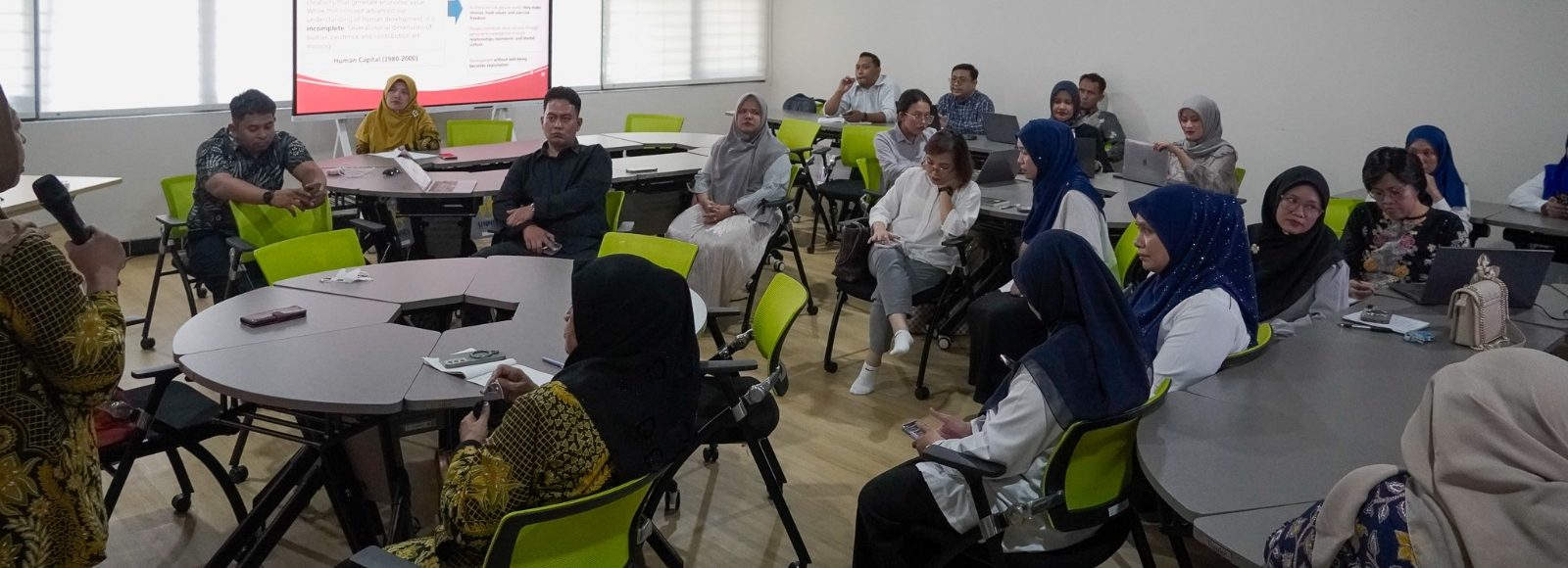
On Thursday, October 9, 2025, the Faculty of Mathematics and Natural Sciences, Semarang State University (FMIPA UNNES) held a Curriculum Benchmarking event for the Physics Education, Chemistry Education, and Biology Education Study Programs in collaboration with the Faculty of Education, Universiti Teknologi MARA (UiTM) Malaysia.
The event, held on the 2nd floor of Building D12, FMIPA UNNES, aimed to strengthen academic collaboration and ensure the alignment of the Outcome-Based Education (OBE) curriculum that emphasizes sustainability and real societal impact. This initiative reflects UNNES’s continuous commitment to advancing Sustainable Development Goal (SDG) 4: Quality Education, particularly in promoting inclusive, equitable, and high-quality education while fostering lifelong learning opportunities through curriculum innovation.
The event was attended by coordinators of study programs within FMIPA UNNES, including:
- Dr. Bambang Subali, Coordinator of Physics Education
- Dr. Sigit Saptono, Coordinator of Biology Education
- Dr. Agung Tri Prasetyo, Coordinator of Chemistry Education
- Arif Widiyatmoko, S.Pd., M.Pd., Ph.D., Coordinator of Science Education (Master’s Program)
- Prof. Dr. Ani Rusilowati, Coordinator of Physics Education (Master’s Program)
The activity was facilitated by Dr. Ellianawati, M.Sc., who also served as a liaison between FMIPA UNNES and the Faculty of Education, UiTM Malaysia.
During parallel discussion sessions, UiTM experts provided constructive input and recommendations to further strengthen each program’s curriculum:
Physics Education: Dr. Norezan Ibrahim from UiTM highlighted the strong structure of the UNNES Physics Education curriculum, which integrates graduate profiles, CPL (Competency-Based Professional Learning), and sustainability values. He suggested presenting semester content more systematically to illustrate competency progression and CPL relevance across courses.
Chemistry Education: Prof. Dr. Sharipah Ruzaina binti Syed Aris emphasized the curriculum’s strong philosophical and ESD (Education for Sustainable Development) alignment. She recommended enhancing bilingual instruction, integrating digital and AI-based learning, and fostering reflective pedagogy and international collaboration to broaden educational impact.
Biology Education: Zulinda Ayu binti Zulkipli, M.Sc., and Dr. Al ‘Aina Yuhainis Firus Khan praised the conservation-based and research-oriented nature of UNNES Biology Education. Their suggestions included simplifying pedagogical courses and incorporating elements of globalization and cross-disciplinary innovation—such as Bioinformatics for Educators and Global Biodiversity Policy.
All participants agreed that the benchmarking results would serve as a foundation for refining the UNNES 2025 Curriculum: Outcome-Based, Sustainable, and Impactful Curriculum, in line with SDG 4 (Quality Education) and SDG 17 (Partnerships for the Goals). The collaboration also reinforces FMIPA UNNES’s position as an international center of excellence in conservation-based science education.
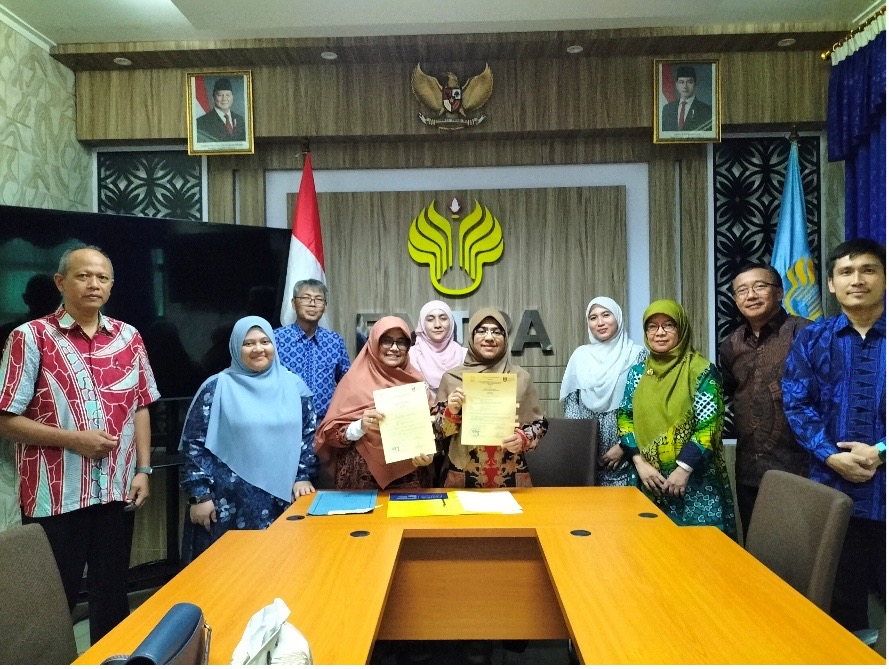
The event concluded with the signing of a memorandum of understanding (MoU) and a commitment to follow-up actions, including joint curriculum development and exploration of academic mobility programs between FMIPA UNNES and UiTM Malaysia.
Through this cross-border academic partnership, FMIPA UNNES continues to uphold its mission to produce science educators and researchers who embody sustainability values, integrity, and global competitiveness—contributing meaningfully to the achievement of the United Nations Sustainable Development Goals.