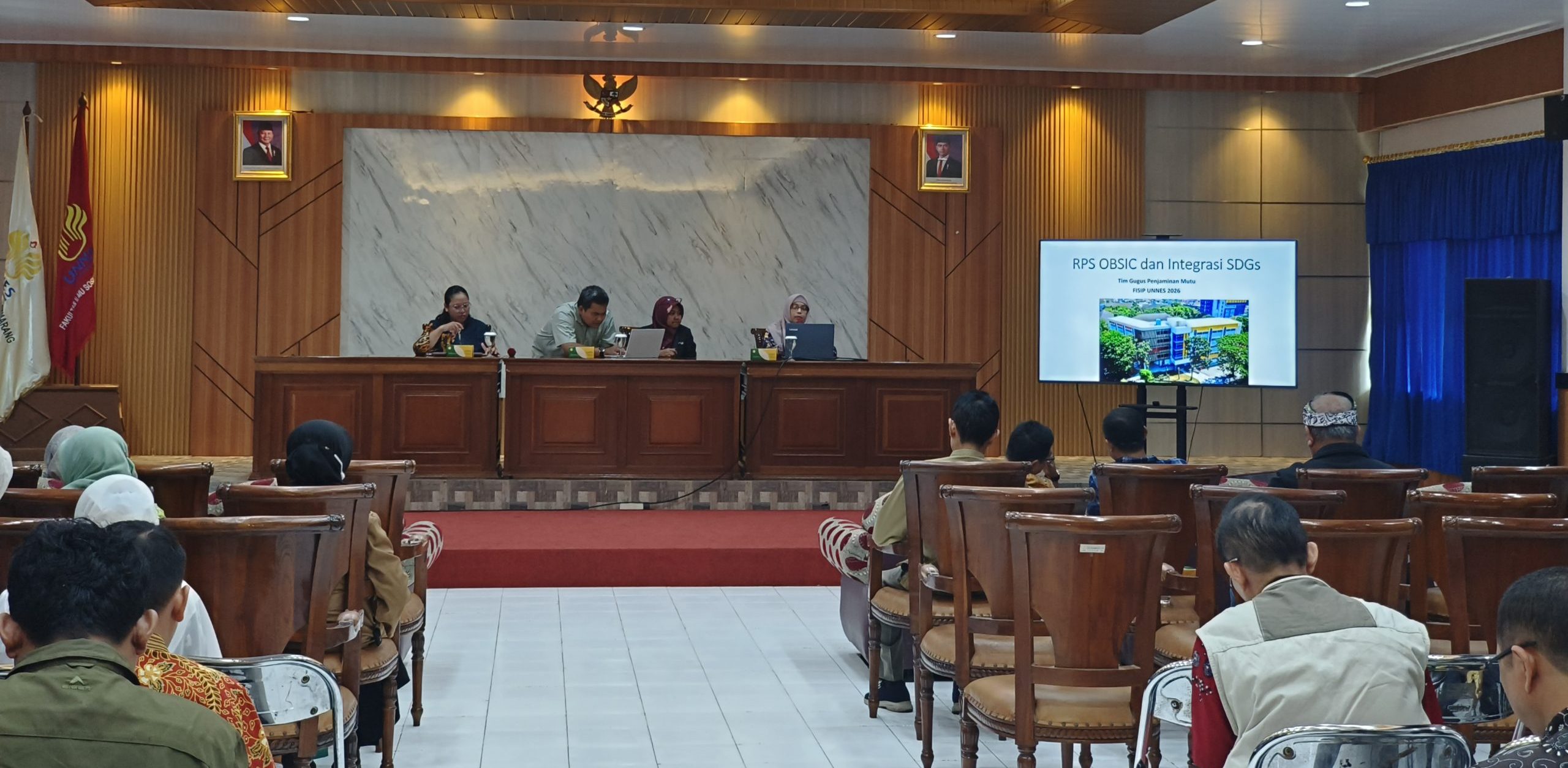
The Faculty of Social and Political Sciences (FISIP), Universitas Negeri Semarang (UNNES), organized a Workshop on the Development of Outcome-Based Education (OBE) Semester Learning Plans (RPS) Integrated with the Sustainable Development Goals (SDGs) on Tuesday, 20 January 2026. The workshop was held at the 3rd Floor Hall of Building C7, FISIP UNNES, and was attended by lecturers from across the faculty.
The activity was officially opened by the Vice Dean for Academic and Student Affairs of FISIP UNNES, Dr. scient. med. Fadly Husain, S.Sos., M.Si. In his opening remarks, he emphasized that the integration of the SDGs into the FISIP UNNES curriculum is implemented across all study programs through the preparation of Semester Learning Plans aligned with the Outcome-Based Education (OBE) approach. This integration is specifically articulated in the Course Learning Outcome Sub-Achievements (CPMK).
Following the opening session, Dr. Nurul Fatimah, S.Pd., M.Si., delivered a presentation outlining the six SDGs priority areas of FISIP UNNES for 2026, namely SDG 1 (No Poverty), SDG 4 (Quality Education), SDG 5 (Gender Equality), SDG 6 (Clean Water and Sanitation), SDG 14 (Life Below Water), and SDG 17 (Partnerships for the Goals).
The workshop also addressed the technical timeline for the preparation and submission of the RPS. Participants were informed that the deadline for RPS submission would be one week after the workshop, with finalization scheduled for 27 January 2026. The process is coordinated by the heads of study programs and the Quality Assurance Groups (GPM) within each respective program.
As the main keynote speaker, FISIP UNNES invited Corina Karim, S.Si., M.Si., Ph.D., Head of the Subdirectorate for Educational Relevance Development at the Directorate of Innovation and Educational Development (DIPP), Universitas Brawijaya. In her presentation, she highlighted the importance of systematically and measurably integrating the SDGs into OBE-based curricula through structured learning planning.
She further emphasized that higher education institutions play a strategic role in preparing graduates with competencies aligned to the needs of the labor market. According to her, while industry stakeholders identify the competencies required in the workforce, universities are responsible for developing and delivering those competencies through relevant curricula. Therefore, the preparation of OBE-based Semester Learning Plans must be aligned with stakeholder needs while continuing to uphold the principles of sustainable development.
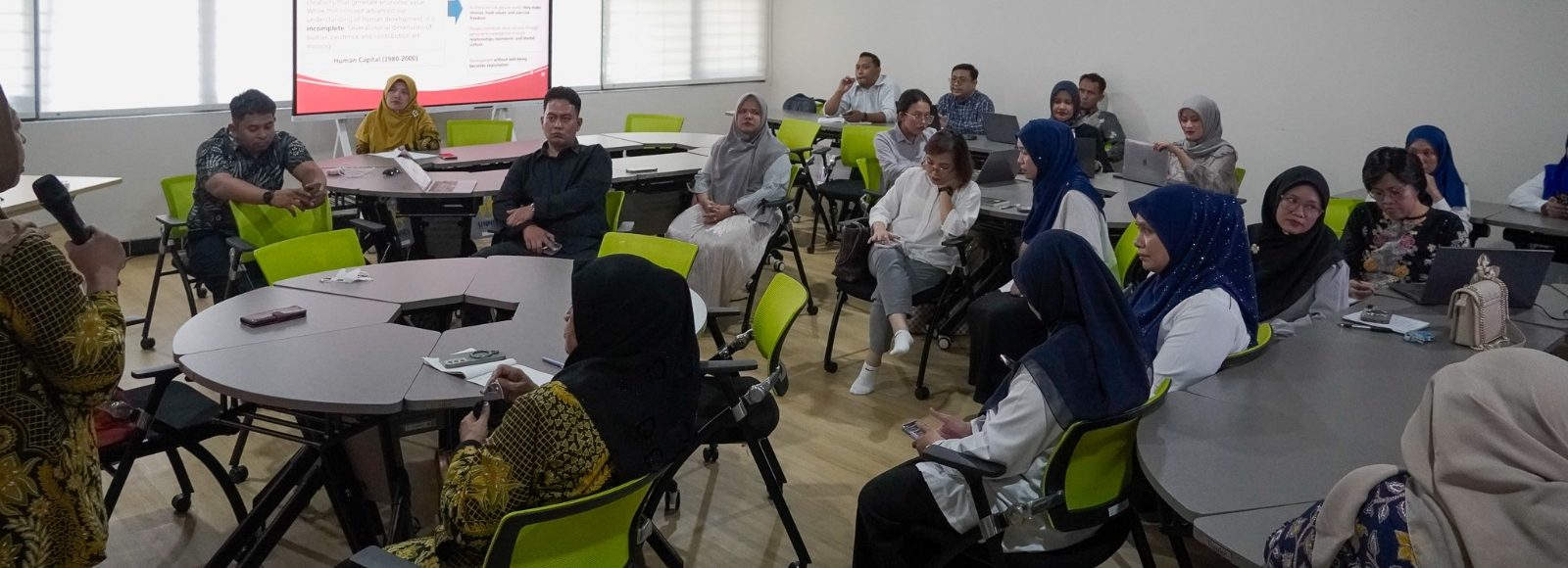
The workshop concluded with hands-on sessions in which each study program practiced developing OBE-based Semester Learning Plans under the guidance of mentors. Through the implementation of the OBE approach, FISIP UNNES lecturers are expected to deliver learning processes that are competency-oriented, measurable, and responsive to industry demands, while simultaneously supporting the achievement of the Sustainable Development Goals.