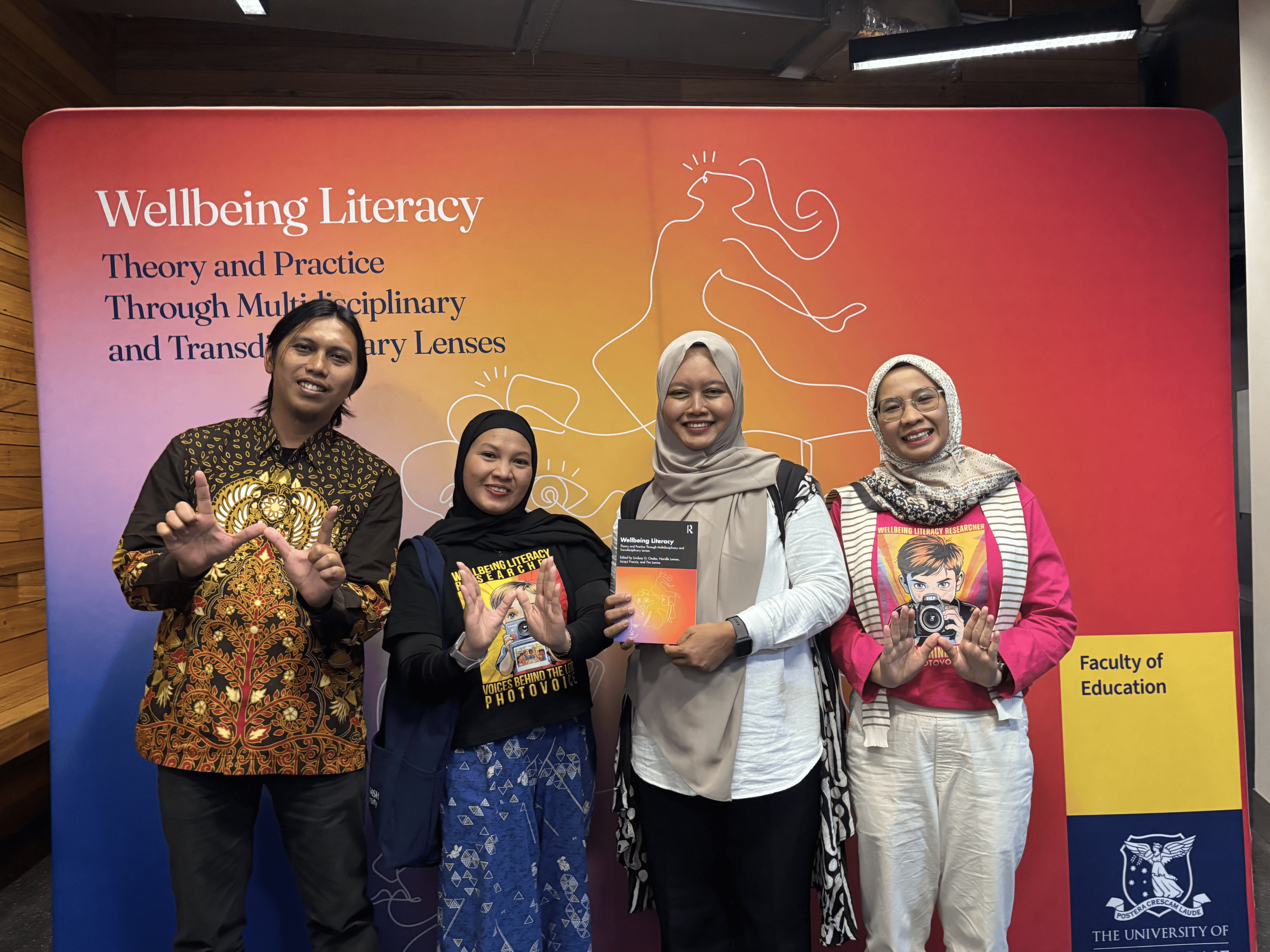
The launch of the book Wellbeing Literacy: Theory and Practice through Multidisciplinary and Transdisciplinary Lenses on November 19, 2025, at the Faculty of Education, University of Melbourne, was attended by more than 200 academics, professors, researchers, students, and wellbeing practitioners from various countries. In this enthusiastic international scientific forum, the research team from the Faculty of Education and Psychology (FIPP), Semarang State University (UNNES) appeared as one of the important contributors to the book published by Routledge.
The UNNES FIPP team consisted of Dr. Siti Nuzulia as team leader, along with Fatma Kusuma Maharani, M.Psi., Psychologist, Muhammad Nazil Iqdami, M.Ed., and Dr. Wulan Aulia Azizah, M.Pd. They contributed through a chapter titled “Exploring Wellbeing Literacy among Javanese Undergraduates,” which highlights how the wellbeing literacy of Javanese students is influenced by cultural values such as sincerity, patience, harmony, and the use of ngoko-krama language levels.
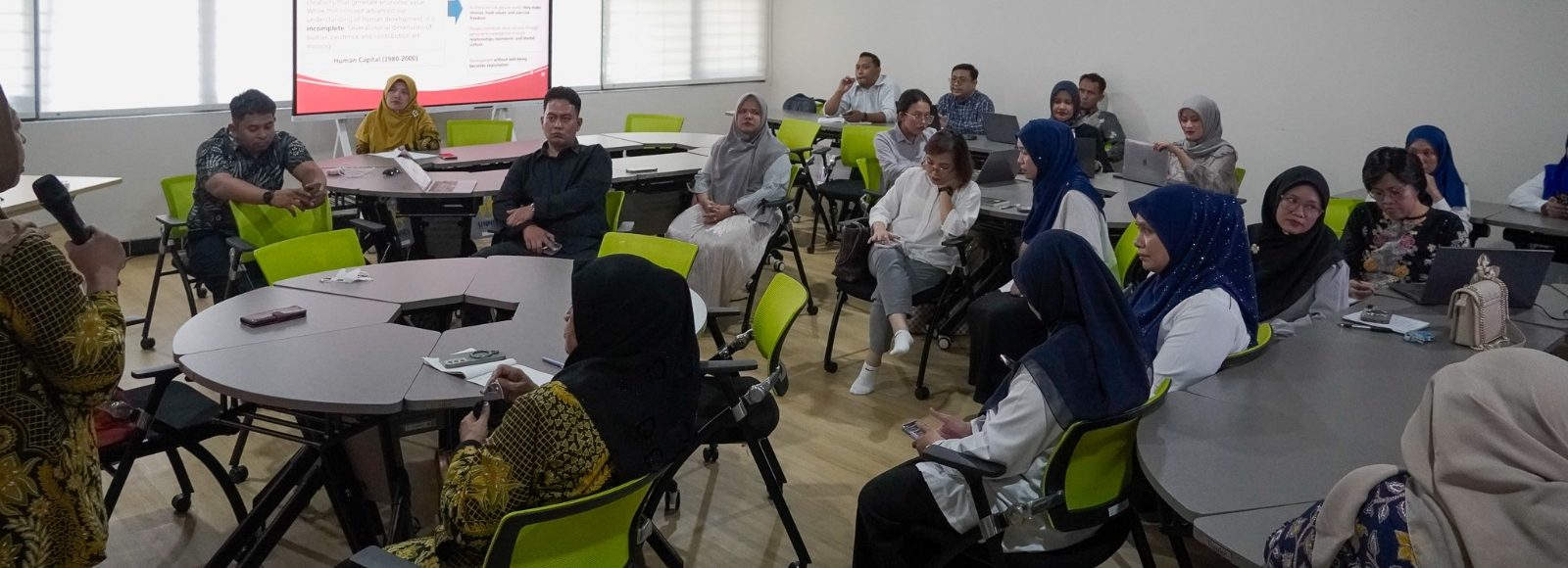
During the event, Dr. Siti Nuzulia was one of the main panelists who presented the team’s research findings. She explained how the young Javanese generation negotiates their language of wellbeing as a combination of ancestral wisdom and modern concepts of wellbeing, giving rise to a hybrid, contextual, and cultural form of wellbeing literacy. This perspective broadens the global discourse, which has been dominated by Western models of wellbeing, and opens up space for a relational and culture-based framework of wellbeing. This contribution directly supports SDG 10 (Reduced Inequalities) by bringing the Indonesian perspective to the global scientific conversation.
The resonance of these findings is evident in the high level of interest and questions from the international audience regarding local knowledge systems, cultural variations in emotional regulation and wellbeing communication, and implications for future cross-cultural research.
In addition to its academic contribution, the launch of this book also marks a strategic moment for strengthening international collaboration between FIPP UNNES and the University of Melbourne. Follow-up discussions between researchers opened up new opportunities for collaboration, including collaborative research, international co-teaching, staff and student mobility programs, and the development of cross-cultural wellbeing literacy projects. These efforts reflect the spirit of SDG 17 (Partnerships for the Goals), namely global cooperation to achieve common goals.
This event also emphasized that wellbeing literacy is a transformative competency relevant to SDG 3 (Good Health and Well-being) and SDG 4 (Quality Education). FIPP UNNES’ participation is an important milestone that demonstrates Indonesia’s contribution to global wellbeing research, while strengthening FIPP UNNES’ position as a faculty committed to culture-oriented, inclusive research, and international impact.