Financial Transparency as the Foundation for UNNES to Build an Effective and Inclusive Institution

Universitas Negeri Semarang > Sustainable Development Goals Universitas Negeri Semarang > News > Financial Transparency as the Foundation for UNNES to Build an Effective and Inclusive Institution

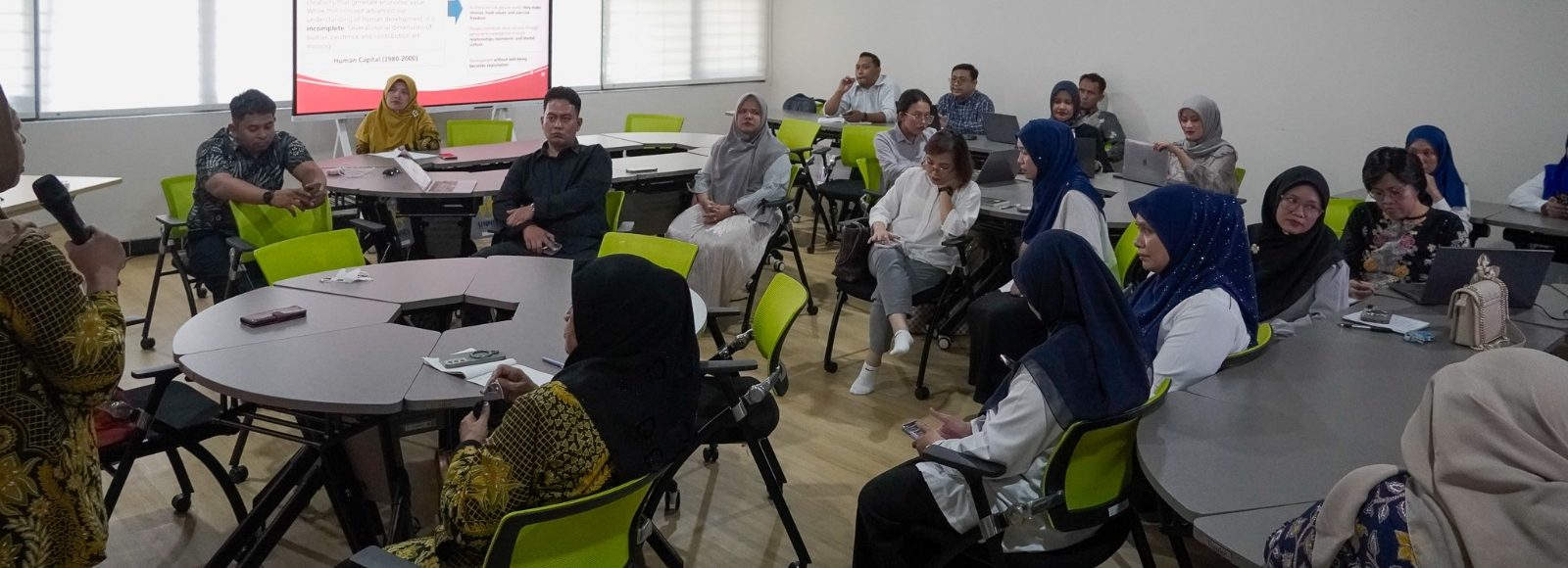
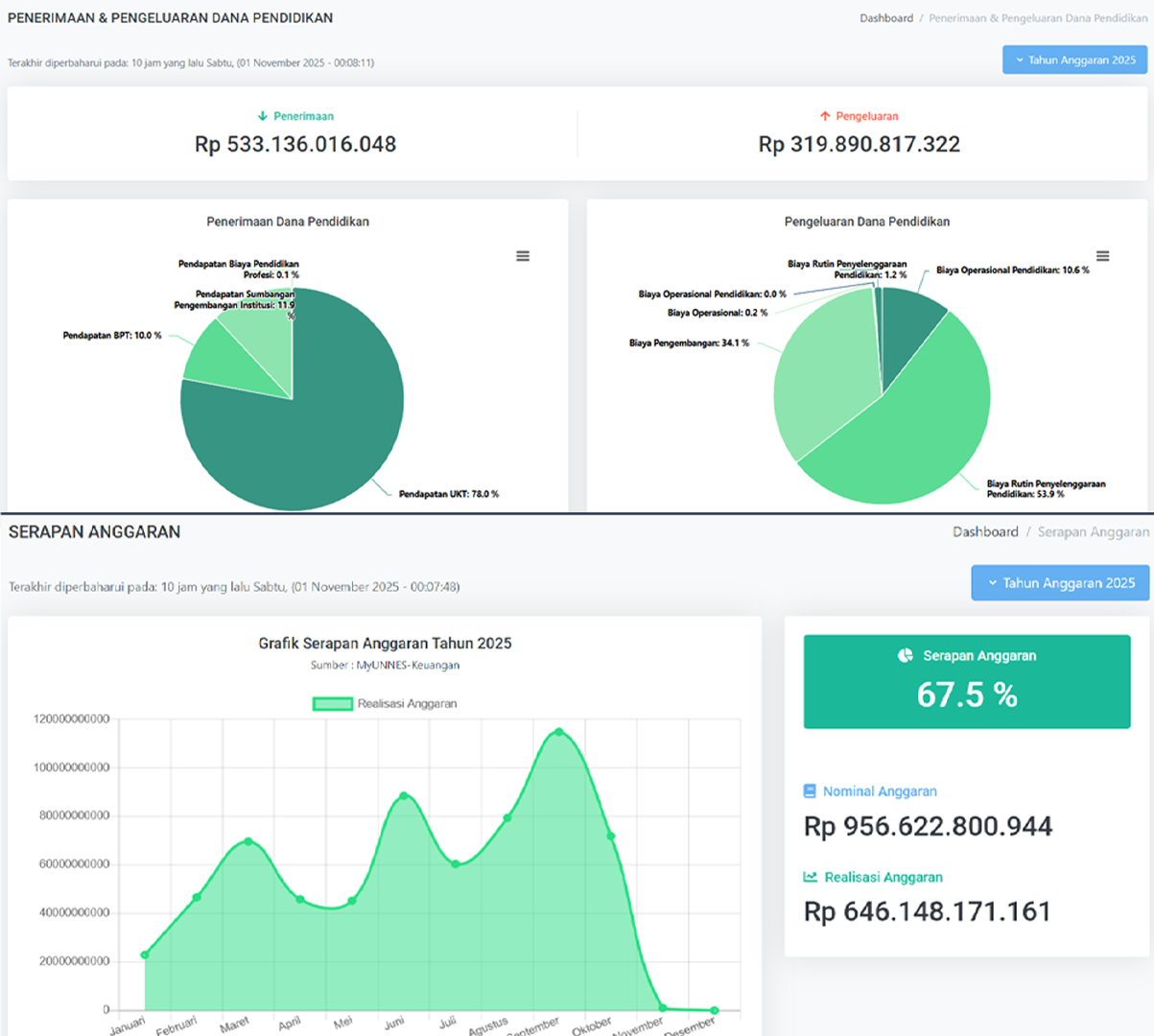
Universitas Negeri Semarang (UNNES) continues to strengthen its institutional commitment to transparent and accountable governance by consistently publishing its annual financial reports, which are publicly accessible and internally audited. These reports present not only numerical data but also an in-depth analysis of budget planning, spending realization, and fund allocation across the university’s strategic programs and initiatives.

As a Legal Entity State University (PTN-BH), UNNES positions financial transparency as a cornerstone of its governance structure, ensuring that fiscal management reflects the principles of integrity, accountability, and inclusiveness. The financial statements demonstrate how resources are utilized to support the university’s tridharma perguruan tinggi education, research, and community service while aligning institutional priorities with sustainable development goals.

During the reporting period, UNNES’s main sources of funding derived from the State Budget (APBN) and student education contributions, alongside several competitive research and partnership grants. The university’s financial standing remains stable, maintaining strong liquidity and solvency ratios. UNNES has also consistently received the “Unqualified Opinion” (Wajar Tanpa Pengecualian/WTP) from financial auditors over the past several years a recognition of the university’s compliance with sound financial management and government accounting standards.

The latest report, UNNES Financial Report 2024, can be publicly accessed through the Official Information and Documentation Portal (PPID) at

https://unnes.ac.id/ppid/2025/07/20/laporan-keuangan-unnes-tahun-2024/

This annual publication includes detailed breakdowns of operational and investment expenditures, allowing stakeholders including students, faculty, and the public to assess how funds are allocated and managed. Each fiscal cycle, the Bureau of Planning and Finance submits the Annual Work and Budget Plan (RKAT) to university leadership, followed by internal and external auditing to ensure alignment with national financial governance standards.

UNNES Rector, Prof. Dr. S. Martono, M.Si., emphasized that financial transparency is not merely an administrative formality but a moral responsibility to the public.

“As a public university, transparency and accountability are essential values that reflect our integrity as an institution. Every rupiah managed by UNNES must contribute to public trust, institutional development, and the nation’s progress,” he stated.

UNNES also utilizes its financial reports as a tool for institutional learning. The data serve as a foundation for evaluating unit performance including faculties and research centers and for designing follow-up strategies in the subsequent fiscal years. This continuous improvement cycle ensures that funds are used effectively, strategically, and responsibly.

In alignment with Sustainable Development Goal 16.6 (Develop effective, accountable, and transparent institutions at all levels), UNNES demonstrates how transparency can strengthen trust, equity, and institutional resilience. The open availability of financial data not only enhances public confidence but also encourages participatory oversight, allowing external stakeholders to contribute to the university’s integrity and governance improvement.

As a Conservation and Impactful University, UNNES upholds that good governance is not solely about managing finances it is about managing trust. Through consistent transparency, ethical fiscal management, and inclusive decision-making, UNNES continues to build itself as an effective, accountable, and justice-driven institution that contributes to sustainable national development.
Related Posts

Leave a Reply

* Kode Akses Komentar:

* Tuliskan kode akses komentar diatas:

GDPR

  • Privacy Policy

Privacy Policy

At unnes.ac.id, the privacy of our visitors is of extreme importance to us. This privacy policy document outlines the types of personal information that is received and collected by unnes.ac.id and how it is used.

Log Files

Like many other Web sites, unnes.ac.id makes use of log files. The information inside the log files includes internet protocol (IP) addresses, type of browser, Internet Service Provider (ISP), date/time stamp, referring/exit pages, and number of clicks to analyze trends, administer the site, track user’s movement around the site, and gather demographic information. IP addresses and other such information are not linked to any information that is personally identifiable.

Cookies

unnes.ac.id uses cookies to store information about visitors’ preferences, to record user-specific information on which pages the site visitor accesses or visits, and to personalize or customize our web page content based upon visitors’ browser type or other information that the visitor sends via their browser.

Third-party ad servers or ad networks use technology in their respective advertisements and links that appear on unnes.ac.id and which are sent directly to your browser. They automatically receive your IP address when this occurs. Other technologies (such as cookies, JavaScript, or Web Beacons) may also be used by our site’s third-party ad networks to measure the effectiveness of their advertising campaigns and/or to personalize the advertising content that you see on the site.

unnes.ac.id has no access to or control over these cookies that are used by third-party advertisers.

You should consult the respective privacy policies of these third-party ad servers for more detailed information on their practices as well as for instructions about how to opt-out of certain practices. unnes.ac.id’s privacy policy does not apply to, and we cannot control the activities of, such other advertisers or web sites.

If you wish to disable cookies, you may do so through your individual browser options. More detailed information about cookie management with specific web browsers can be found at the browsers’ respective websites.

Consent

By using our website, you hereby consent to our privacy policy and agree to its terms.

Update

This Privacy Policy was last updated on: 2023-02-14. Should we update, amend or make any changes to our privacy policy, those changes will be posted here.

Contact Us

If you have any questions, comments, or concerns about our Privacy Policy or our practices with regards to your personal information, please feel free to contact us through the contact form on our website or by emailing us at humas[at]mail.unnes.ac.id.

This Privacy Policy is intended as a general guide to our practices in collecting and using information. If there is any inconsistency between this Privacy Policy and the terms of the Service Agreement or any other terms that may apply to specific services you use, then those specific service terms shall apply.

Terms of Use

By using our website, you agree to abide by this Privacy Policy. If you do not agree with this Privacy Policy, please do not use our website. We reserve the right to update this Privacy Policy from time to time without prior notice. Please review our Privacy Policy periodically to check for changes. Your continued use of our website following the posting of changes to this Privacy Policy means that you accept the changes.

Thank you for reading our Privacy Policy. We are committed to protecting the privacy of our website visitors and will continue to update our Privacy Policy to ensure optimal protection.