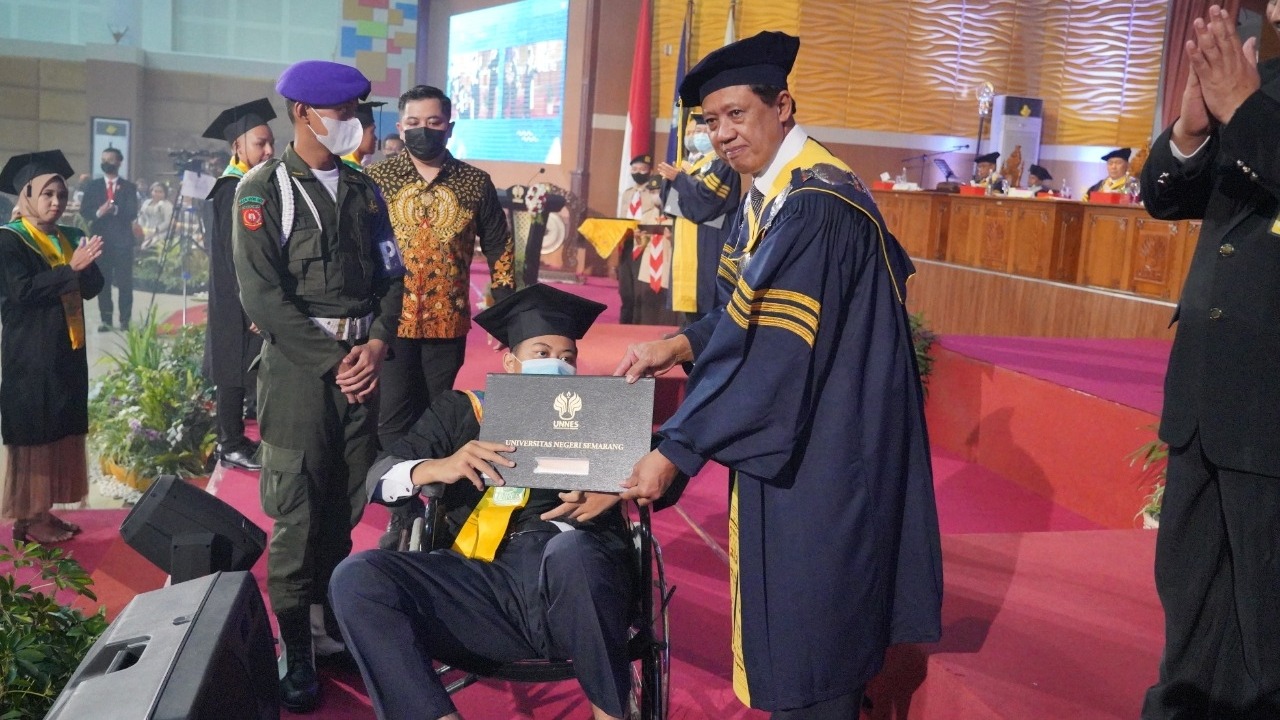
Universitas Negeri Semarang (UNNES) has reinforced its institutional commitment to inclusive education by issuing Rector’s Regulation No. 116 of 2024 on Educational Services for Students with Disabilities. This regulation provides a comprehensive policy framework that outlines strategies, provisions, and institutional responsibilities to ensure equal access, reasonable adjustments, and adequate support for students with disabilities across all academic programs.
The regulation is grounded in national legislation on human rights, higher education, and disability inclusion, ensuring that UNNES aligns with Indonesia’s broader commitment to equitable and inclusive education. It mandates that all students, regardless of disability status, are entitled to participate fully in academic, social, and extracurricular activities without discrimination.
Guaranteeing Reasonable Adjustments and Equal Access
A central component of the policy is the provision of reasonable accommodations, defined as necessary and appropriate modifications to ensure that students with disabilities can access education on an equal basis. These adjustments include flexible learning methods, adapted assessments, accessible teaching materials, and individualized academic support.
The policy ensures that students with disabilities receive:
- accessible infrastructure and learning environments
- academic assistance tailored to individual needs
- assistive technologies and support services
- equal opportunities to participate in student organizations and leadership roles
These provisions are designed to eliminate barriers and enable full participation in university life.
Comprehensive Support Systems and Services
UNNES implements this policy through a range of integrated services, including academic mentoring, counseling, psychological support, and the provision of support personnel such as interpreters and peer assistants. The university also ensures that public facilities, classrooms, and campus services are accessible and inclusive.
Importantly, the regulation emphasizes a holistic support system, where academic, administrative, and support units work collaboratively to meet the diverse needs of students with disabilities.
Institutional Coordination through Disability Service Unit (ULD)
A key institutional mechanism mandated by the regulation is the establishment of the Disability Service Unit (Unit Layanan Disabilitas/ULD). This unit plays a central role in coordinating all disability-related services and ensuring effective implementation of inclusive policies across faculties and administrative units.
The ULD is responsible for:
- coordinating academic adjustments and support services
- conducting needs assessments and early identification
- monitoring and evaluating the implementation of accommodations
- providing counseling and referral services
- promoting awareness of inclusive education among staff and students
The unit also facilitates cross-unit collaboration to ensure consistency and quality of service delivery throughout the university.
Adequate Funding and Institutional Responsibility
The regulation also highlights the importance of adequate institutional support and resources, including funding for infrastructure, assistive facilities, training, and service provision. UNNES ensures that financial and operational resources are allocated to support the implementation of inclusive education policies, enabling sustainable and effective service delivery.
This commitment is further reinforced by institutional accountability mechanisms, including monitoring, evaluation, and sanctions for non-compliance. These measures ensure that all units within the university adhere to the policy and provide appropriate services to students with disabilities.
Strengthening Accountability and Reporting Mechanisms
To ensure transparency and continuous improvement, the regulation establishes clear reporting mechanisms that allow members of the academic community to report barriers, discrimination, or service gaps. The university responds through structured procedures, ensuring that issues are addressed promptly and effectively.
Sanctions are applied to individuals or units that fail to comply with the policy, reinforcing the seriousness of the institution’s commitment to inclusion and equality.
Advancing an Inclusive and Equitable Academic Environment
Through the implementation of Rector’s Regulation No. 116 of 2024, UNNES demonstrates a strong, structured, and well-resourced approach to inclusive education. The integration of policy, services, infrastructure, and funding ensures that reasonable adjustments are not only defined but also effectively implemented.
This comprehensive framework positions UNNES as a leading institution in promoting accessibility, equality, and inclusion in higher education, contributing to broader sustainability goals, particularly in advancing equitable access to quality education and reducing inequalities.