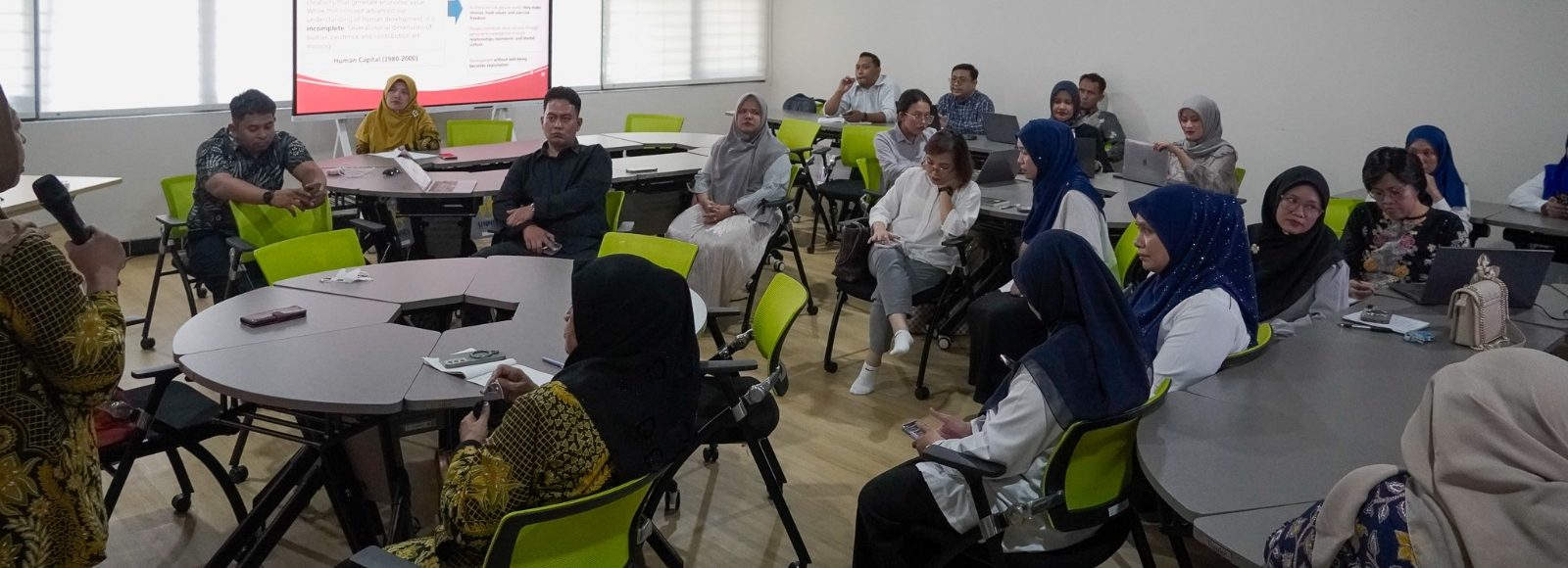
PEKERTI and Applied Approach (AA) training programs play crucial roles in enhancing the teaching competencies of educators. These programs are integral to improving pedagogical practices, which directly contribute to the sustainability of quality education. By empowering educators with the necessary tools and knowledge, these training initiatives ensure that education remains high-quality, inclusive, and adaptable to current and future educational needs.
Staff Members’ Role in Ensuring Sustainable Education Quality
Sustainable Development Goal (SDG) 4: Quality Education directly aligns with the objectives of PEKERTI and AA training. Both programs target the continuous improvement of educators’ competencies, enhancing their ability to provide high-quality education to all students. The staff members—educators, trainers, and teaching assistants—play a pivotal role in implementing the knowledge and skills gained from these programs. Through PEKERTI and AA, staff members are equipped to deliver quality education that promotes lifelong learning and supports SDG 4.
Participant Reporting and Frequency of Training Sessions:
PEKERTI: Annually, 300 participants (educators) undergo the PEKERTI training, conducted approximately 10 times per year, with each session lasting for 82 training hours (JP). This frequency and total training hours ensure a consistent and scalable impact on the educators’ pedagogical practices.
AA: The Applied Approach (AA) training occurs 4-5 times annually, with each batch consisting of 30 participants per session. Each session provides 50 training hours (JP), focusing on more advanced pedagogical skills and techniques for senior educators. These training sessions are crucial in developing the competencies of senior faculty members, ensuring that both the younger and senior educators benefit from continuous professional development.
Enhancing Competencies for Staff Members and SDG Alignment
SDG Target 4.C focuses on increasing the number of qualified teachers, and both PEKERTI and AA are designed to achieve this by improving the pedagogical competencies of educators. Through these training programs, staff members gain new insights into teaching strategies, content design, assessment methods, and digital literacy. The competencies gained by staff through PEKERTI and AA support the SDGs, specifically SDG 4.7, which emphasizes the importance of education for sustainable development, global citizenship, and human rights.
By engaging in these professional development programs, educators enhance their ability to create personalized and inclusive learning environments, which are key components of SDG 4. This ensures that quality education remains accessible, inclusive, and effective for all learners, contributing to the overall achievement of SDG 4.
Long-Term Benefits for Education Sustainability
The integration of AI, digital tools, and personalized learning experiences within PEKERTI and AA allows educators to implement sustainable, adaptable teaching practices. Sustainable Development Goal (SDG) 4.7, which aims to provide education for sustainable development, is supported by these programs through the development of educators who are capable of teaching values like peace, sustainability, and inclusion.
Furthermore, PEKERTI and AA provide educators with the skills to design and implement innovative learning experiences, ensuring that education remains dynamic, adaptive, and aligned with the needs of future generations.
Key Impact: Training Frequency, Participant Reporting, and Total Training Hours (JP)
PEKERTI Training:
Annual Participants: 30 per batch (300 educators per year)
Sessions per Year: 10 sessions
Training Hours (JP): 82 hours per session
AA Training:
Annual Participants: 30 educators per batch
Sessions per Year: 4-5 sessions
Training Hours (JP): 50 hours per session
These training programs significantly contribute to achieving SDG 4 by enhancing the skills of educators in areas such as instructional design, technology integration, and assessment strategies. The high number of participants and frequent training sessions provide widespread benefits, making PEKERTI and AA essential tools in strengthening the sustainability of quality education.
Empowering Educators to Contribute to the SDGs
PEKERTI and AA both provide educators with the knowledge and skills necessary to design and deliver high-quality, inclusive learning experiences. Educators who are empowered through these programs contribute directly to SDG 4 by ensuring that students receive a relevant, impactful, and sustainable education. Moreover, the continuous professional development promoted by these training programs fosters a culture of lifelong learning among educators, which is essential for the sustainability of education.
Conclusion
Both PEKERTI and Applied Approach (AA) are fundamental in improving the pedagogical practices of educators and ensuring the sustainability of quality education. By increasing the competencies of educators through regular training sessions, these programs help achieve SDG 4: Quality Education, promote lifelong learning, and foster a culture of continuous improvement in teaching. With 300 participants annually in PEKERTI and 30 in AA, both training programs have a significant, long-term impact on the quality and sustainability of education in Indonesia.