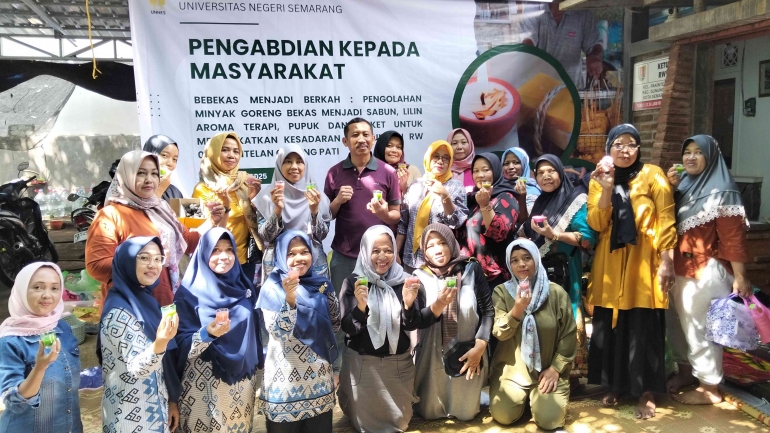
Used cooking oil is often disposed of carelessly by the community, which can pollute the environment and endanger health. Through this activity, residents are invited to process the waste into useful products and have economic value. In an effort to increase environmental awareness and community empowerment in RW 05 Pakintelan Village, Gunungpati District, the FMIPA Semarang State University (UNNES) community service team held a community service activity entitled “Used Cooking Oil Becomes a Blessing.” This activity focused on processing used cooking oil (jelantah) into useful products such as dishwashing soap, aromatherapy candles, and briquettes. The FMIPA Semarang State University community service team consists of a combination of lecturers and students from the Chemistry and Physics groups. This community service activity was chaired by Dr. Nuni Widiarti S.Pd., M.Si, with lecturer members Dr. Triastuti Sulistyaningsih M.Si., Dr. Budi Astuti, M.Sc., and Devy Lestari S.Pd., M.Pd. Meanwhile, the student team consisted of three members: Roja Maysa Rohamh, Nala Izzul Muna, and Amanda Farizka Maylani. The community service activity took place on Sunday, May 25, 2025, in Pakintelan.
The activity began with opening remarks from the head of RW 05, Pakintelan Gunungpati Village, who welcomed the program, themed “Used Oil Becomes a Blessing,” which utilized used cooking oil to make aromatherapy candles, scented coconut fiber, and briquettes. This activity increased residents’ knowledge of utilizing used cooking oil, which is often thrown away, into useful products and could even become a new business for housewives in RW 05 Pakintelan. The head of the community service team then expressed gratitude for the participation of the women of RW 05 Pakintelan and expressed his hope that the training would be beneficial.
After the opening ceremony, the event continued with a presentation on the use of used cooking oil for making aromatherapy candles, scented soap, and briquettes. The first presentation covered the recycling process for used cooking oil, which involves letting the oil sit for 1–2 days to allow impurities to settle. The oil is then filtered through a fine cloth or filter paper to remove frying residue and become ready to be used as a base for other products. The next presentation focused on making aromatherapy candles from used cooking oil. The ingredients used were 250 ml of clean used cooking oil, 200 grams of paraffin wax, a fragrance of choice, a cotton wick, and a candle mold made from glass, used cans, or eggshells. Making aromatherapy candles began by melting the paraffin wax over low heat, gradually adding the used cooking oil and aromatherapy oil, stirring constantly, then pouring the mixture into molds with wicks, and allowing it to harden.
The following material covered making fragrant dishwashing soap with 1 liter of clean used cooking oil, 130–150 grams of caustic soda (NaOH), 300 ml of water, essential oils, natural dyes, and soap molds. The process began by dissolving NaOH in water (which produces heat and must cool to 40°C), then mixing it with oil for 30 minutes while gradually adding fragrance and dyes. The mixture was poured into molds, left for 2–3 days, and then cured for 3–4 weeks until the pH was safe. For briquettes, the ingredients included 1 kg of sawdust or rice husk charcoal, 100 ml of used cooking oil, 100 grams of starch, water, and molds. The mixture was kneaded until sticky, placed in molds, and sun-dried for 2–3 days until ready to use as fuel.
The next activity was a hands-on session on making aromatherapy candles, soap, and briquettes, guided by the women of RW 05 Pakintelan together with the UNNES team. This activity raised awareness about household waste management, with participants showing strong enthusiasm and plans for independent production. The products created also have market potential, offering opportunities for additional household income. The activity concluded with a group photo of participants and their products.
Finally, it can be concluded that the “Used to Be Blessed Goods” program demonstrates that household waste, such as used cooking oil, can be processed into valuable and economically viable products. This activity not only reduces environmental pollution but also empowers the community through new skills and business opportunities. Moreover, this initiative strongly supports the United Nations Sustainable Development Goals (SDGs), particularly SDG 13 (Climate Action), as recycling used cooking oil helps mitigate environmental impacts, reduce greenhouse gas emissions from improper waste disposal, and foster sustainable practices at the grassroots level. By transforming waste into eco-friendly products, the community contributes to both environmental protection and climate resilience.