To Achieve SDG 17, FEB Unnes Strengthens Strategic Partnerships with Industry
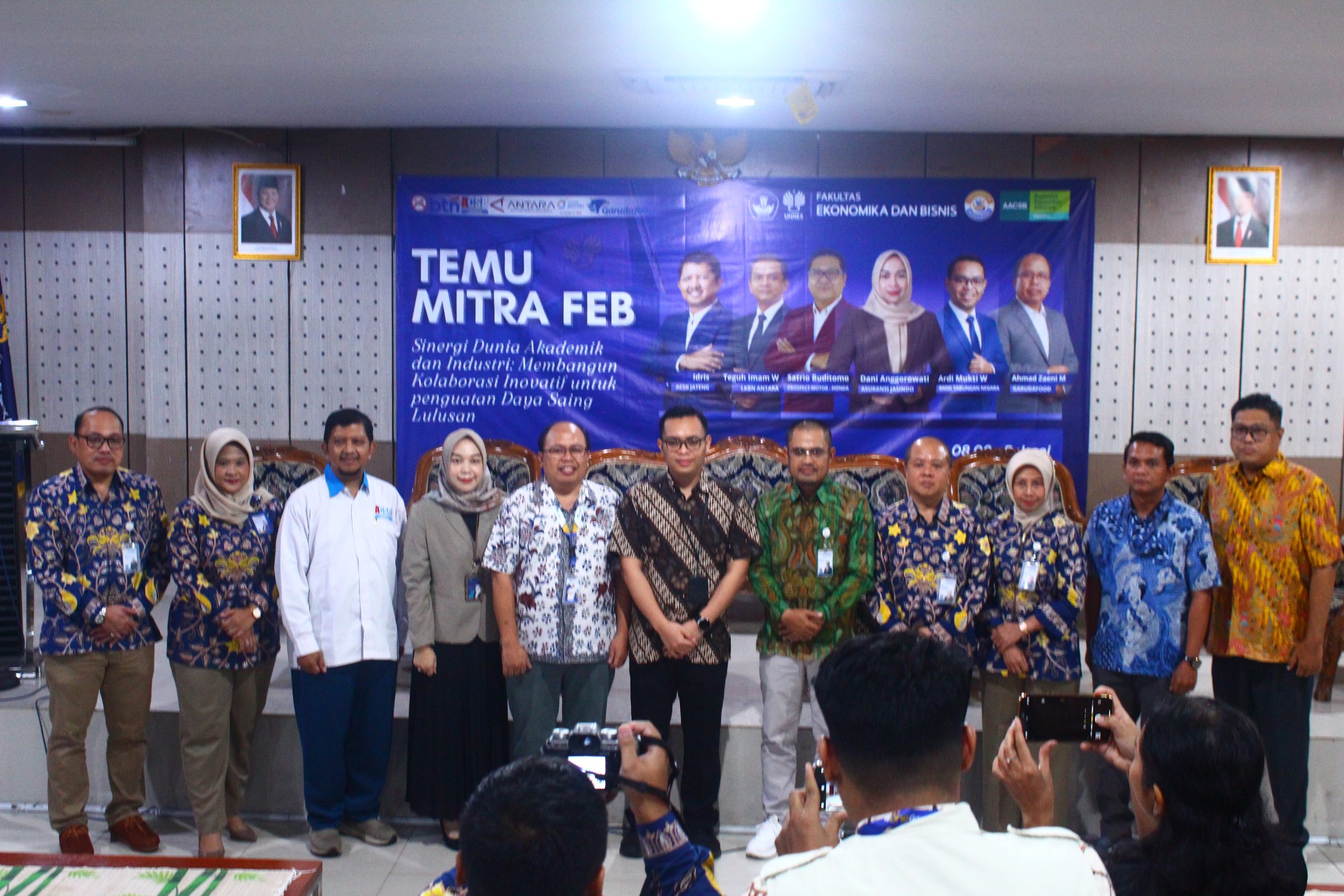
The Faculty of Economics and Business, Semarang State University (FEB Unnes) is taking concrete steps to achieve Sustainable Development Goal (SDG) 17, Partnerships to Achieve Goals. Through a Partner Gathering themed “Synergy between Academia and Industry: Building Innovative Collaborations to Strengthen Graduate Competitiveness,” FEB Unnes demonstrated its commitment to building inclusive and sustainable partnerships between the educational sector and various stakeholders, particularly the private sector.
The event, attended by representatives of leading companies such as Honda Prospect Motor, Asubansi Jasindo, LKBN ANTARA, Bank Tabungan Negara, Garuda Food, and the Asia Council for Small Business, served as a strategic platform to align industry needs with graduate competency development. The Dean of FEB Unnes, Amir Mahmud, emphasized that such collaboration is crucial for education to be more adaptive to rapid changes in the workplace. This forum not only opens up internship and recruitment opportunities but also serves as a dialogue space for exchanging ideas and valuable input to improve the quality of education, ultimately contributing to broader economic development.
In the discussion session, Satrio Buditomo from Honda Prospect Motor confirmed that the demand for young talent through internship programs remains high. “Internship programs are the first bridge to a decent working world. We hope students will seriously prepare themselves by developing technical and soft skills to maximize this opportunity,” explained Satrio. Meanwhile, Teguh Imam Wibowo from the Central Java Bureau of LKBN ANTARA added that students’ internship seriousness is fundamental. “We apply the 5W+1H principle not only in journalism, but also before accepting an internship. Students must have clear goals and objectives, such as being involved in community empowerment projects. This trains them to be part of a strong team and solve real-world problems—skills highly sought after in the workplace,” explained Teguh.
The dialogue with the students also touched on integrity and career readiness issues. The questions raised demonstrate a high awareness of the importance of preparing for a competitive workforce.
By aligning curriculum and practices through direct feedback from industry, the Faculty of Economics and Business (FEB) at Unnes is committed to producing employable graduates and future leaders who can drive sustainable economic growth. Therefore, this FEB Unnes initiative is a concrete example of how the principles of SDG 17 are operationalized. The partnerships established are not solely for the institution’s benefit, but represent a collective effort to prepare a competent next generation while simultaneously addressing development challenges at the national level. This synergy is key to achieving other sustainable development goals, such as quality education (SDG 4) and inclusive economic growth (SDG 8).