Universities play a vital role in producing high-quality graduates who contribute significantly to national development. The quality of these graduates becomes a long-term investment in human capital. One key factor that strengthens a university’s role in education is the presence of productive and competent lecturers and staff. Therefore, ensuring the welfare of employees is an essential effort to enhance their productivity and, in turn, the overall performance of the institution.
To support staff and faculty productivity, Universitas Negeri Semarang (UNNES) has implemented several income and welfare schemes. This policy recognizes the strong correlation between employee well-being and institutional productivity.
The UNNES salary structure adheres to national regulations, including Law Number 5 of 2014 on the State Civil Apparatus (ASN) and Government Regulation Number 5 of 2024. Based on these legal frameworks, salaries at UNNES are equivalent to those of civil servants in other public institutions, ensuring that all employees receive at least the nationally determined living wage level.
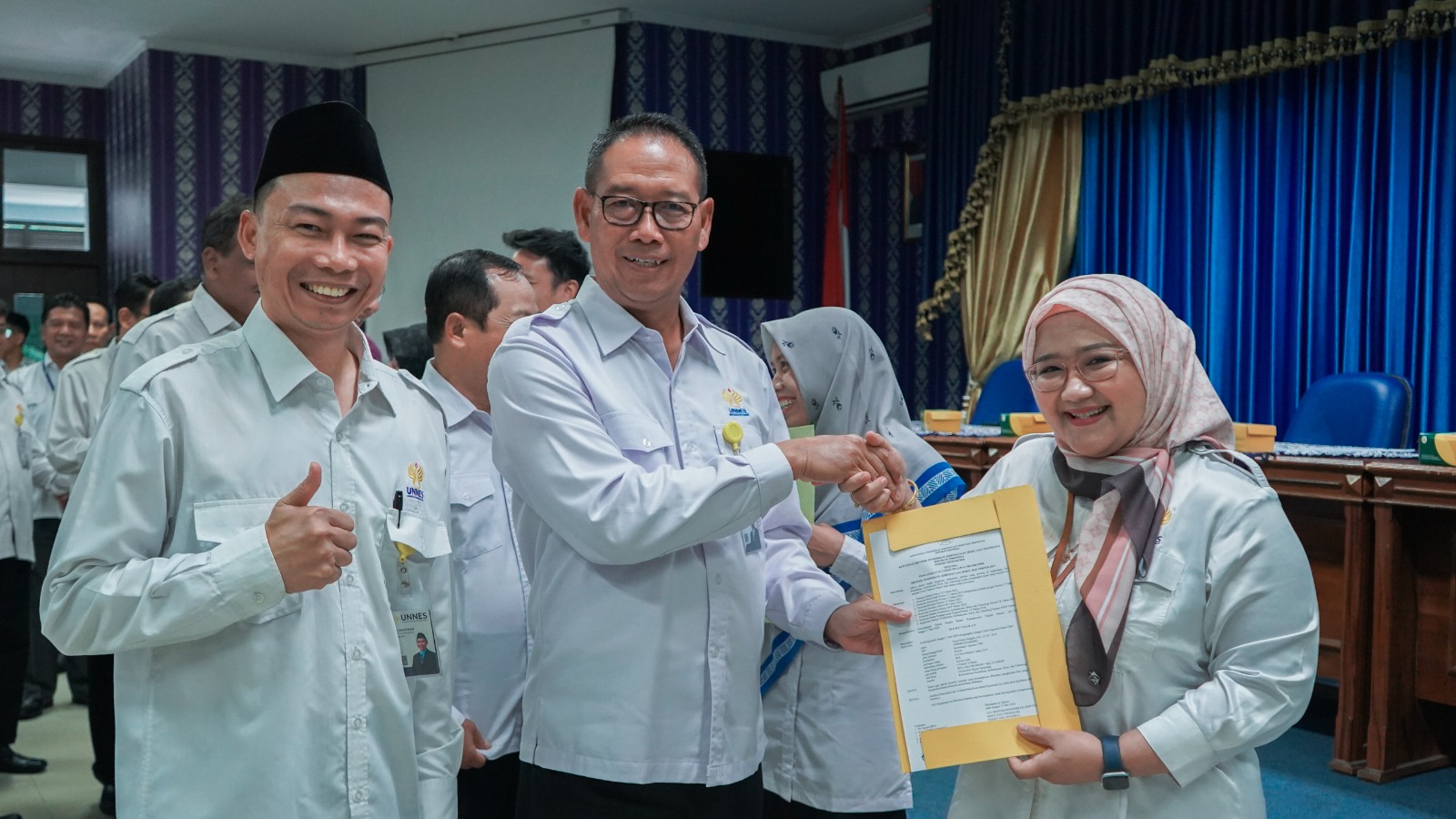
In addition to the standard salary system, UNNES has established an internal policy to further enhance staff income. The issuance of Rector Regulation Number 37 of 2023 on the Remuneration System of Universitas Negeri Semarang demonstrates the university’s commitment to strengthening employee welfare and motivation. This regulation provides a performance-based remuneration system that offers additional income components, such as allowances and performance rewards, based on measurable work achievements.
Consequently, UNNES ensures that total compensation for its staff and faculty exceeds the government’s minimum wage standards, aligning with the local living wage indicators. This approach not only supports financial security for employees and their families but also fosters a culture of excellence, innovation, and accountability within the university.
By implementing a remuneration-based payment system, Universitas Negeri Semarang aims to continuously enhance employee productivity, which will ultimately contribute to improved educational quality and sustainable institutional performance.