

Gus In’am’s sermon at the 2026 FIPP UNNES Halalbihalal: Unraveling the “tangled threads” of position, the dangers of bankruptcy in the afterlife, and the example of Kiai Sholeh Darat’s literacy.
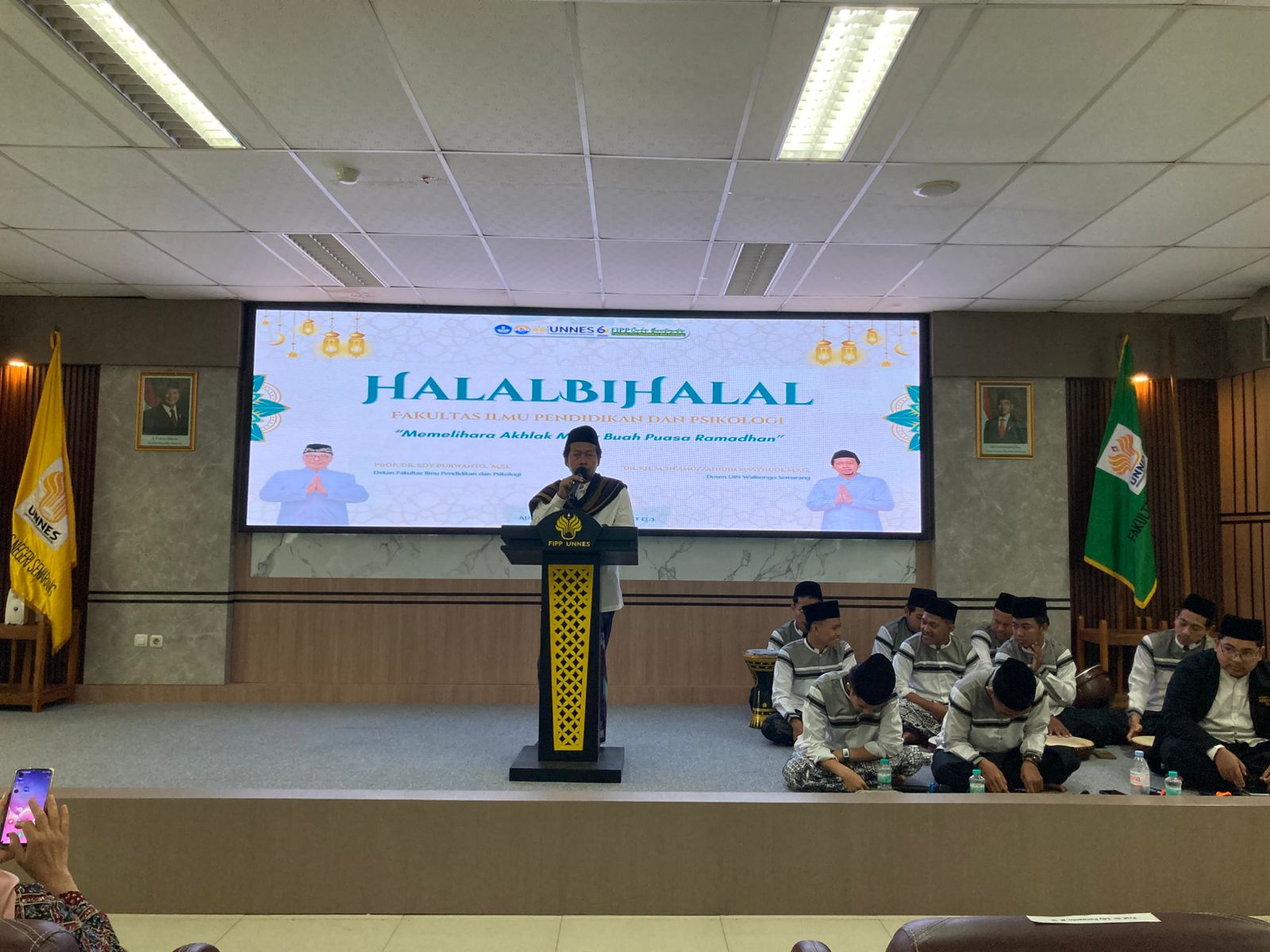
SEMARANG – The 3rd-floor auditorium of the Faculty of Education and Psychology (FIPP) at Semarang State University (UNNES) suddenly erupted with laughter on Wednesday, April 1, 2026. From the pulpit, Dr. KH. M. In’amuzzahidin Masyhudi, M.Ag., was dissecting the philosophy behind this annual post-Ramadan tradition.
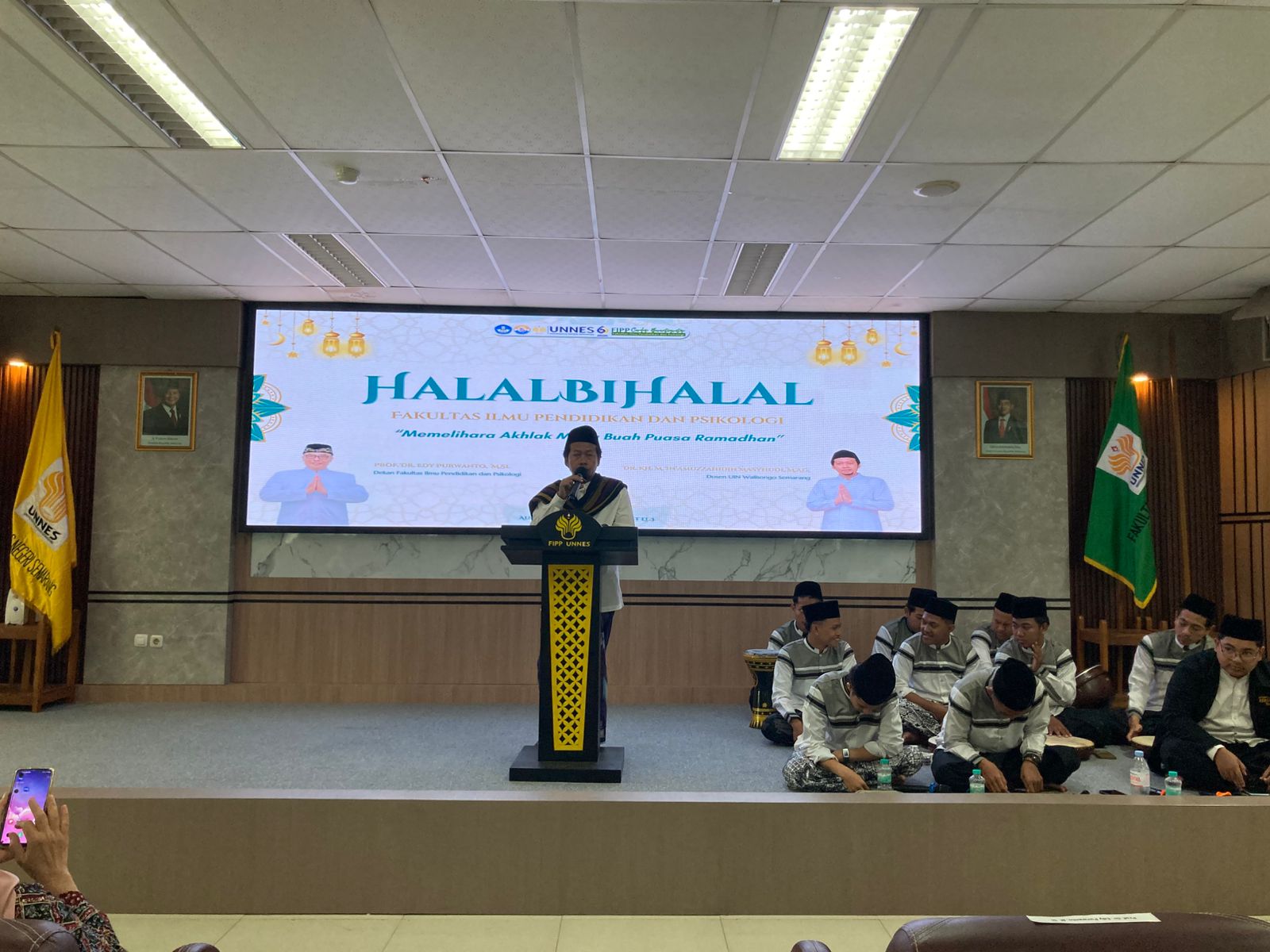
The UIN Walisongo lecturer, who is also the head of the KH Sholeh Darat Lovers Community (Kopisoda), described halalbihalal as a moment to “halla,” or unravel the tangled threads. He criticized the dynamics of campus life that sometimes lead to strained relationships due to competition.
“Hopefully, our relationships, which were tangled up due to official matters such as applying to be a vice dean or dean but not being accepted can be resolved,” said Gus In’am.
According to him, becoming an official requires a “handshake” (fate) and a “signature” (SK), not elbowing, which actually destroys the rewards of fasting.
Gus In’am reminded the academic community not to become muflis, or bankrupt in the afterlife. A person is considered bankrupt if he has abundant rewards from prayer and fasting, but they are wasted due to the sin of cursing or hurting others.
“Fasting teaches honesty to avoid sting operations. In the digital age, our words are transferred to our fingers through WhatsApp messages. Don’t let your hands be used to curse or make negative comments,” emphasized the caretaker of the Salaf Nurul Hidayah Islamic Boarding School in Semarang.
Concluding the sermon, he invited the audience to emulate the compassion of Prophet Ibrahim, who was fond of honoring guests, as a tangible fruit of fasting.
Kiai Sholeh Darat’s Literacy Spirit
The Dean of FIPP UNNES, Prof. Dr. Edy Purwanto, M.Si., delivered a speech connecting educational values with local history. He recounted how Kiai Sholeh Darat educated prominent figures like R.A. Kartini through clever literacy strategies.
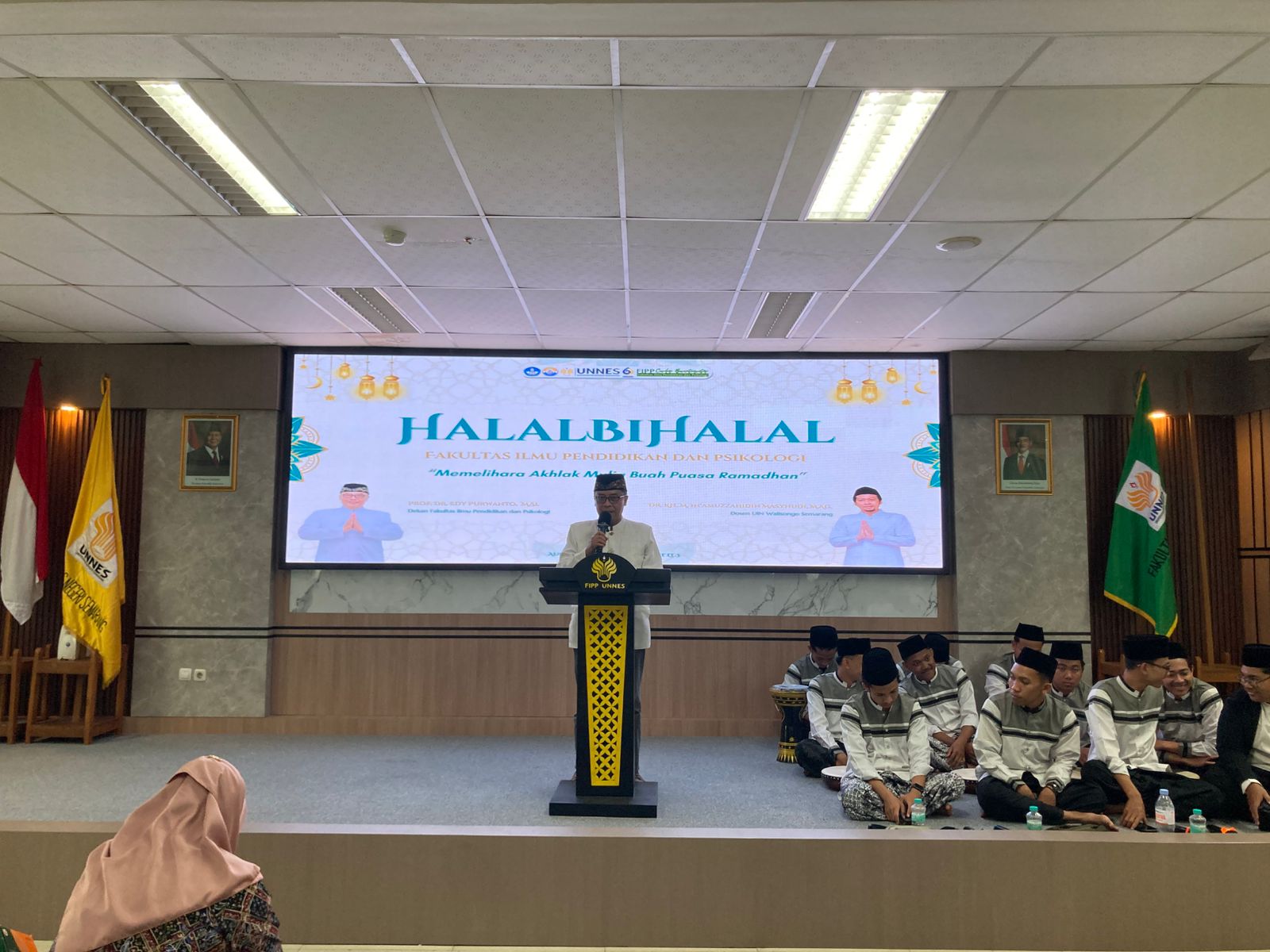
“Kiai Sholeh Darat circumvented colonial prohibitions by writing a translation of the Quran using the Pegon Arabic script,” he said.
From studying the Quran, Kartini was inspired by the concept of “Minadzulumati ilan nur,” or “After Darkness Comes Light.”
Meanwhile, the Chair of the Committee, Indrajati Kunwijaya, M.Pd., stated that the event, themed “Maintaining Noble Morals as a Fruit of Ramadan Fasting,” was an important forum for strengthening ties between leaders, lecturers, educational staff, student representatives, and retirees.
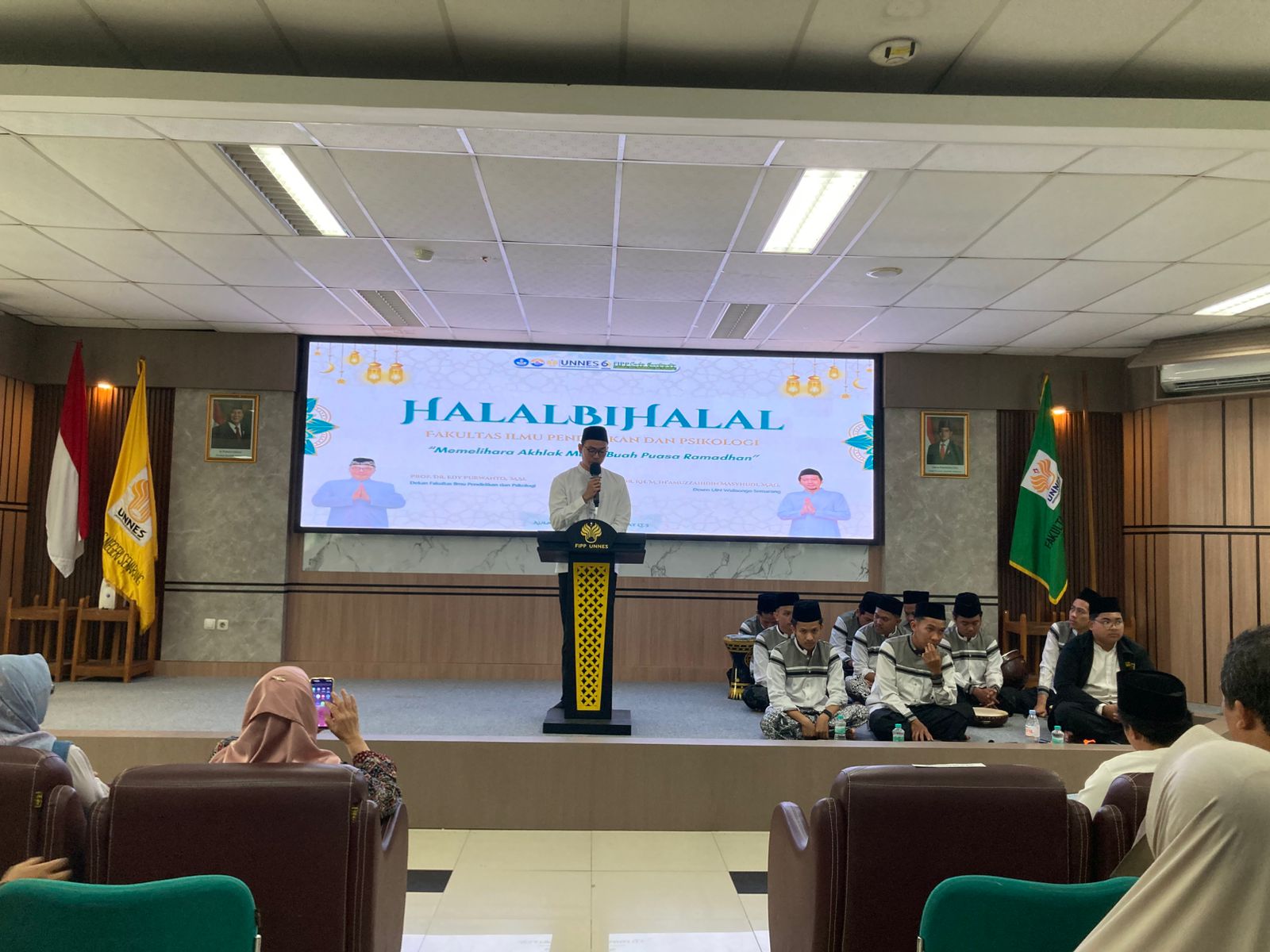
The 2026 FIPP UNNES Halalbihalal activity ended with a joint prayer, bringing hope that the entire academic community can return to work with clean hearts and that the relationships that have been “unraveled” will be harmonious again.