UNNES Research Team Illuminates Cultural Wellbeing Literacy at University of Melbourne Book Launch, Strengthening Global SDG Commitments

Universitas Negeri Semarang/Faculty of Education and Psychology/Berita/UNNES Research Team Illuminates Cultural Wellbeing Literacy at University of Melbourne Book Launch, Strengthening Global SDG Commitments

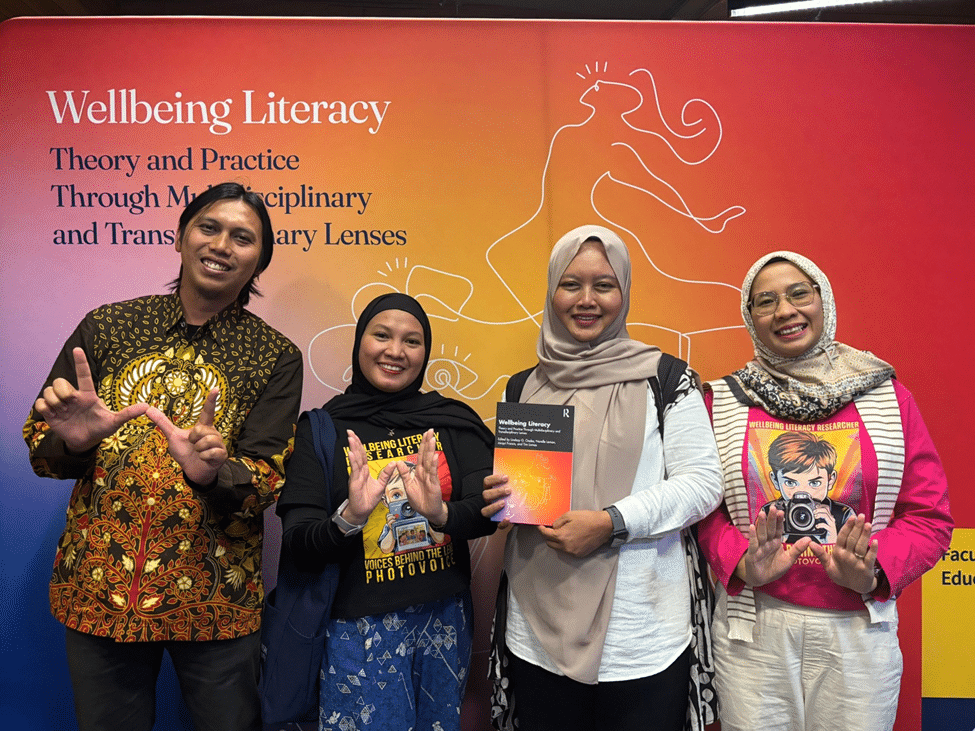
Melbourne, 19 November 2025 — The Faculty of Education at the University of Melbourne was filled with excitement and intellectual energy as more than 200 lecturers, professors, researchers, students, and wellbeing practitioners gathered for the launch of the Routledge volume Wellbeing Literacy: Theory and Practice through Multidisciplinary and Transdisciplinary Lenses. Edited by international wellbeing leaders Lindsay G. Oades, Narelle Lemon, Jacqui Francis, and Tim Lomas, the book represents an important contribution to global wellbeing scholarship and aligns strongly with the United Nations Sustainable Development Goals (SDGs), particularly SDG 3 (Good Health and Well-being), SDG 4 (Quality Education), SDG 10 (Reduced Inequalities), and SDG 17 (Partnerships for the Goals).

Among the international contributors, a research team from Universitas Negeri Semarang (UNNES), Indonesia, led by Dr. Siti Nuzulia, gained notable attention for their chapter titled “Exploring Wellbeing Literacy among Javanese Undergraduates.” As one of four invited panelists, Dr. Nuzulia presented key findings from their research, offering a cultural and spiritual perspective that enriched the global conversation on wellbeing literacy. Her presentation highlighted that Javanese wellbeing literacy is shaped by deeply rooted cultural values—such as spiritual grounding expressed through concepts like ikhlassabar, and alhamdulillah; relational harmony represented in rukun; and respectful communication embedded in the linguistic layers of ngoko–krama. She emphasized how Javanese young people negotiate between tradition and modernity, forming a hybrid wellbeing language that blends ancestral wisdom with contemporary wellbeing concepts.
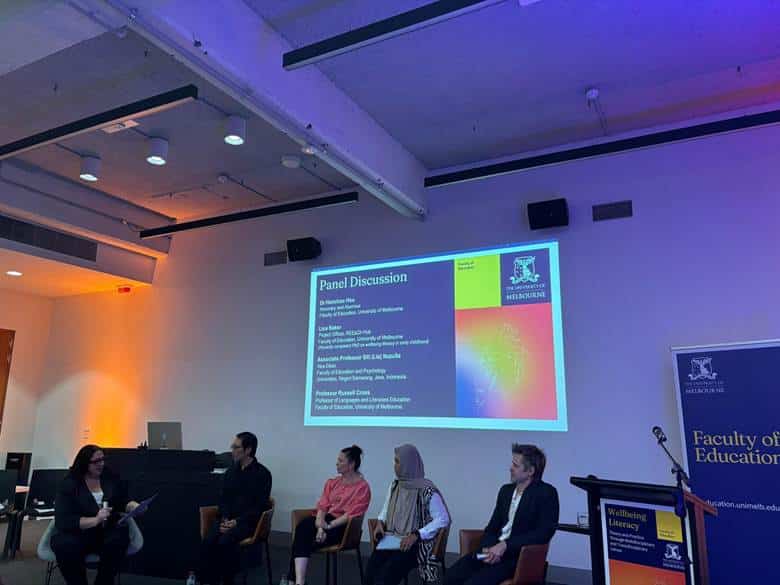
Her insights challenged Western-centric models of wellbeing literacy, reminding the global audience that wellbeing is not merely individual or linguistic but cultural, relational, and context-bound. This contribution supports SDG 10 (Reduced Inequalities) by bringing underrepresented cultural frameworks into mainstream academic discourse. The presentation received strong engagement, with attendees posing critical questions about indigenous knowledge systems, cultural variation in wellbeing expression, and the future of cross-cultural wellbeing research.

Beyond the academic discussions, the book launch served as a vibrant platform for strengthening international partnerships. Conversations between UNNES faculty and researchers from the University of Melbourne opened new pathways for collaboration, including joint research, co-teaching initiatives, staff and student mobility programs, and cross-cultural wellbeing literacy projects. These emerging initiatives reflect the global spirit of SDG 17 (Partnerships for the Goals), demonstrating how universities can work together to advance shared priorities through education and knowledge exchange.

The book launch also reaffirmed the importance of wellbeing literacy as a transformative capability in education, aligning with SDG 4 (Quality Education) and SDG 3 (Good Health and Well-being). Participants praised the book’s multidisciplinary and transdisciplinary approach, noting its capacity to shape more inclusive, human-centered educational frameworks that empower individuals and communities to communicate, interpret, and cultivate wellbeing across diverse cultural contexts. For UNNES, this moment marks a significant milestone in Indonesia’s contribution to global educational research. By elevating Javanese cultural philosophies on an international stage, the UNNES research team showcased the richness, depth, and global relevance of Indonesian scholarship. Their participation reinforces the importance of culturally grounded wellbeing research in building healthier, more equitable, and more sustainable societies worldwide.
Related Posts

Leave a Reply

* Kode Akses Komentar:

* Tuliskan kode akses komentar diatas:

GDPR

  • Privacy Policy

Privacy Policy

At unnes.ac.id, the privacy of our visitors is of extreme importance to us. This privacy policy document outlines the types of personal information that is received and collected by unnes.ac.id and how it is used.

Log Files

Like many other Web sites, unnes.ac.id makes use of log files. The information inside the log files includes internet protocol (IP) addresses, type of browser, Internet Service Provider (ISP), date/time stamp, referring/exit pages, and number of clicks to analyze trends, administer the site, track user’s movement around the site, and gather demographic information. IP addresses and other such information are not linked to any information that is personally identifiable.

Cookies

unnes.ac.id uses cookies to store information about visitors’ preferences, to record user-specific information on which pages the site visitor accesses or visits, and to personalize or customize our web page content based upon visitors’ browser type or other information that the visitor sends via their browser.

Third-party ad servers or ad networks use technology in their respective advertisements and links that appear on unnes.ac.id and which are sent directly to your browser. They automatically receive your IP address when this occurs. Other technologies (such as cookies, JavaScript, or Web Beacons) may also be used by our site’s third-party ad networks to measure the effectiveness of their advertising campaigns and/or to personalize the advertising content that you see on the site.

unnes.ac.id has no access to or control over these cookies that are used by third-party advertisers.

You should consult the respective privacy policies of these third-party ad servers for more detailed information on their practices as well as for instructions about how to opt-out of certain practices. unnes.ac.id’s privacy policy does not apply to, and we cannot control the activities of, such other advertisers or web sites.

If you wish to disable cookies, you may do so through your individual browser options. More detailed information about cookie management with specific web browsers can be found at the browsers’ respective websites.

Consent

By using our website, you hereby consent to our privacy policy and agree to its terms.

Update

This Privacy Policy was last updated on: 2023-02-14. Should we update, amend or make any changes to our privacy policy, those changes will be posted here.

Contact Us

If you have any questions, comments, or concerns about our Privacy Policy or our practices with regards to your personal information, please feel free to contact us through the contact form on our website or by emailing us at humas[at]mail.unnes.ac.id.

This Privacy Policy is intended as a general guide to our practices in collecting and using information. If there is any inconsistency between this Privacy Policy and the terms of the Service Agreement or any other terms that may apply to specific services you use, then those specific service terms shall apply.

Terms of Use

By using our website, you agree to abide by this Privacy Policy. If you do not agree with this Privacy Policy, please do not use our website. We reserve the right to update this Privacy Policy from time to time without prior notice. Please review our Privacy Policy periodically to check for changes. Your continued use of our website following the posting of changes to this Privacy Policy means that you accept the changes.

Thank you for reading our Privacy Policy. We are committed to protecting the privacy of our website visitors and will continue to update our Privacy Policy to ensure optimal protection.